Robin Hickman – författare
2 043 kr
Skickas inom 10-15 vardagar
681 kr
Skickas inom 10-15 vardagar
4 549 kr
Skickas inom 5-8 vardagar
756 kr
Läs direkt efter köp
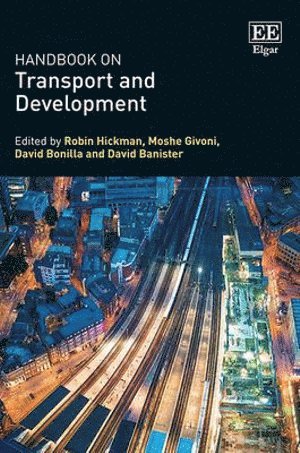
With 45 chapters from leading international authors, the book is organised around three main themes:
urban structure and traveltransport and spatial impactswider dimensions in transport and development.The chapters each present commentary on key issues within these themes, presenting the debate on the impacts of urban structure on travel, the impacts of transport investment on development, and social and cultural change on travel. A multitude of competing inter-disciplinary perspectives are considered - leaving the reader with an invaluably comprehensive and critical understanding of the field.This major Handbook will serve as a guide for undergraduates and graduate students, researchers, consultants, and also practitioners and policy makers, wishing to find a comprehensive and original reference to research on transport and development.
Contributors: J.A. Annema, F. Avelino, D. Banister, D. Bonilla, F. Bruinsma, C.C. Cantarelli, X. (Jason) Cao, C.-L. Chen, G. Cohen-Blankshtain, C. Curtis, G. Dane, J. Dodson, A. Donald, R. Dowling, M. Echenique, A. El-Geneidy, R. Ewing, E. Feitelson, B. Flyvbjerg, N. Garrick, H. Geerlings, K. Geurs, M. Givoni, A.R. Goetz, P. Gordon, A. Grigolon, D. Halden, P. Hall, I. Hamiduddin, S. Handy, P. Headicar, D.A. Hensher, D. Hidalgo, R. Hickman, R. Hjorthol, M. Hillman, E. Holden, T. Holvad, H. Holzapfel, M. Iacono, O.B. Jensen, P. Jones, J. Kenworthy, S. Kenyon, C.A. Klöckner, K.J. Krizek, B. Lee, S. Leleur, D. Levinson, T. Li, Z. Li, K. Linnerud, S. Marshall, W. Marshall, E. Matthies, L. Meija Dorantes, R. Meyfahrt, P. Mokhtarian, J.C. Muñoz, P. Naess, P. Newman, S. Nordbakke, S. Petheram, S. Rasouli, P. Rietveld, O. Rotem-Mindali, T. Schwanen, N. Sipe, D. Stead, P. Stoker, G. Stokes, H. Timmermans, B. Van Wee, R. Wilson, D. Yang
860 kr
Läs direkt efter köp
Sustainable mobility has long been sought after in cities around the world, particularly in industrialised countries, but also increasingly in the emerging cities in Asia. Progress however appears difficult to make as the private car, still largely fuelled by petrol or diesel, remains the mainstream mode of use. Transport is the key sector where carbon dioxide (CO2) emissions seem difficult to reduce.
Transport, Climate Change and the City seeks to develop achievable and low transport CO2 emission futures in a range of international case studies, including in London, Oxfordshire, Delhi, Jinan and Auckland. The aim is that the scenarios as developed, and the consideration of implementation and governance issues, can help us plan for and achieve attractive future travel behaviours at the city level. The alternative is to continue with only incremental progress against CO2 reduction targets, to ‘sleepwalk’ into climate change difficulties, oil scarcity, a poor quality of life, and to continue with the high traffic casualty figures. The topic is thus critical, with transport viewed as central to the achievement of the sustainable city and reduced CO2 emissions.
860 kr
Läs direkt efter köp
Sustainable mobility has long been sought after in cities around the world, particularly in industrialised countries, but also increasingly in the emerging cities in Asia. Progress however appears difficult to make as the private car, still largely fuelled by petrol or diesel, remains the mainstream mode of use. Transport is the key sector where carbon dioxide (CO2) emissions seem difficult to reduce.
Transport, Climate Change and the City seeks to develop achievable and low transport CO2 emission futures in a range of international case studies, including in London, Oxfordshire, Delhi, Jinan and Auckland. The aim is that the scenarios as developed, and the consideration of implementation and governance issues, can help us plan for and achieve attractive future travel behaviours at the city level. The alternative is to continue with only incremental progress against CO2 reduction targets, to ‘sleepwalk’ into climate change difficulties, oil scarcity, a poor quality of life, and to continue with the high traffic casualty figures. The topic is thus critical, with transport viewed as central to the achievement of the sustainable city and reduced CO2 emissions.
854 kr
Skickas inom 5-8 vardagar
3 195 kr
Skickas inom 5-8 vardagar
825 kr
Läs direkt efter köp
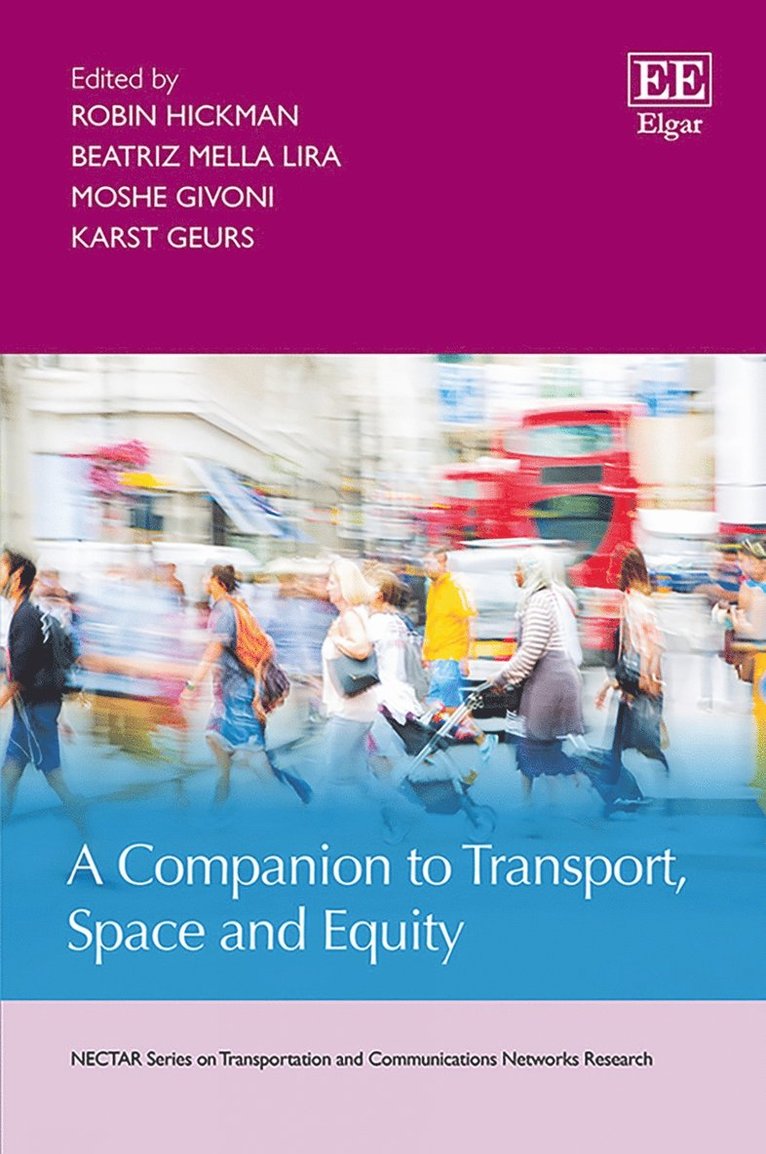
Employing international case studies to scrutinise the spatial and social equity impacts of transport systems and infrastructure, the contributors bring together wide-ranging empirical research to fill in the lacunae on social equity. This nuanced and comprehensive Companion examines transport investments, and related changes in accessibility, urban form and development, house prices and gentrification to better understand the complex relationships between transport and social equity. Drawing together competing perspectives, this book highlights the range and dimensions of the debate, the complexity and tensions, and the progression of the argument over time.
Provocative and comprehensive, this book will serve as an impressive guide for undergraduate and graduate students, as well as offering a detailed reference point for researchers and academics working on urban social equity. Consultants and policy makers overseeing transport infrastructure, city planning and wider public policy will also benefit from this book''s rigorous empirical approach to transport impacts.
1 857 kr
Skickas inom 5-8 vardagar
430 kr
Läs direkt efter köp
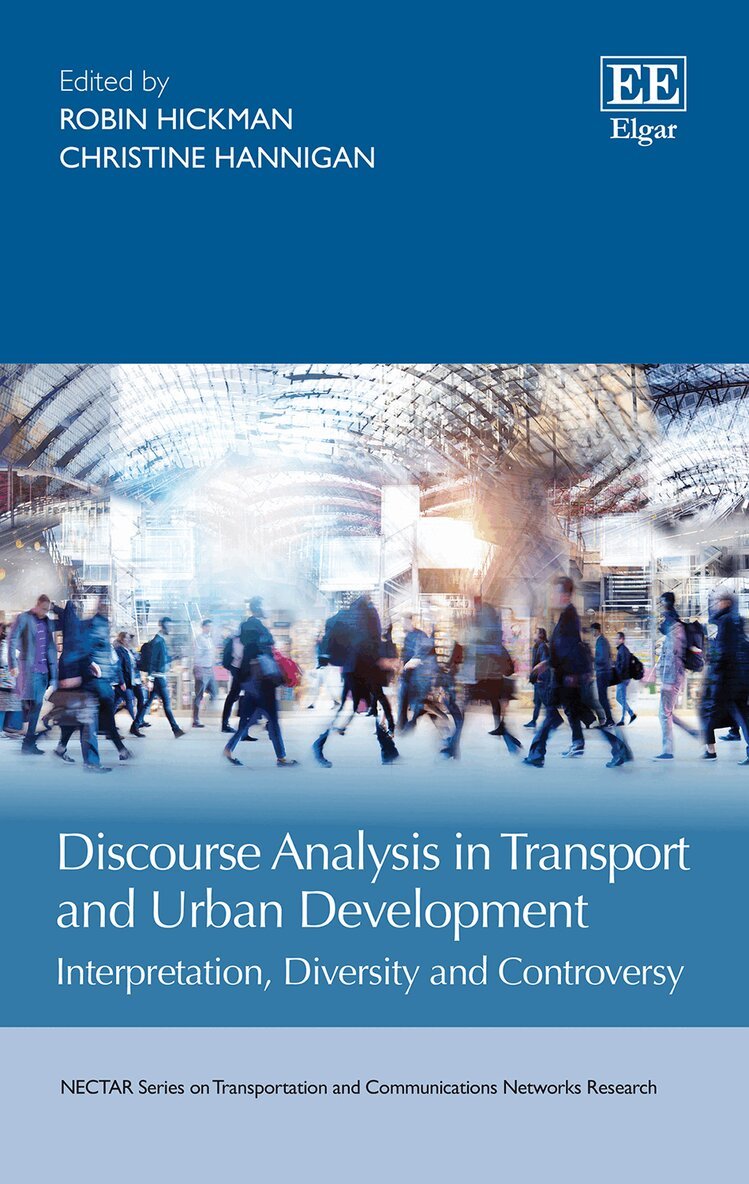
Combining theory with empirical case studies, this book breaks new ground in the field by critically engaging with an understanding of the different perspectives and subjectivities associated with transport systems and urban development projects. Incorporating the diverse wider societal and political contexts, various approaches to discourse analysis are examined, including content analysis, critical discourse analysis and Q methodology. Examining the narratives in transport and urban development, chapters study car advertising, highway reconstruction, public transport, bus provision, transit-orientated development and financialisation, walking and cycling networks, and emerging new technologies. Ultimately, the book argues that mainstream views and processes must be confronted in order to respond to contemporary public policy challenges, and makes a convincing case for the wider use of discourse analysis in transport and urban development research, planning and implementation.
Global in scope, this cutting-edge book will prove vital reading for students and scholars of transport planning and urban development. Its practical guidance will be useful to transport and development policymakers and practitioners working in urban and regional authorities, consultancies and civil society.