Robin Hörnig – författare
Visar alla böcker från författaren Robin Hörnig. Handla med fri frakt och snabb leverans.
3 produkter
3 produkter
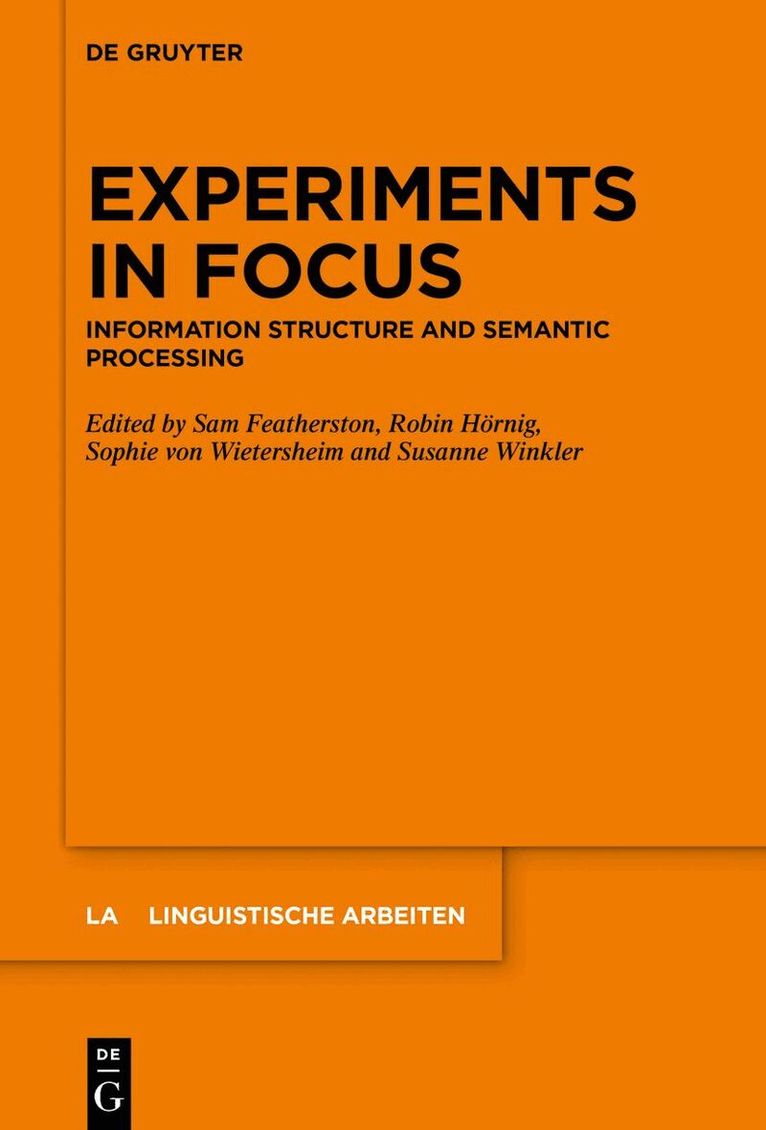
Inbunden, Engelska, 2019
1 729 kr
Skickas inom 5-8 vardagar
This volume presents new and cutting-edge research on the question of how we parse, interpret and understand language in more complex discourse settings. The challenge is to find empirical evidence on how information structure and semantic processing are related. Comprehensible answers are provided by showing how syntax, phonology, semantics and pragmatics interact and how they influence semantic processing and interpretation. The analysis of core information structural concepts that contribute to processing such as focus and contrast, the specific discourse status of referents that add to the common ground, context dependency and markedness as well as prosodic prominence and givenness marking has added new and convincing evidence to the research of information structure and semantic processing.
Häftad, Engelska, 2021
304 kr
Skickas inom 5-8 vardagar
This volume presents new and cutting-edge research on the question of how we parse, interpret and understand language in more complex discourse settings. The challenge is to find empirical evidence on how information structure and semantic processing are related. Comprehensible answers are provided by showing how syntax, phonology, semantics and pragmatics interact and how they influence semantic processing and interpretation. The analysis of core information structural concepts that contribute to processing such as focus and contrast, the specific discourse status of referents that add to the common ground, context dependency and markedness as well as prosodic prominence and givenness marking has added new and convincing evidence to the research of information structure and semantic processing.
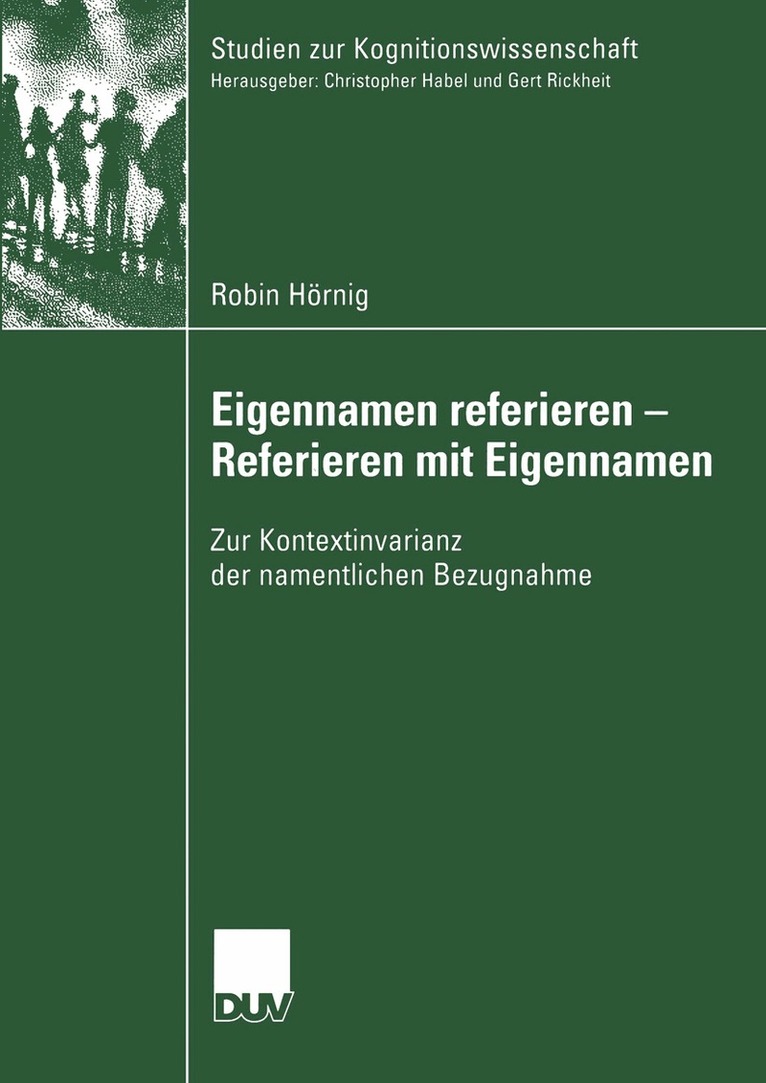
Häftad, Tyska, 2003
445 kr
Skickas inom 10-15 vardagar
Seit Freges "Der Morgenstern ist der Abendstern" bewegt sich die philosophisch-semantische Diskussion um die referentielle Funktion der Eigennamen im Spannungsfeld zwischen Epistemologie (a priori - a posteriori) und Metaphysik (notwendig - kontingent). Tendenziell wird aus kognitiver Sicht der epistemologischen Argumentation größere Bedeutung zugemessen und die Metaphysik in den Hintergrund geschoben. Robin Hörnig integriert Epistemologie und Metaphysik durch das Einbeziehen möglicher Welten und Kontexte im Rahmen von Kaplans zweistufiger Semantik. Er zeigt auf, dass sich die Ebene der Satzsemantik (Freges Gedanke) als unzureichend für die Repräsentation des Fregeschen Erkenntniswertes erweist und dass es einer Äußerungssemantik zur Repräsentation der Fregeschen Bedeutung bedarf. Das Äußerungsverstehen unterscheidet sich kognitiv signifikant vom Satzverstehen. Als Schlüsselproblem kristallisiert sich die Kontextinvarianz der namentlichen Bezugnahme heraus, das sich aus der Sprecher- und aus der Hörerperspektive nicht gleichermaßen stellt.