Robin J. Brooks – författare
Visar alla böcker från författaren . Handla med fri frakt och snabb leverans.
3 produkter
3 produkter
Häftad, Engelska, 2014
98 kr
Skickas
Berkshire began the Second World War in 1939 with virtually no military airfields. However, this quickly changed and a massive building programme was soon underway, initially intended to provide training facilities for bomber crews. As the newly built airfields became operational, some were taken over by the USAAF including Greenham Common, Membury and Welford and they were involved in the planning and eventual execution of operation Overlord, the Allied D-Day assault upon Fortress Europe. White Waltham near Maidenhead will always be remembered as the headquarters of the legendary Air Transport Auxiliary, whose male and then increasingly female pilots - including Amy Johnson - ferried every type of aircraft from the factories to the front line airfields. Not only did the ATA prove that girls had excellent flying skills, but also that they were capable of piloting solo the largest bombers. This book describes the history of each airfield, highlights some of the major operations carried out from them, and marks their overall contribution to the great war effort. The effects of the war on the daily lives of the people living in Berkshire are also described.Reading and Newbury in particular realised the constant dangers they faced from random daylight attacks by German planes. Robin Brook's action-packed account will bring back vivid memories for many. It is a sharp reminder of the time when the skies never ceased to throb with the drone of departing and returning aircraft.
Häftad, Engelska, 1996
179 kr
Skickas inom 11-20 vardagar
This meticulously researched, fully illustrated book contains a full account of the part played by Hampshire's airfields during World War II. The history of each airfield is remembered here, with details about the squadrons and aircraft based at them, and the main operations flown. The subject is brought vividly to life with evocative accounts, alongside photos of the airmen themselves and their aircraft.The effects of the war on the daily lives of civilians and the constant dangers from raids and night bombing are also detailed.In common with other counties in the south-east, Hampshire suffered badly from bomb damage during the Second World War, with Portsmouth quickly gaining the unenviable title of the most bombed city outside London. The city's naval base, along with nearby Southampton and its Spitfire manufacturing facility, bore the brunt of this onslaught.Also in the line of fire were the county's airfields. Many of those airfields are now just memories, but their previous life, during those dramatic and hectic times, is brought back to life in this book. From the large military airfields to the Advanced Landing Grounds and the Flight Testing airfields, they all played a part in forming the county's history.But this was also a war against the civilian population, for the Luftwaffe did not distinguish between military and civil targets. Bombs were dropped at random and thus the civilians of Hampshire saw the full horror of war.This book tells the story of those on active service as well as the civilians who died or were injured in the defence of their country.
Inbunden, Engelska, 2014
534 kr
Skickas
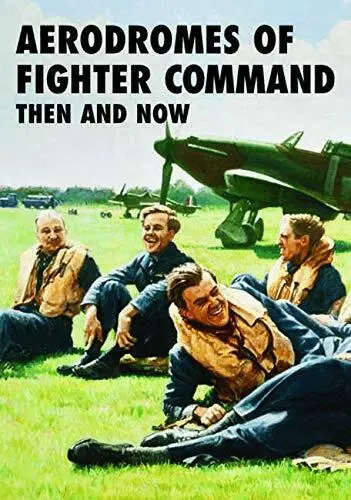
RAF Fighter Command was established in July 1936 to provide the airborne element in the defence of Britain against air attack. The aerodromes under the Command described in this book came under the control of several Groups: No. 9 in the west, No. 10 covering the south-west, No. 11 in the south-east, No. 12 on the eastern side of the country, and Nos. 13 and 14 protecting the extreme north. In this volume the activities of over 90 airfields are described and illustrated in our 'then and now' theme, both on the ground and from above. Many, having served their purpose, have returned to farmland leaving only odd vestiges to recall their former role as front-line fighter stations. Others have succumbed to the encroachment of housing or industry or even been totally expunged from the map through mining activities. On the other hand, a number have continued to be used as airfields, either for sport or business flying, and some continue as major airports with modern facilities. Sadly the post-war years have witnessed the slow decline of the RAF presence at so many of their former bases, two having closed during our research for this book. And some have found a new lease of life with the Army . . . or even the Ministry of Justice! All came into their own during the six years of war and the scars from that battle are still evident if one cares to look. Mouldering buildings from the former era remain as poignant reminders of the airmen and women who once habited them . . . now standing almost as memorials to the thousands who never came through. This is their story. 800 illustrations