Robyn Arianrhod – författare
Visar alla böcker från författaren Robyn Arianrhod. Handla med fri frakt och snabb leverans.
9 produkter
9 produkter
Inbunden, Engelska, 2024
323 kr
Skickas inom 3-6 vardagar
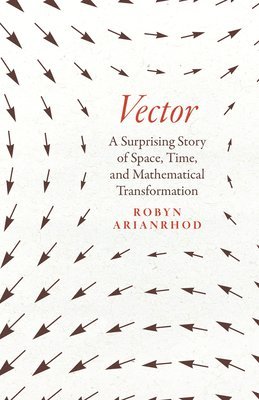
A celebration of the seemingly simple idea that allowed us to imagine the world in new dimensions—sparking both controversy and discovery. The stars of this book, vectors and tensors, are unlikely celebrities. If you ever took a physics course, the word “vector” might remind you of the mathematics needed to determine forces on an amusement park ride, a turbine, or a projectile. You might also remember that a vector is a quantity that has magnitude and (this is the key) direction. In fact, vectors are examples of tensors, which can represent even more data. It sounds simple enough—and yet, as award-winning science writer Robyn Arianrhod shows in this riveting story, the idea of a single symbol expressing more than one thing at once was millennia in the making. And without that idea, we wouldn’t have such a deep understanding of our world.Vector and tensor calculus offers an elegant language for expressing the way things behave in space and time, and Arianrhod shows how this enabled physicists and mathematicians to think in a brand-new way. These include James Clerk Maxwell when he ushered in the wireless electromagnetic age; Einstein when he predicted the curving of space-time and the existence of gravitational waves; Paul Dirac, when he created quantum field theory; and Emmy Noether, when she connected mathematical symmetry and the conservation of energy. For it turned out that it’s not just physical quantities and dimensions that vectors and tensors can represent, but other dimensions and other kinds of information, too. This is why physicists and mathematicians can speak of four-dimensional space-time and other higher-dimensional “spaces,” and why you’re likely relying on vectors or tensors whenever you use digital applications such as search engines, GPS, or your mobile phone.In exploring the evolution of vectors and tensors—and introducing the fascinating people who gave them to us—Arianrhod takes readers on an extraordinary, five-thousand-year journey through the human imagination. She shows the genius required to reimagine the world—and how a clever mathematical construct can dramatically change discovery’s direction.
Inbunden, Engelska, 2019
420 kr
Skickas inom 5-8 vardagar
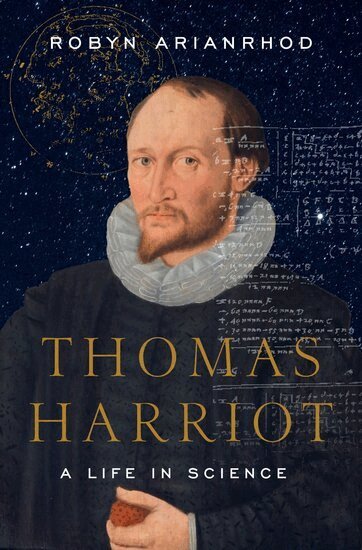
Thomas Harriot (1560-1621) was a pioneer in both the figurative and literal sense. Navigational adviser and loyal friend to Sir Walter Ralegh, Harriot took part in the first expedition to colonize Virginia. Not only was he responsible for getting Ralegh's ships safely to harbor in the New World, once there he became the first European to acquire a working knowledge of an indigenous language (he also began a lifelong love of tobacco, which may have been his undoing). Harriot's abilities were seemingly unlimited and nearly awe-inspiring. He was the first to use a telescope to map the moon's craters, and, independently of Galileo, discovered and recorded sunspots. He preceded Newton (whose fame eclipsed his) in his discovery of the properties of the prism. He was arguably the best mathematician of his age, and one of the finest experimental scientists of all time. Yet Harriot has traditionally remained a tantalizingly elusive character. He had no close family to pass down records, and few of his letters survive. Most importantly, he never published his scientific discoveries, and half a century after his death he had all but been forgotten. In recent decades, many (self-styled "Harrioteers") have become obsessed with restoring to Harriot his right place, but Robyn Arianrhod's biography is the first actually to do this, and she has done it the only way it can be done: through his science. Using Harriot's re-discovered manuscripts, Arianrhod illuminates the full extent of his achievements in science and physics, expertly guiding us through what makes them original and important, and the story behind them. Because he hadn't yet polished them for publication, Harriot's papers also proffer unique insight into the scientific process itself.Though his thinking depended on a more natural, intuitive approach than those who followed him, Harriot laid the foundations of what in Newton's time would become modern physics. Arianrhod's biography offers the human face of scientific discovery, a lived example of the way in which science actually progresses. Set against the backdrop of the Elizabethan world with all of its dramas and creative tensions--Harriot's years almost exactly overlap those of Shakespeare's--this biography gives proper due to one of history's most remarkable minds.
E-bok
PDF, Engelska, 2019252 kr
Läs direkt efter köp
As Robyn Arianrhod shows in this new biography, the most complete to date, Thomas Harriot was a pioneer in both the figurative and literal sense. Navigational adviser and loyal friend to Sir Walter Ralegh, Harriot--whose life was almost exactly contemporaneous to Shakespeare''s--took part in the first expedition to colonize Virginia in 1585. Not only was he responsible for getting Ralegh''s ships safely to harbor in the New World, he was also the first European to acquire a working knowledge of an indigenous language from what is today the US, and to record in detail the local people''s way of life. In addition to his groundbreaking navigational, linguistic, and ethnological work, Harriot was the first to use a telescope to map the moon''s surface, and, independently of Galileo, recorded the behavior of sunspots and discovered the law of free fall. He preceded Newton in his discovery of the properties of the prism and the nature of the rainbow, to name just two more of his unsung "firsts."Indeed many have argued that Harriot was the best mathematician of his age, and one of the finest experimental scientists of all time. Yet he has remained an elusive figure. He had no close family to pass down records, and few of his letters survive. Most importantly, he never published his scientific discoveries, and not long after his death in 1621 had all but been forgotten. In recent decades, many scholars have been intent on restoring Harriot to his rightful place in scientific history, but Arianrhod''s biography is the first to pull him fully into the limelight. She has done it the only way it can be done: through his science. Using Harriot''s re-discovered manuscripts, Arianrhod illuminates the full extent of his scientific and cultural achievements, expertly guiding us through what makes them original and important, and the story behind them. Harriot''s papers provide unique insight into the scientific process itself. Though his thinking depended on a more natural, intuitive approach than those who followed him, and who achieved the lasting fame that escaped him, Harriot helped lay the foundations of what in Newton''s time would become modern physics. Thomas Harriot: A Life in Science puts a human face to scientific inquiry in the Elizabethan and Jacobean worlds, and at long last gives proper due to the life and times of one of history''s most remarkable minds.
E-bok
Engelska, 2019252 kr
Läs direkt efter köp
As Robyn Arianrhod shows in this new biography, the most complete to date, Thomas Harriot was a pioneer in both the figurative and literal sense. Navigational adviser and loyal friend to Sir Walter Ralegh, Harriot--whose life was almost exactly contemporaneous to Shakespeare''s--took part in the first expedition to colonize Virginia in 1585. Not only was he responsible for getting Ralegh''s ships safely to harbor in the New World, he was also the first European to acquire a working knowledge of an indigenous language from what is today the US, and to record in detail the local people''s way of life. In addition to his groundbreaking navigational, linguistic, and ethnological work, Harriot was the first to use a telescope to map the moon''s surface, and, independently of Galileo, recorded the behavior of sunspots and discovered the law of free fall. He preceded Newton in his discovery of the properties of the prism and the nature of the rainbow, to name just two more of his unsung "firsts."Indeed many have argued that Harriot was the best mathematician of his age, and one of the finest experimental scientists of all time. Yet he has remained an elusive figure. He had no close family to pass down records, and few of his letters survive. Most importantly, he never published his scientific discoveries, and not long after his death in 1621 had all but been forgotten. In recent decades, many scholars have been intent on restoring Harriot to his rightful place in scientific history, but Arianrhod''s biography is the first to pull him fully into the limelight. She has done it the only way it can be done: through his science. Using Harriot''s re-discovered manuscripts, Arianrhod illuminates the full extent of his scientific and cultural achievements, expertly guiding us through what makes them original and important, and the story behind them. Harriot''s papers provide unique insight into the scientific process itself. Though his thinking depended on a more natural, intuitive approach than those who followed him, and who achieved the lasting fame that escaped him, Harriot helped lay the foundations of what in Newton''s time would become modern physics. Thomas Harriot: A Life in Science puts a human face to scientific inquiry in the Elizabethan and Jacobean worlds, and at long last gives proper due to the life and times of one of history''s most remarkable minds.
Häftad, Engelska, 2013
226 kr
Skickas inom 5-8 vardagar
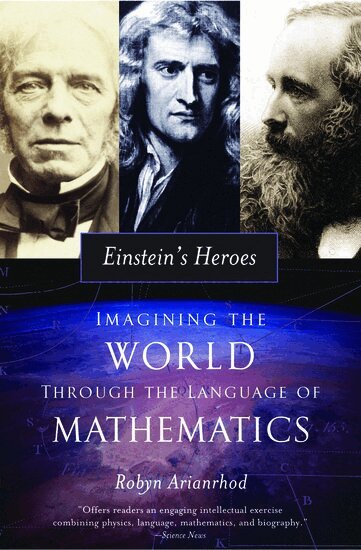
Imagine you are fluent in a magical language of prophecy, a language so powerful it can accurately describe things you cannot see or even imagine. Einstein's Heroes takes you on a journey of discovery about just such a miraculous language--the language of mathematics--one of humanity's most amazing accomplishments.Blending science, history, and biography, this remarkable book reveals the mysteries of mathematics, focusing on the life and work of three of Albert Einstein's heroes: Isaac Newton, Michael Faraday, and especially James Clerk Maxwell, whose work directly inspired the theory of relativity. Robyn Arianrhod bridges the gap between science and literature, portraying mathematics as a language and arguing that a physical theory is a work of imagination involving the elegant and clever use of this language. The heart of the book illuminates how Maxwell, using the language of mathematics in a new and radical way, resolved the seemingly insoluble controversy between Faraday's idea of lines of force and Newton's theory of action-at-a-distance. In so doing, Maxwell not only produced the first complete mathematical description of electromagnetism, but actually predicted the existence of the radio wave, teasing it out of the mathematical language itself.Here then is a fascinating look at mathematics: its colorful characters, its historical intrigues, and above all its role as the uncannily accurate language of nature.
Inbunden, Engelska, 2012
489 kr
Skickas inom 5-8 vardagar
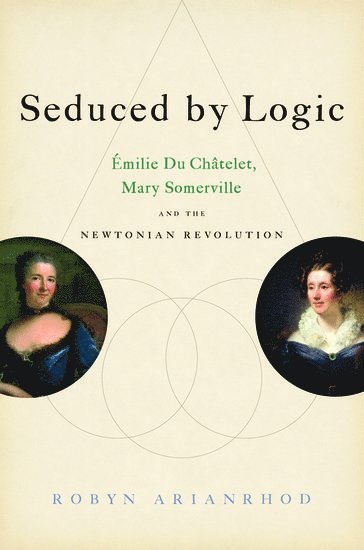
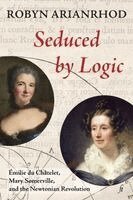
This is the fascinating story of two women who lives were guided by a passion for mathematics and an insatiable curiosity to know and understand the world around them -- the beautiful, outrageous Émilie du Châtelet and the charmingly subversive Mary Somerville. Against great odds, Émilie and Mary taught themselves mathematics, and did it so well that they each became a world authority on Newtonian mathematical physics.Seduced by Logic begins with Émilie du Châtelet, an 18th-century French aristocrat, intellectual, and Voltaire's lover, whose true ambition was to be a mathematician. She strove not only to further Newton's ideas in France, but to prove that they had French connections, including to the work of Descartes, whom Newton had read. She translated the great Principia Mathematica into French, in what became the accepted French version of Newton's work, and was instrumental in bringing Newton's revolutionary opus to a Continental audience. A century later, in Scotland, Mary Somerville taught herself mathematics and rose from genteel poverty to become a figure of authority on Newtonian physics. Living in France, she became acquainted with the work of one of Newton's protégés, Pierre Simon Laplace, and translated his six-volume Celestial Mechanics into English. It remained the standard astronomy text for the next century, and was considered the most influential work since Principia. Connected by their love for mathematics, Émilie and Mary bring to life a period of remarkable political and scientific change. Combining biography and history of science, Robyn Arianrhod's book explores the roles both women played in bringing Newton's Principia to a wider audience, and reveals the intimate links between the unfolding Newtonian revolution and the origins of intellectual and political liberty.
E-bok
PDF, Engelska, 2012440 kr
Läs direkt efter köp
Newton''s explanation of the natural law of universal gravity shattered the way mankind perceived the universe, and hence it was not immediately embraced. After all, how can anyone warm to a force that cannot be seen or touched? But for two women, separated by time and space but joined in their passion for Newtonian physics, the intellectual power of that force drove them to great achievements. Brilliant, determined, and almost entirely self-taught, they dedicated their lives to explaining and disseminating Newton''s discoveries.Robyn Arianrhod''s Seduced by Logic tells the story of Emilie du Chatelet and Mary Somerville, who, despite living a century apart, were connected by their love for mathematics and their places at the heart of the most advanced scientific society of their age. When Newton published his revolutionary theory of gravity, in his monumental Principia of 1687, most of his Continental peers rejected it for its reliance on physical observation and mathematical insight instead of religious or metaphysical hypotheses. But the brilliant French aristocrat and intellectual Emilie du Chatelet and some of her early eighteenth-century Enlightenment colleagues--including her lover, Voltaire--realized the Principia had changed everything, marking the beginning of theoretical science as a predictive, quantitative, and secular discipline. Emilie devoted herself to furthering Newton''s ideas in France, and her translation of the Principia is still the accepted French version of this groundbreaking work. Almost a century later, in Scotland, Mary Somerville taught herself mathematics and rose from genteel poverty to become a world authority on Newtonian physics. She was fêted by the famous French Newtonian, Pierre Simon Laplace, whose six-volume Celestial Mechanics was considered the greatest intellectual achievement since the Principia. Laplace''s work was the basis of Mary''s first book, Mechanism of the Heavens; it is a bittersweet irony that this book, written by a woman denied entry to university because of her gender, remained an advanced university astronomy text for the next century.Combining biography, history, and popular science, Seduced by Logic not only reveals the fascinating story of two incredibly talented women, but also brings to life a period of dramatic political and scientific change. With lucidity and skill, Arianrhod explains the science behind the story, and explores - through the lives of her protagonists - the intimate links between the unfolding Newtonian revolution and the development of intellectual and political liberty.
346 kr
Läs direkt efter köp
Newton''s explanation of the natural law of universal gravity shattered the way mankind perceived the universe, and hence it was not immediately embraced. After all, how can anyone warm to a force that cannot be seen or touched? But for two women, separated by time and space but joined in their passion for Newtonian physics, the intellectual power of that force drove them to great achievements. Brilliant, determined, and almost entirely self-taught, they dedicated their lives to explaining and disseminating Newton''s discoveries.Robyn Arianrhod''s Seduced by Logic tells the story of Emilie du Chatelet and Mary Somerville, who, despite living a century apart, were connected by their love for mathematics and their places at the heart of the most advanced scientific society of their age. When Newton published his revolutionary theory of gravity, in his monumental Principia of 1687, most of his Continental peers rejected it for its reliance on physical observation and mathematical insight instead of religious or metaphysical hypotheses. But the brilliant French aristocrat and intellectual Emilie du Chatelet and some of her early eighteenth-century Enlightenment colleagues--including her lover, Voltaire--realized the Principia had changed everything, marking the beginning of theoretical science as a predictive, quantitative, and secular discipline. Emilie devoted herself to furthering Newton''s ideas in France, and her translation of the Principia is still the accepted French version of this groundbreaking work. Almost a century later, in Scotland, Mary Somerville taught herself mathematics and rose from genteel poverty to become a world authority on Newtonian physics. She was fêted by the famous French Newtonian, Pierre Simon Laplace, whose six-volume Celestial Mechanics was considered the greatest intellectual achievement since the Principia. Laplace''s work was the basis of Mary''s first book, Mechanism of the Heavens; it is a bittersweet irony that this book, written by a woman denied entry to university because of her gender, remained an advanced university astronomy text for the next century.Combining biography, history, and popular science, Seduced by Logic not only reveals the fascinating story of two incredibly talented women, but also brings to life a period of dramatic political and scientific change. With lucidity and skill, Arianrhod explains the science behind the story, and explores - through the lives of her protagonists - the intimate links between the unfolding Newtonian revolution and the development of intellectual and political liberty.
Häftad, Engelska, 2024
231 kr
Skickas inom 5-8 vardagar