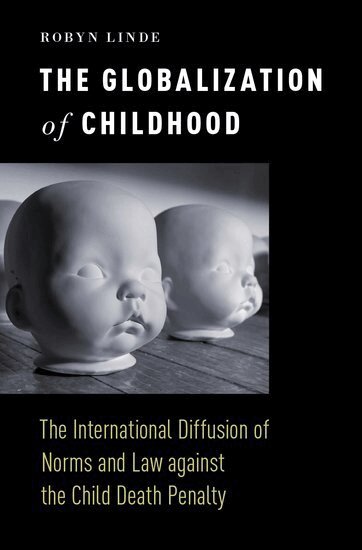
How does an idea that forms in the minds of a few activists in one part of the world become a global norm that nearly all states obey? How do human rights ideas spread? In this book, Robyn Linde tracks the diffusion of a single human rights norm: the abolition of the death penalty for child offenders under the age of 18. The norm against the penalty diffused internationally through law--specifically, criminal law addressing child offenders, usually those convicted of murder or rape. Through detailed case studies and a qualitative, comparative approach to national law and practice, Linde argues that children played an important--though little known--role in the process of state consolidation and the building of international order. This occured through the promotion of children as international rights holders and was the outcome of almost two centuries of activism. Through an innovative synthesis of prevailing theories of power and socialization, Linde shows that the growth of state control over children was part of a larger political process by which the liberal state (both paternal and democratic) became the only model of acceptable and legitimate statehood and through which newly minted international institutions would find purpose. The book offers insight into the origins, spread, and adoption of human rights norms and law by elucidating the roles and contributions of principled actors and norm entrepreneurs at different stages of diffusion, and by identifying a previously unexplored pattern of change whereby resistant states were brought into compliance with the now global norm against the child death penalty. From the institutions and legacy of colonialism to the development and promotion of the global child--a collection of related, still changing norms of child welfare and protection--Linde demonstrates how a specifically Western conception of childhood and ideas about children shaped the current international system.
The role of nongovernmental organizations (NGOs) in international politics has changed significantly in the two decades since the first edition of this book was published. This new edition explores that role, including new chapters and updated data - and using examples such as the Covid-19 pandemic, Russia’s invasion of Ukraine, thehumanitarian crisis in Gaza, earthquake relief in Syria and Turkey, refugee crises in Mexico and Uganda, current lobbying efforts in the US and UN, and much more - to highlight the current relevance of the topic.In sum, NGOs in International Politics surveys the full spectrum of NGO actors, activities, and relationships in a manner that is both accessible and comprehensive.Praise for the previous edition:“A good balance of theory and illustrative case examples. [The authors] successfully condense a great deal of complex infomation into simple concepts.” — Voluntas“An excellent introduction to the significance of nongovernmental organizations.... The authors have framed a foundational work useful to students and scholars in the field.” — Linda L. M. Bennet, University of Southern Indiana“A thoughtful, in-depth survey of the explosive popularity of nongovernmental organizations.” — Midwest Book Review
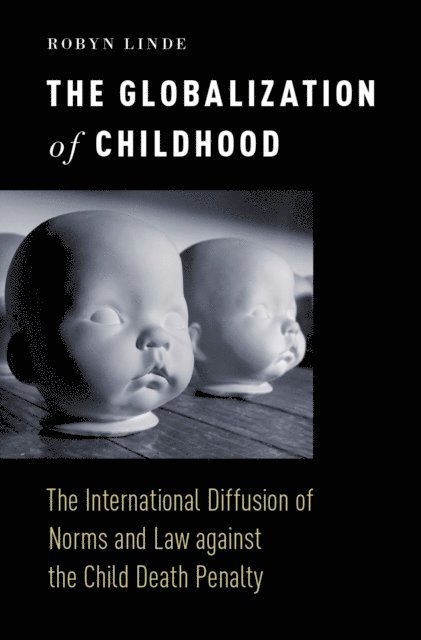
How does an idea that forms in the minds of a few activists in one part of the world become a global norm that nearly all states obey? How do human rights ideas spread? In this book, Robyn Linde tracks the diffusion of a single human rights norm: the abolition of the death penalty for child offenders under the age of 18. The norm against the penalty diffused internationally through law--specifically, criminal law addressing child offenders, usually those convicted of murder or rape. Through detailed case studies and a qualitative, comparative approach to national law and practice, Linde argues that children played an important--though little known--role in the process of state consolidation and the building of international order. This occured through the promotion of children as international rights holders and was the outcome of almost two centuries of activism. Through an innovative synthesis of prevailing theories of power and socialization, Linde shows that the growth of state control over children was part of a larger political process by which the liberal state (both paternal and democratic) became the only model of acceptable and legitimate statehood and through which newly minted international institutions would find purpose. The book offers insight into the origins, spread, and adoption of human rights norms and law by elucidating the roles and contributions of principled actors and norm entrepreneurs at different stages of diffusion, and by identifying a previously unexplored pattern of change whereby resistant states were brought into compliance with the now global norm against the child death penalty. From the institutions and legacy of colonialism to the development and promotion of the global child--a collection of related, still changing norms of child welfare and protection--Linde demonstrates how a specifically Western conception of childhood and ideas about children shaped the current international system.
The role of nongovernmental organizations (NGOs) in international politics has changed significantly in the two decades since the first edition of this book was published. This new edition explores that role, including new chapters and updated data - and using examples such as the Covid-19 pandemic, Russia’s invasion of Ukraine, thehumanitarian crisis in Gaza, earthquake relief in Syria and Turkey, refugee crises in Mexico and Uganda, current lobbying efforts in the US and UN, and much more - to highlight the current relevance of the topic.In sum, NGOs in International Politics surveys the full spectrum of NGO actors, activities, and relationships in a manner that is both accessible and comprehensive.Praise for the previous edition:“A good balance of theory and illustrative case examples. [The authors] successfully condense a great deal of complex infomation into simple concepts.” — Voluntas“An excellent introduction to the significance of nongovernmental organizations.... The authors have framed a foundational work useful to students and scholars in the field.” — Linda L. M. Bennet, University of Southern Indiana“A thoughtful, in-depth survey of the explosive popularity of nongovernmental organizations.” — Midwest Book Review