Rochelle Lieber - Böcker
Visar alla böcker från författaren Rochelle Lieber. Handla med fri frakt och snabb leverans.
18 produkter
18 produkter
7 065 kr
Skickas inom 5-8 vardagar
The field of morphology has gained expanded importance in contemporary linguistics with the realization that it can no longer be narrowly construed as the study of the means by which complex words are formed. Rather, the study of morphology must be situated in the context of our understanding of the mental lexicon as a whole. The Oxford Encyclopedia of Morphology offers a sweeping introduction to the field, showing that morphology is not only an active area of study in its own right, but also a critical link between different subfields of linguistics.Led by Editor in Chief Rochelle Lieber and an editorial board of international experts, this collection includes 115 wide-ranging and in-depth articles, encompassing all aspects of morphology, such as morphological units, inflection, derivation, compounding, and formal morphological means. Contributors at the forefront of the field discuss the major theoretical debates and methodological approaches, exploring the interface between morphology and phonology, syntax, and semantics, along with psycholinguistic, neurolinguistics, and sociolinguistic issues. The final section of the encyclopedia presents illustrative sketches of the morphological systems of a wide range of language families, from Arawak and Dravidian to Sino-Tibetan and Indo-European, offering a wide range of cross-linguistic data that will be useful to both researchers and teachers.
917 kr
Skickas inom 7-10 vardagar
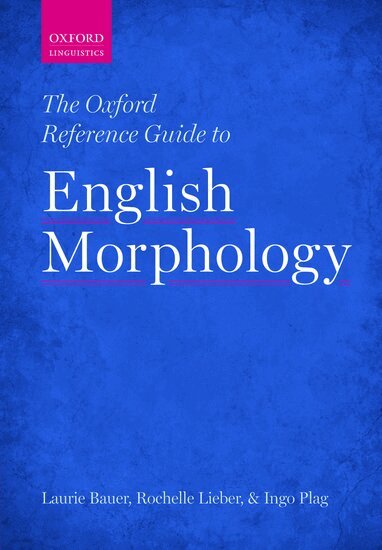
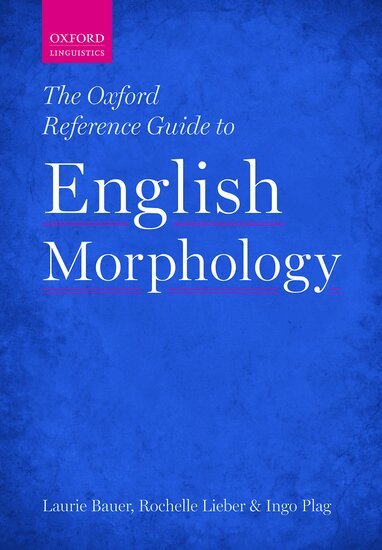
This volume presents a data-rich description of English inflection and word-formation. Based on large corpora including the Corpus of Contemporary American English and the British national Corpus, it is the first comprehensive treatment of contemporary English morphology that includes both inflection and word-formation. It covers not only well-studied topics such as compounding, conversion, and the inflection and derivation of nouns and verbs, but also areas that have received less scholarly attention, such as the formation of adjectives, locatives, negatives, evaluatives, neoclassical compounds and blends, among many other topics. Equal wieght is given to form and meaning. The volume also contains sections devoted to phonological and orthographics aspects of morphology and to combinatorial and paradigmatic properties of English morphology. It ends with a series of chapters that assess the implications of English morphology for morphological theory, discussing topics such as stratification, blocking and comprtition, the analysis of conversion, and the relationship between inflection and derivation.Winner of the 2015 Bloomfield Book Award and written by three outstanding scholars, this outstanding book will interest all scholars and students of English and of linguistic morphology more generally.
643 kr
Skickas inom 5-8 vardagar
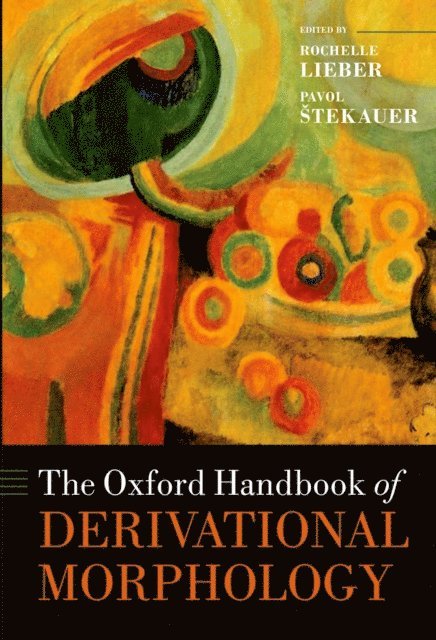
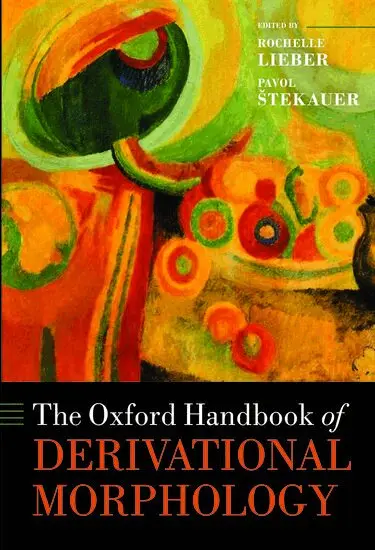
The Oxford Handbook of Derivational Morphology is intended as a companion volume to The Oxford Handbook of Compounding (OUP 2009) Written by distinguished scholars, its 41 chapters aim to provide a comprehensive and thorough overview of the study of derivational morphology.The handbook begins with an overview and a consideration of definitional matters, distinguishing derivation from inflection on the one hand and compounding on the other. From a formal perspective, the handbook treats affixation (prefixation, suffixation, infixation, circumfixation, etc.), conversion, reduplication, root and pattern and other templatic processes, as well as prosodic and subtractive means of forming new words. From a semantic perspective, it looks at the processes that form various types of adjectives, adverbs, nouns, and verbs, as well as evaluatives and the rarer processes that form function words. The book also surveys derivation in fifteen language families that are widely dispersed in terms of both geographical location and typological characteristics.
1 944 kr
Skickas inom 5-8 vardagar
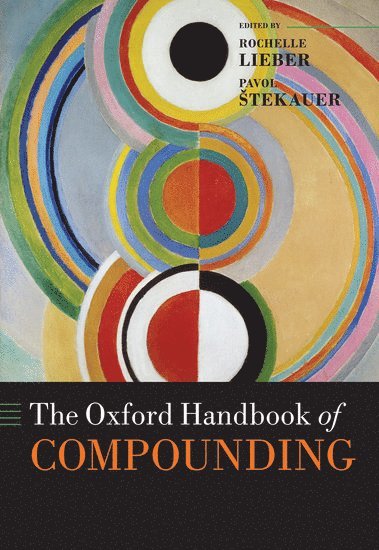
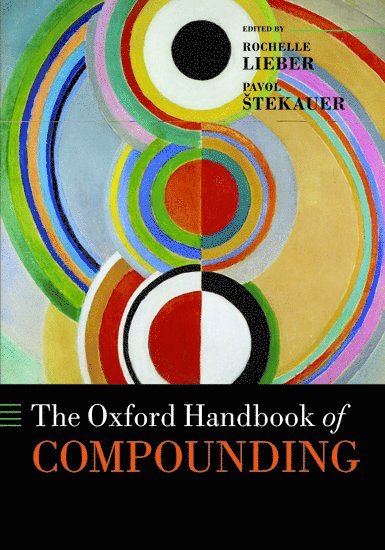
This book presents a comprehensive review of theoretical work on the linguistics and psycholinguistics of compound words and combines it with a series of surveys of compounding in a variety of languages from a wide range of language families. Compounding is an effective way to create and express new meanings. Compound words are segmentable into their constituents so that new items can often be understood on first presentation. However, as keystone, keynote, and keyboard, and breadboard, sandwich-board, and mortarboard show, the relation between components is often far from straightforward. The question then arises, as to how far compound sequences are analysed at each encounter and how far they are stored in the brain as single lexical items? The nature and processing of compounds thus offer an unusually direct route to how language operates in the mind, as well as providing the means of investigating important aspects of morphology, and lexical semantics, and insights to child language acquisition and the organization of the mental lexicon. This book is the first to report on the state of the art on these and other central topics, including the classification and typology of compounds, and cross-linguistic research on the subject in different frameworks and from synchronic and diachronic perspectives.
1 944 kr
Skickas inom 5-8 vardagar
This book presents a comprehensive, data-rich, theory-neutral description of English word formation, including inflection and derivation, compounding, conversion, and such minor processes as subtractive morphology. It also offers analyses of the theoretical challenges these phenomena present. It is the first to make systematic use of large linguistic corpora, including the Corpus of Contemporary American English, the British National Corpus, and the American National Corpus by which, for example, the authors are able to measure the productivity of different patterns and to trace semantic developments as they happen. After setting out their methodology and theoretical assumptions, the authors describe word formation and inflection in contemporary English. They give equal weight to form and meaning and cover nominalizations, agentive forms, comparatives, root and synthetic compounds, as well as more recondite topics such as the abstract noun-forming suffixes -hood, -dom, and -ship, neoclassical compounds, and the morphology of numbers. They examine the relations between orthography and phonological form. While their focus is on contemporary morphology, they trace the history of phenomena wherever doing so helps to understand and explain current form and function. The final part of the book shows how the data assembled within it bear on current theoretical issues and reveal new lines of research. This outstanding book will interest all scholars and students of English and of linguistic morphology more generally.
1 989 kr
Skickas inom 5-8 vardagar
The Oxford Handbook of Derivational Morphology is intended as a companion volume to the Oxford Handbook of Compounding (OUP 2009), aiming to provide a comprehensive and thorough overview of the study of derivational morphology. Written by distinguished scholars, its 41 chapters are devoted to theoretical and definitional matters, formal and semantic issues, interdisciplinary connections, and detailed descriptions of derivational processes in a wide range of language families. It presents the reader with the current state of the art in the study of derivational morphology. The handbook begins with an overview and a consideration of definitional matters, distinguishing derivation from inflection on the one hand and compounding on the other. From a formal perspective, the handbook treats affixation (prefixation, suffixation, infixation, circumfixation, etc.), conversion, reduplication, root and pattern and other templatic processes, as well as prosodic and subtractive means of forming new words. From a semantic perspective, it looks at the processes that form various types of adjectives, adverbs, nouns, and verbs, as well as evaluatives and the rarer processes that form function words. Chapters are devoted to issues of theory, methodology, the historical development of derivation, and to child language acquisition, sociolinguistic, experimental, and psycholinguistic approaches. The second half of the book surveys derivation in fifteen language families that are widely dispersed in terms of both geographical location and typological characteristics. It ends with a consideration of both areal tendencies in derivation and the issue of universals.
709 kr
Skickas inom 7-10 vardagar
This book presents a comprehensive review of theoretical work on the linguistics and psycholinguistics of compound words and combines it with a series of surveys of compounding in a variety of languages from a wide range of language families. Compounding is an effective way to create and express new meanings. Compound words are segmentable into their constituents so that new items can often be understood on first presentation. However, as keystone, keynote, and keyboard, and breadboard, sandwich-board, and mortarboard show, the relation between components is often far from straightforward. The question then arises as to how far compound sequences are analysed at each encounter and how far they are stored in the brain as single lexical items. The nature and processing of compounds thus offer an unusually direct route to how language operates in the mind, as well as providing the means of investigating important aspects of morphology, and lexical semantics, and insights to child language acquisition and the organization of the mental lexicon. This book is the first to report on the state of the art on these and other central topics, including the classification and typology of compounds, and approaches to cross-linguistic research on the subject from generative and non-generative, synchronic and diachronic perspectives.
988 kr
Tillfälligt slut
One of the major contributions to theoretical linguistics during the twentieth century has been an advancement of our understanding that the information-bearing units which make up human language are organized on a hierarchy of levels. It has been an overarching goal of research since the 1930s to determine the precise nature of those levels and what principles guide interactions among them. Linguists have typically posited phonological, morphological, and syntactic levels, each with its own distinct vocabulary and organizing principles, but in Deconstructing Morphology Rochelle Lieber persuasively challenges the existence of a morphological level of language. Her argument, that rules and vocabulary claimed to belong to the morphological level in fact belong to the levels of syntax and phonology, follows the work of Sproat, Toman, and others. Her study, however, is the first to draw jointly on Chomsky's Government-Binding Theory of syntax and on recent research in phonology.Ranging broadly over data from many languages--including Tagalog, English, French, and Dutch--Deconstructing Morphology addresses key questions in current morphological and phonological research and provides an innovative view of the overall architecture of grammar.
441 kr
Skickas inom 7-10 vardagar
Morphology and Lexical Semantics explores the meanings of morphemes and how they combine to form the meanings of complex words, including derived words (writer, unionise), compounds (dog bed, truck driver) and words formed by conversion. Rochelle Lieber discusses the lexical semantics of word formation in a systematic way, allowing the reader to explore the nature of affixal polysemy, the reasons why there are multiple affixes with the same function and the issues of mismatch between form and meaning in word formation. Using a series of case studies from English, this book develops and justifies the theoretical apparatus necessary for raising and answering many questions about the semantics of word formation. Distinguishing between a lexical semantic skeleton that is featural and hierarchically organised and a lexical semantic body that is holistic, it shows how the semantics of word formation has a paradigmatic character.
1 363 kr
Skickas inom 7-10 vardagar
Morphology and Lexical Semantics explores the meanings of morphemes and how they combine to form the meanings of complex words, including derived words (writer, unionise), compounds (dog bed, truck driver) and words formed by conversion. Rochelle Lieber discusses the lexical semantics of word formation in a systematic way, allowing the reader to explore the nature of affixal polysemy, the reasons why there are multiple affixes with the same function and the issues of mismatch between form and meaning in word formation. Using a series of case studies from English, this book develops and justifies the theoretical apparatus necessary for raising and answering many questions about the semantics of word formation. Distinguishing between a lexical semantic skeleton that is featural and hierarchically organised and a lexical semantic body that is holistic, it shows how the semantics of word formation has a paradigmatic character.
382 kr
Tillfälligt slut
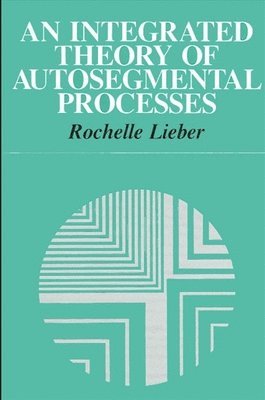
This volume resolves an inconsistency that has arisen in the autosegmental theory of phonology and morphology - some versions of this theory allow a single distinctive feature to be duplicated on more than one tier, and others do not. In this book the author affirms that duplication of features should be allowed, but should not be restricted, by a device called the Duplicate Features Filter. She proposes a number of other revisions to current autosegmental theory, and shows how this unified theory can lead to elegant and revealing analyses of such varied phenomena as consonant mutation, umlaut, infixation and the behavior of depressor consonants in tone languages, and vowel and consonant harmony processes. Languages as diverse as Khalka Mongolian, modern German, Zulu, Andalusian Spanish, Terena, Mixtec, Chumash, Fula, Nuer, and Chemehuevi are discussed.Integrated autosegmental theory draws together diverse linguistic phenomena and reveals underlying similarities among them. The result is a concise and detailed work which brings the phenomena of autosegmental phonology and morphology into a single cohesive framework.
Del 150 - Cambridge Studies in Linguistics
English Nouns
The Ecology of Nominalization
Inbunden, Engelska, 2016
1 417 kr
Skickas inom 7-10 vardagar
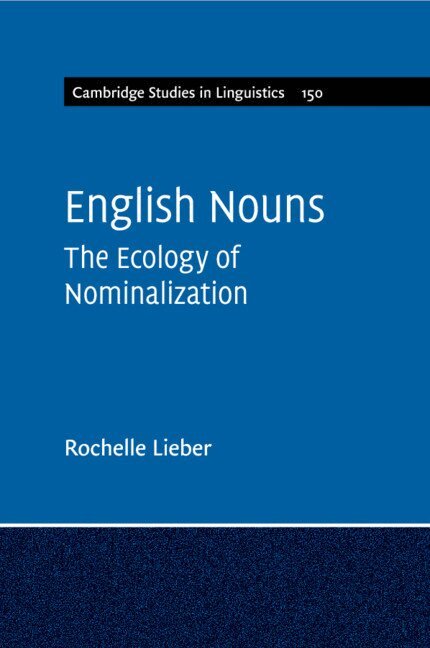
Using extensive data from the Corpus of Contemporary American English (Davies, 2008), this groundbreaking book shows that the syntactic patterns in which English nominalizations can be found and the range of possible readings they can express are very different from what has been claimed in past theoretical treatments, and therefore that previous treatments cannot be correct. Lieber argues that the relationship between form and meaning in the nominalization processes of English is virtually never one-to-one, but rather forms a complex web that can be likened to a derivational ecosystem. Using the Lexical Semantic Framework (LSF), she develops an analysis that captures the interrelatedness and context dependence of nominal readings, and suggests that the key to the behavior of nominalizations is that their underlying semantic representations are underspecified in specific ways and that their ultimate interpretation must be fixed in context using processes available within the LSF.
398 kr
Skickas inom 5-8 vardagar
Morphology is the study of how words are put together. A lively introduction to the subject, this textbook is intended for undergraduates with relatively little background in linguistics. Providing data from a wide variety of languages, it includes hands-on activities such as 'challenge' boxes, designed to encourage students to gather their own data and analyze it, work with data on websites, perform simple experiments, and discuss topics with each other. There is also an extensive introduction to the terms and concepts necessary for analyzing words. Unlike other textbooks it anticipates the question 'is it a real word?' and tackles it head on by looking at the distinction between dictionaries and the mental lexicon. This second edition has been thoroughly updated, including new examples and exercises as well as a detailed introduction to using linguistic corpora to find and analyze morphological data.
1 116 kr
Skickas inom 7-10 vardagar
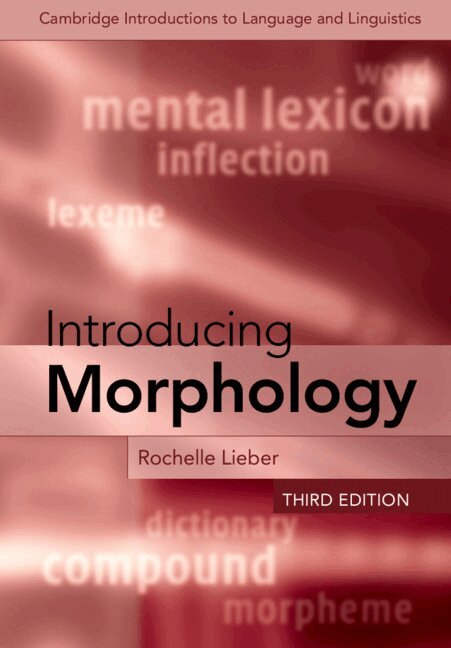
A lively introduction to morphology, this textbook is intended for undergraduates with relatively little background in linguistics. It shows students how to find and analyze morphological data and presents them with basic concepts and terminology concerning the mental lexicon, inflection, derivation, morphological typology, productivity, and the interfaces between morphology and syntax on the one hand and phonology on the other. By the end of the text students are ready to understand morphological theory and how to support or refute theoretical proposals. Providing data from a wide variety of languages, the text includes hands-on activities designed to encourage students to gather and analyse their own data. The third edition has been thoroughly updated with new examples and exercises. Chapter 2 now includes an updated detailed introduction to using linguistic corpora, and there is a new final chapter covering several current theoretical frameworks.
368 kr
Skickas inom 7-10 vardagar
A lively introduction to morphology, this textbook is intended for undergraduates with relatively little background in linguistics. It shows students how to find and analyze morphological data and presents them with basic concepts and terminology concerning the mental lexicon, inflection, derivation, morphological typology, productivity, and the interfaces between morphology and syntax on the one hand and phonology on the other. By the end of the text students are ready to understand morphological theory and how to support or refute theoretical proposals. Providing data from a wide variety of languages, the text includes hands-on activities designed to encourage students to gather and analyse their own data. The third edition has been thoroughly updated with new examples and exercises. Chapter 2 now includes an updated detailed introduction to using linguistic corpora, and there is a new final chapter covering several current theoretical frameworks.
Del 150 - Cambridge Studies in Linguistics
English Nouns
The Ecology of Nominalization
Häftad, Engelska, 2018
672 kr
Skickas inom 7-10 vardagar
Using extensive data from the Corpus of Contemporary American English (Davies, 2008), this groundbreaking book shows that the syntactic patterns in which English nominalizations can be found and the range of possible readings they can express are very different from what has been claimed in past theoretical treatments, and therefore that previous treatments cannot be correct. Lieber argues that the relationship between form and meaning in the nominalization processes of English is virtually never one-to-one, but rather forms a complex web that can be likened to a derivational ecosystem. Using the Lexical Semantic Framework (LSF), she develops an analysis that captures the interrelatedness and context dependence of nominal readings, and suggests that the key to the behavior of nominalizations is that their underlying semantic representations are underspecified in specific ways and that their ultimate interpretation must be fixed in context using processes available within the LSF.
2 399 kr
Skickas inom 10-15 vardagar
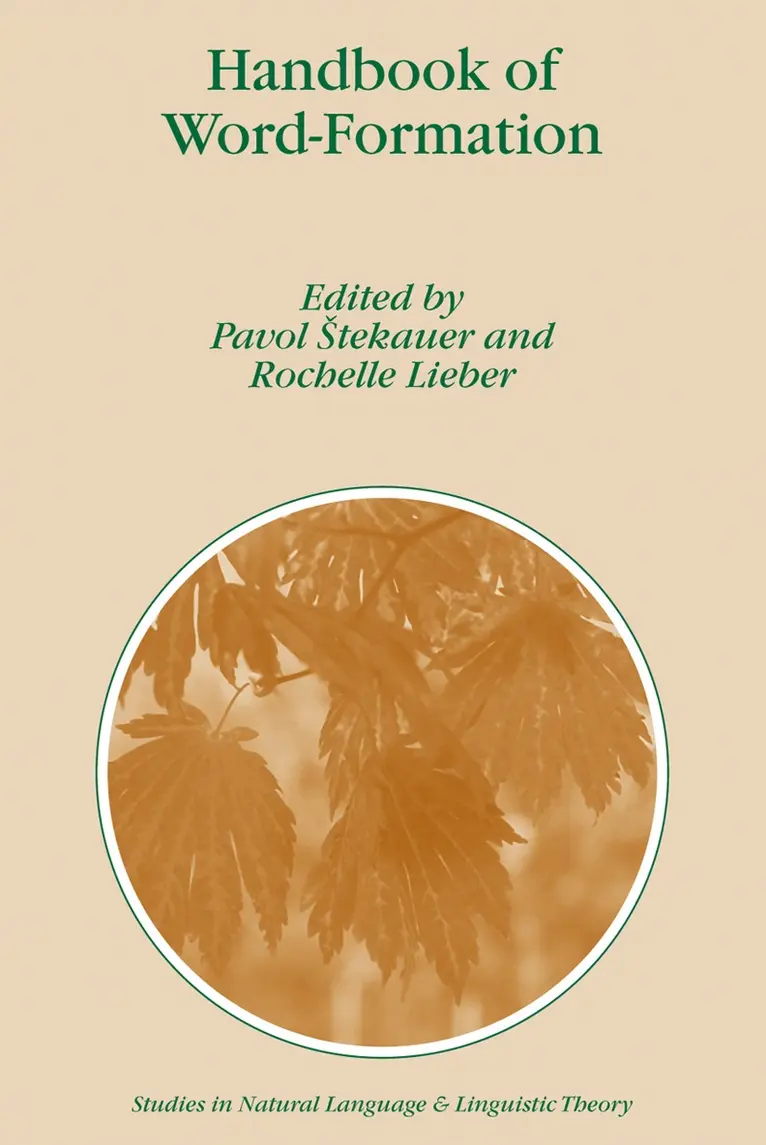
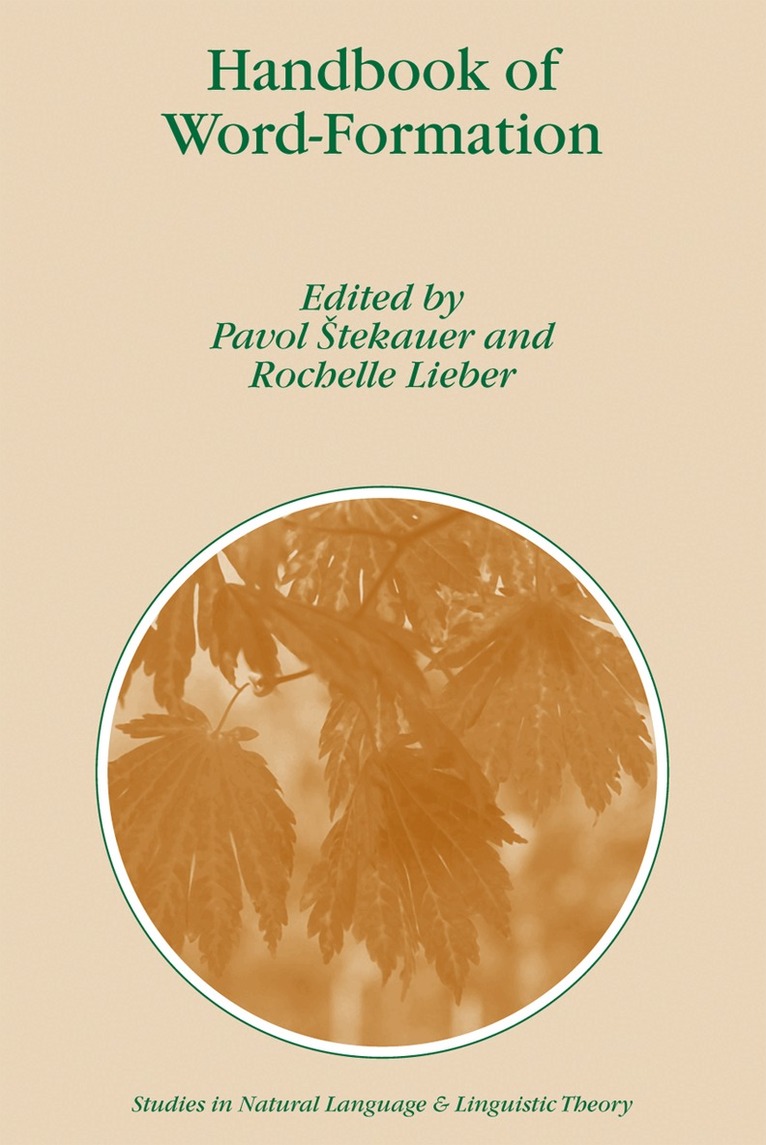
xiv 4. Final remarks 349 PETER HOHENHAUS: LEXICALIZATI ION AND INSTITUTIONALIZATION TITUTIONALIZATION 353 1. Introduction 353 2. Lexicalization 353 2. 1 LEXICALIZATION IN A DIACHRONIC SENSE 353 2. 2 LEXICALIZATION IN A SYNCHRONIC SENSE: LISTING/LISTEDNESS 356 2. 3 THE LEXICON AND THEORIESOF WORD-FORMATION 357 3. Institutionalization359 3. 1 TERMINOLOGY 359 3. 2 IDEAL AND REAL SPEAKERS AND THE SPEECH COMMUNITY 360 3. 3 DE-INSTITUTIONALIZATION: THE END OF A WORD’S LIFE 362 4. Problems 363 4. 1 NONCE-FORMATIONS AND NEOLOGISMS 363 4. 2 (NON-)LEXICALIZABILITY 365 4. 3 WHAT IS IN THE (MENTAL) LEXICON AND HOW DOES IT GET THERE? 367 4. 4 UNPREDICTABLE & PLAYFUL FORMATIONS, ANALOGY, FADS, AND NEW DEVELOPMENTS 369 4. 5 LEXICALIZATION BEYOND WORDS 370 ROCHELLE LIEBER: ENGLISH WORD-FORMATION PROCESSES 375 1. Introduction 375 2. Compounding 375 2. 1 DETERMINING WHAT COUNTS AS A COMPOUND 376 2. 2 ROOT COMPOUNDING 378 2. 3 SYNTHETIC COMPOUNDING 379 2. 4 STRUCTURE AND INTERPRETATION 379 3. Derivation 383 3. 1 PREFIXATION 390 3. 1. 1 Negative prefixes (un-, in-, non-, de-, dis-) 391 3. 1. 2 Locational prefixes 393 3. 1. 3 Temporal and aspectual prefixes 400 3. 1. 4 Quantitative prefixes 402 CONTENTS xv 3. 1. 5 Verbal prefixes 402 3. 2 SUFFIXATION 403 3. 2. 1 Personal nouns 403 3. 2. 2 Abstract nouns 406 3. 2. 3 Verb-forming suffixes 410 3. 2. 4 Adjective-forming suffixes 413 3. 2. 5 Collectives 417 3. 3 CONCLUSION 418 4. Conversion 418 5.
2 399 kr
Skickas inom 10-15 vardagar
xiv 4. Final remarks 349 PETER HOHENHAUS: LEXICALIZATI ION AND INSTITUTIONALIZATION TITUTIONALIZATION 353 1. Introduction 353 2. Lexicalization 353 2. 1 LEXICALIZATION IN A DIACHRONIC SENSE 353 2. 2 LEXICALIZATION IN A SYNCHRONIC SENSE: LISTING/LISTEDNESS 356 2. 3 THE LEXICON AND THEORIESOF WORD-FORMATION 357 3. Institutionalization359 3. 1 TERMINOLOGY 359 3. 2 IDEAL AND REAL SPEAKERS AND THE SPEECH COMMUNITY 360 3. 3 DE-INSTITUTIONALIZATION: THE END OF A WORD’S LIFE 362 4. Problems 363 4. 1 NONCE-FORMATIONS AND NEOLOGISMS 363 4. 2 (NON-)LEXICALIZABILITY 365 4. 3 WHAT IS IN THE (MENTAL) LEXICON AND HOW DOES IT GET THERE? 367 4. 4 UNPREDICTABLE & PLAYFUL FORMATIONS, ANALOGY, FADS, AND NEW DEVELOPMENTS 369 4. 5 LEXICALIZATION BEYOND WORDS 370 ROCHELLE LIEBER: ENGLISH WORD-FORMATION PROCESSES 375 1. Introduction 375 2. Compounding 375 2. 1 DETERMINING WHAT COUNTS AS A COMPOUND 376 2. 2 ROOT COMPOUNDING 378 2. 3 SYNTHETIC COMPOUNDING 379 2. 4 STRUCTURE AND INTERPRETATION 379 3. Derivation 383 3. 1 PREFIXATION 390 3. 1. 1 Negative prefixes (un-, in-, non-, de-, dis-) 391 3. 1. 2 Locational prefixes 393 3. 1. 3 Temporal and aspectual prefixes 400 3. 1. 4 Quantitative prefixes 402 CONTENTS xv 3. 1. 5 Verbal prefixes 402 3. 2 SUFFIXATION 403 3. 2. 1 Personal nouns 403 3. 2. 2 Abstract nouns 406 3. 2. 3 Verb-forming suffixes 410 3. 2. 4 Adjective-forming suffixes 413 3. 2. 5 Collectives 417 3. 3 CONCLUSION 418 4. Conversion 418 5.