Rod A. Martin - Böcker
789 kr
Skickas inom 7-10 vardagar
Research on humor is carried out in a number of areas in psychology, including the cognitive (What makes something funny?), developmental (when do we develop a sense of humor?), and social (how is humor used in social interactions?) Although there is enough interest in the area to have spawned several societies, the literature is dispersed in a number of primary journals, with little in the way of integration of the material into a book.
Dr. Martin is one of the best known researchers in the area, and his research goes across subdisciplines in psychology to be of wide appeal. This is a singly authored monograph that provides in one source, a summary of information researchers might wish to know about research into the psychology of humor. The material is scholarly, but the presentation of the material is suitable for people unfamiliar with the subject-making The Psychology of Humor suitable for use for advanced undergraduate and graduate level courses on the psychology of humor-which have not had a textbook source.
2007 AATH Book Award for Humor/Laughter Research category!
Up-to-date coverage of research on humor and laughter in every area of psychology Research findings are integrated into a coherent conceptual framework Includes recent brain imaging studies, evolutionary models, and animal research Draws on contributions from sociology, linguistics, neuroscience, and anthropology Provides an overview of theories of humor and early research Explores applications of humor in psychotherapy, education, and the workplace Points out interesting topics for further research and promising research methodologies Written in a scholarly yet easily accessible style 2007 AATH Book Award for Humor/Laughter Research category659 kr
Skickas inom 7-10 vardagar
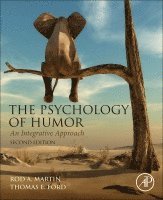
Most of us laugh at something funny multiple times during a typical day. Humor serves multiple purposes, and although there is a sizable and expanding research literature on the subject, the research is spread in a variety of disciplines. The Psychology of Humor, 2e reviews the literature, integrating research from across subdisciplines in psychology, as well as related fields such as anthropology, biology, computer science, linguistics, sociology, and more. This book begins by defining humor and presenting theories of humor. Later chapters cover cognitive processes involved in humor and the effects of humor on cognition. Individual differences in personality and humor are identified as well as the physiology of humor, the social functions of humor, and how humor develops and changes over the lifespan. This book concludes noting the association of humor with physical and mental health, and outlines applications of humor use in psychotherapy, education, and the workplace.
In addition to being fully updated with recent research, the second edition includes a variety of new materials. More graphs, tables, and figures now illustrate concepts, processes, and theories. It provides new brief interviews with prominent humor scholars via text boxes. The end of each chapter now includes a list of key concepts, critical thinking questions, and a list of resources for further reading.
Covers research on humor and laughter in every area of psychology Integrates research findings into a coherent conceptual framework Includes brain imaging studies, evolutionary models, and animal research Integrates related information from sociology, linguistics, neuroscience, and anthropology Explores applications of humor in psychotherapy, education, and the workplace Provides new research, plus key concepts and chapter summaries520 kr
Skickas inom 10-15 vardagar