Rod Adams – författare
Visar alla böcker från författaren Rod Adams. Handla med fri frakt och snabb leverans.
5 produkter
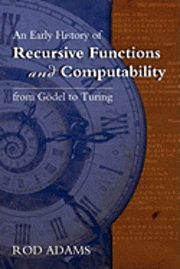
An Early History of Recursive Functions and Computability from Godel to Turing
Av Rod Adams
Häftad
287 kr
Lägg i varukorg
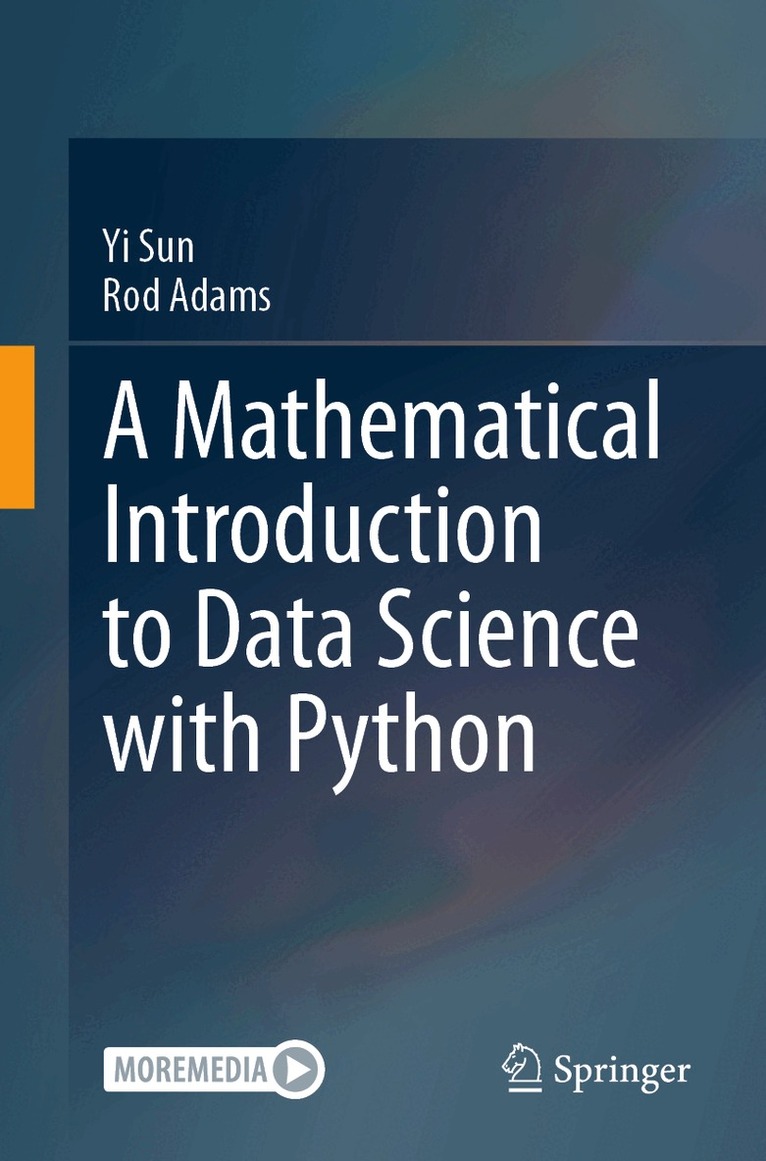
Mathematical Introduction to Data Science with Python
Häftad, 2026
640 kr
Lägg i varukorg
This textbook serves as a companion to "A Mathematical Introduction to Data Science". It uses Python programming to provide a comprehensive foundation in the mathematics needed for data science. It is designed for anyone with a basic mathematical background, including students and self-learners …
Mathematical Introduction to Data Science with Python
E-bok, 2026
734 kr
Lägg i varukorg
This textbook serves as a companion to "e;A Mathematical Introduction to Data Science"e;. It uses Python programming to provide a comprehensive foundation in the mathematics needed for data science. It is designed for anyone with a basic mathematical background, including students and …
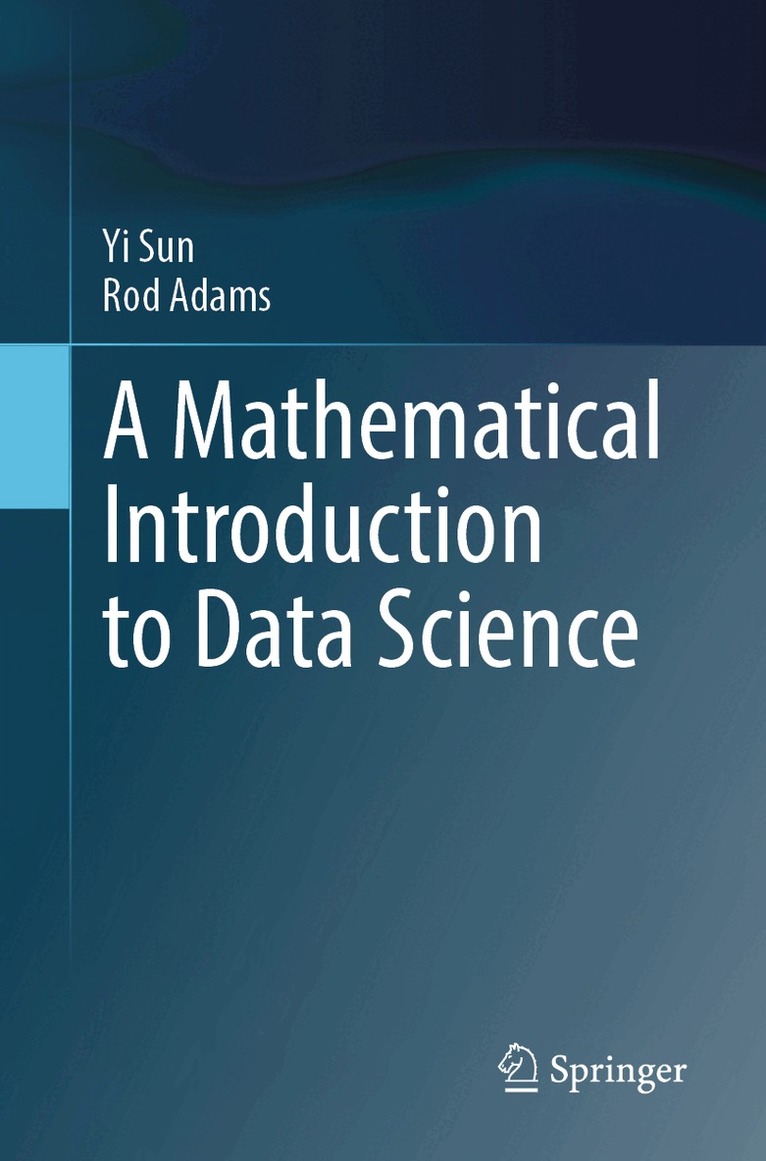
Mathematical Introduction to Data Science
Häftad, 2025
669 kr
Lägg i varukorg
This textbook provides a comprehensive foundation in the mathematics needed for data science for students and self-learners with a basic mathematical background who are interested in the principles behind computational algorithms in data science. It covers sets, functions, linear algebra, and …
Mathematical Introduction to Data Science
E-bok, 2025
815 kr
Lägg i varukorg
This textbook provides a comprehensive foundation in the mathematics needed for data science for students and self-learners with a basic mathematical background who are interested in the principles behind computational algorithms in data science. It covers sets, functions, linear algebra, and …