Rodney D. Vanderploeg – författare
1 691 kr
Skickas inom 3-6 vardagar
2 856 kr
Skickas inom 3-6 vardagar
1 524 kr
Läs direkt efter köp
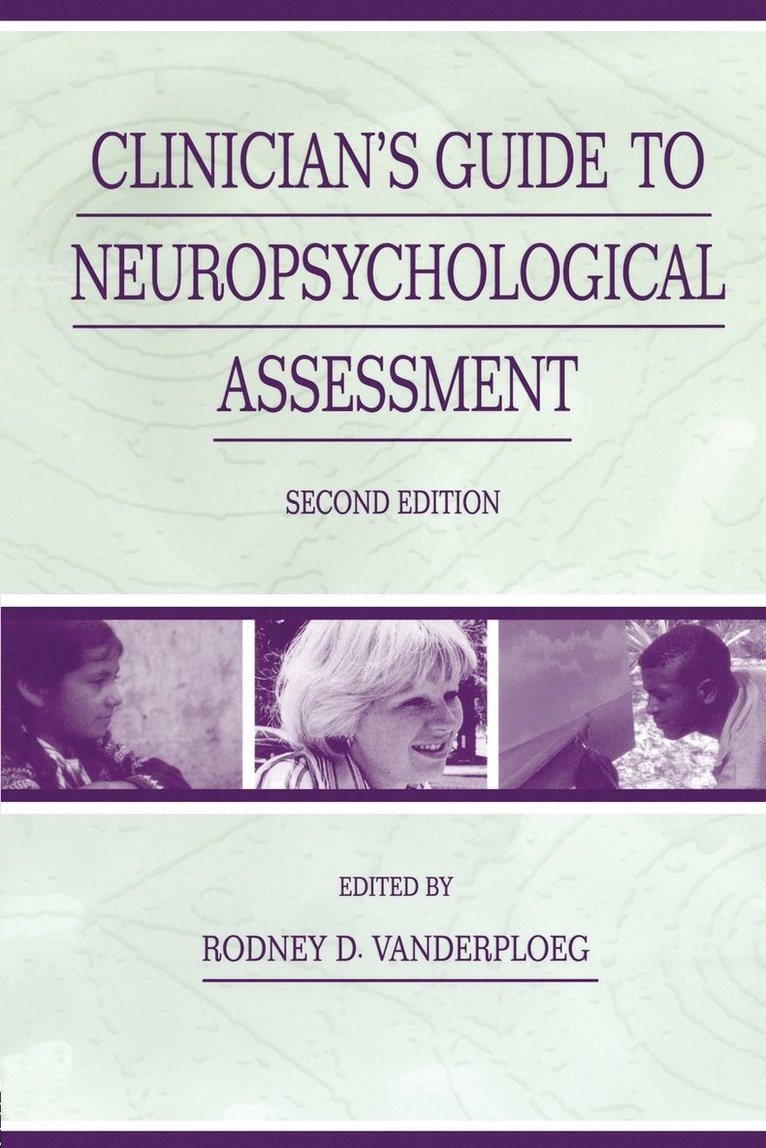
Neuropsychological assessment is a difficult and complicated process. Often, experienced clinicians as well as trainees and students gloss over fundamental problems or fail to consider potential sources of error. Since formal test data on the surface appear unambiguous and objective, they may fall into the habit of overemphasizing tests and their scores and underemphasizing all the factors that affect the validity, reliability, and interpretability of test data. But interpretation is far from straightforward, and a pragmatic application of assessment results requires attention to a multitude of issues. This long-awaited, updated, and greatly expanded second edition of the Clinician''s Guide to Neuropsychological Assessment, like the first, focuses on the clinical practice of neuropsychology. Orienting readers to the entire multitude of issues, it guides them step by step through evaluation and helps them avoid common misconceptions, mistakes, and methodological pitfalls. It is divided into three sections: fundamental elements of the assessment process; special issues, settings, and populations; and new approaches and methodologies. The authors, all of whom are actively engaged in the clinical practice of neuropsychological assessment, as well as in teaching and research, do an outstanding job of integrating the academic and the practical. The Clinician''s Guide to Neuropsychological Assessment, Second Edition will be welcomed as a text for graduate courses but also as an invaluable hands-on handbook for interns, postdoctoral fellows, and experienced neuropsychologists alike. No other book offers its combination of breadth across batteries and approaches, depth, and practicality.
1 524 kr
Läs direkt efter köp
Neuropsychological assessment is a difficult and complicated process. Often, experienced clinicians as well as trainees and students gloss over fundamental problems or fail to consider potential sources of error. Since formal test data on the surface appear unambiguous and objective, they may fall into the habit of overemphasizing tests and their scores and underemphasizing all the factors that affect the validity, reliability, and interpretability of test data. But interpretation is far from straightforward, and a pragmatic application of assessment results requires attention to a multitude of issues. This long-awaited, updated, and greatly expanded second edition of the Clinician''s Guide to Neuropsychological Assessment, like the first, focuses on the clinical practice of neuropsychology. Orienting readers to the entire multitude of issues, it guides them step by step through evaluation and helps them avoid common misconceptions, mistakes, and methodological pitfalls. It is divided into three sections: fundamental elements of the assessment process; special issues, settings, and populations; and new approaches and methodologies. The authors, all of whom are actively engaged in the clinical practice of neuropsychological assessment, as well as in teaching and research, do an outstanding job of integrating the academic and the practical. The Clinician''s Guide to Neuropsychological Assessment, Second Edition will be welcomed as a text for graduate courses but also as an invaluable hands-on handbook for interns, postdoctoral fellows, and experienced neuropsychologists alike. No other book offers its combination of breadth across batteries and approaches, depth, and practicality.
957 kr
Skickas inom 5-8 vardagar
1 212 kr
Läs direkt efter köp
Traumatic brain injury (TBI) is a public health issue of worldwide proportions, affecting motorists, victims of interpersonal violence, athletes, military service members, and Veterans, among others. Management of Adults with Traumatic Brain Injury provides evidence-informed guidance on the core topics in brain injury medicine, including the epidemiology and pathophysiology of TBI, the medical evaluation and neuropsychological assessment of persons with TBI, and the common cognitive, emotional, behavioral, and other neurological disturbances for which persons with TBI and their families seek clinical care.
The volume offers many useful features to its readers, including:
Chapters written by an internationally known group of editors and contributors offering cutting-edge, multidisciplinary perspectives in brain injury medicine. Guidance on the identification and management of early and late postinjury neuropsychiatric disturbances as well as their psychological and psychosocial consequences. Identification of special issues relevant to the evaluation and treatment of TBI and postconcussive symptoms among military service members, and Veterans. Discussion of the ethics and methods of forensic assessment of persons with TBI. Key Clinical Points that highlight concepts, assessment issues, and clinical management strategies in each chapter. A wealth of tables and figures to enhance the accessibility and clinical utility of the book, as well as appendices of additional readings and relevant websites for persons and families affected by TBI and the clinicians providing their care.
Impressive breadth and depth of coverage, logical structure, clinically rich detail, and concise presentation make Management of Adults with Traumatic Brain Injury a must-read for every physician, nurse, and mental health practitioner working to improve the lives of persons with TBI.