Roel J. in 't Veld – författare
Visar alla böcker från författaren Roel J. in 't Veld. Handla med fri frakt och snabb leverans.
6 produkter
6 produkter
Inbunden, Engelska, 1991
1 681 kr
Skickas inom 10-15 vardagar
E-bok
PDF, Engelska, 20243 208 kr
Läs direkt efter köp
Higher education legislation is frequently changed by policy makers, who are acutely conscious that specific changes have repercussions through the law of general applicability, and eventually may alter and revise fundamental societal concepts. However, normative systems are complex, and the impact and direction of legal and social repercussions are neither always intended, nor are they easily foreseen. It is the purpose of this book to identify the chosen directions, and to contribute to the further development of issues in the higher education and research sector and to trace beginnings of new trends. This volume is intended to appeal to the reader's personal, practical perspective to help generate the creativity and inspiration needed in order to maintain the equilibrium between consolidation and change. In the Council of Europe, much thought has been given to these problems in recent years. The Higher Education and Research Committee (CC-HER), previously known as the Standing Conference of University Problems (CC-PU), has established a Legislation Reform Programme for Higher Education (LRP). The Programme is intended to give effective support to the process of legislative reform in higher education, particularly, but not exclusively, in the new member states in central and eastern Europe. To promote dissemination of experience acquired throughout Europe and as a complement to its ongoing advisory and multilateral activities, the Programme's Steering Group has decided to publish a series entitled `Legislating for Higher Education and Research in Europe'. The first volume of this series, Relations between State and Higher Education, is hereby presented to the general public. Relations between State and Higher Education has been compiled in close co-operation with States Parties to the European Cultural Convention. It seeks, as will subsequent volumes, to identify core issues which countries may need to confront in their legislations, and offers examples of good practice.
Häftad, Engelska, 2012
1 634 kr
Skickas inom 10-15 vardagar
Häftad, Engelska, 2012
1 124 kr
Skickas inom 10-15 vardagar
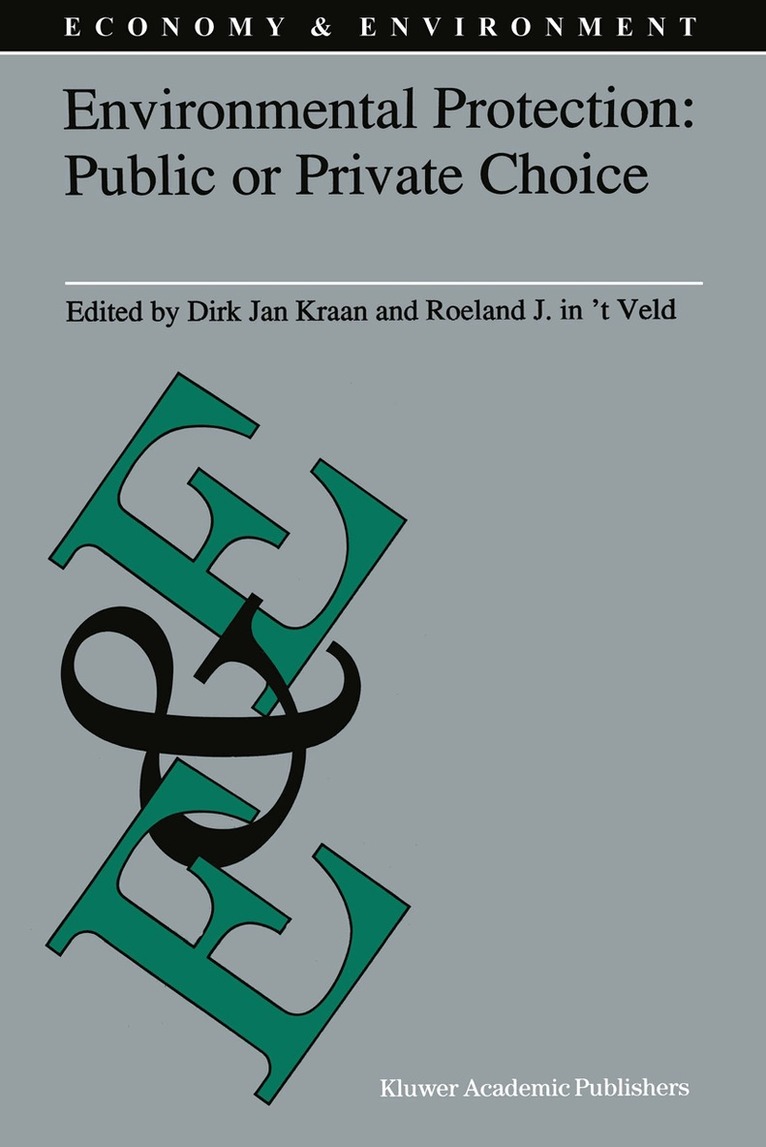
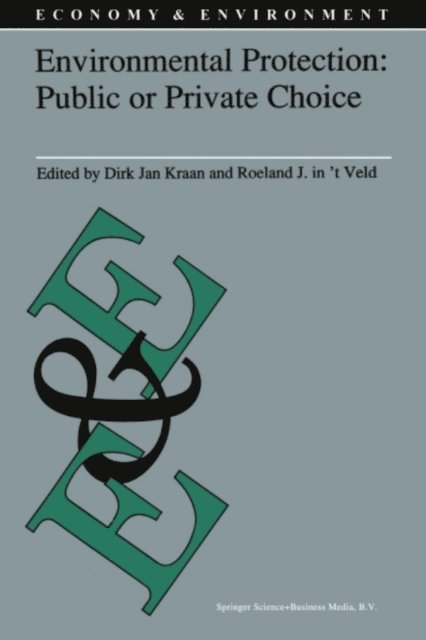
This volume is the result of a collective effort made by its authors to reason and write about environmental policy from an empirical, rather than from a prescriptive perspective. Since the authors, like most people, care about the environment and, as professional economists or political scientists, have some expertise to offer in the area of policy-design, it was not always easy for them to keep on the intended track. Whereas they knew that it is unusual to follow a strictly empirical approach in such a 'practical' field as environmental policy, they discovered only during the effort what kind of difficulties would be encountered. Moreover, they learned that it is sometimes necessary to reason normatively in order to catch essential features of empirical reality. As it turns out, moral notions cannot entirely be neglected in political life. The predominance of homo economicus is not absolute. We feel that the effort has been worthwile and deserves to be repeated and expanded. It has been a truly co-operative project and we are very grateful to all authors for their willingness to contribute. Special gratitude we owe to Frans van Nispen and Annemarie Rima. Frans van Nispen has assisted us in every conceivable way during the preparation of this book.
E-bok
PDF, Engelska, 20121 977 kr
Läs direkt efter köp
E-bok
PDF, Engelska, 20121 408 kr
Läs direkt efter köp
This volume is the result of a collective effort made by its authors to reason and write about environmental policy from an empirical, rather than from a prescriptive perspective. Since the authors, like most people, care about the environment and, as professional economists or political scientists, have some expertise to offer in the area of policy-design, it was not always easy for them to keep on the intended track. Whereas they knew that it is unusual to follow a strictly empirical approach in such a ''practical'' field as environmental policy, they discovered only during the effort what kind of difficulties would be encountered. Moreover, they learned that it is sometimes necessary to reason normatively in order to catch essential features of empirical reality. As it turns out, moral notions cannot entirely be neglected in political life. The predominance of homo economicus is not absolute. We feel that the effort has been worthwile and deserves to be repeated and expanded. It has been a truly co-operative project and we are very grateful to all authors for their willingness to contribute. Special gratitude we owe to Frans van Nispen and Annemarie Rima. Frans van Nispen has assisted us in every conceivable way during the preparation of this book.