Roger Cooter – författare
Visar alla böcker från författaren Roger Cooter. Handla med fri frakt och snabb leverans.
19 produkter
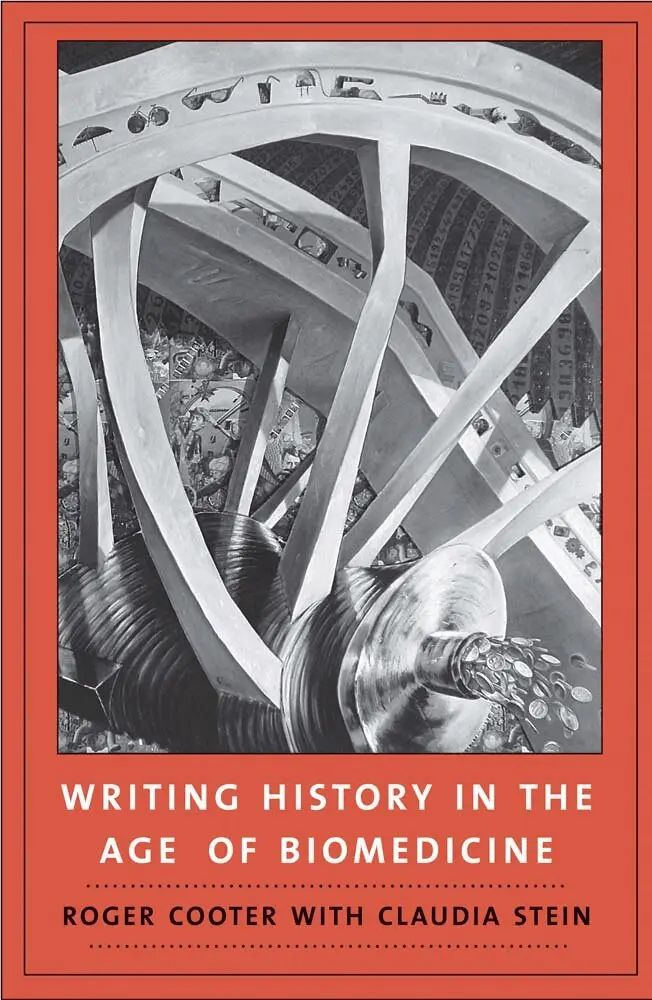
Writing History in the Age of Biomedicine
Av Roger Cooter
Inbunden, 2013
1016 kr
Lägg i varukorg
A noted medical historian explores the roles played by various intellectual frameworks and trends in the writing of historyA collection of ten essays paired with substantial prefaces, this book chronicles and contextualizes Roger Cooter’s contributions to the history of medicine. Through an …
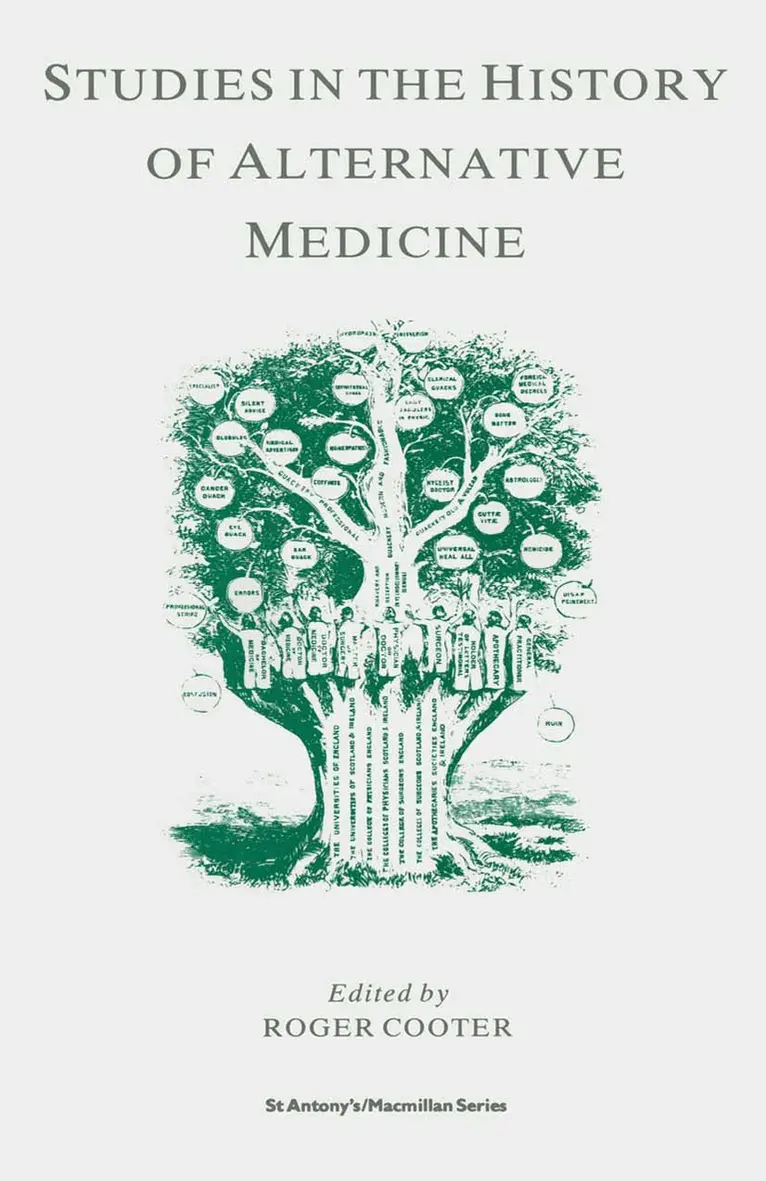
Studies In The History Of Alternative Medicine
Av Roger Cooter
Inbunden, 1988
1128 kr
Lägg i varukorg
A collection of essays focused largely on the 19th century when alternative medicine as opposed to orthodox medicine was not accepted as "professional". Historians in this book explore the dissent which arose in various local and national contexts.
In the Name of the Child
Av Roger Cooter
Inbunden, 1992
2578 kr
Lägg i varukorg
Recent revelations of child abuse have highlighted the need for understanding the historical background to current attitudes towards child health and welfare. In the Name of the Child explores a variety of professional, social, political and cultural constructions of the child in the decades around …
Companion Encyclopedia of Medicine in the Twentieth Century
Av Roger Cooter, John Pickstone
Häftad, 2002
1487 kr
Lägg i varukorg
During the twentieth century, medicine has been radically transformed and powerfully transformative. In 1900, western medicine was important to philanthropy and public health, but it was marginal to the state, the industrial economy and the welfare of most individuals. It is now central to these …
In the Name of the Child
Av Roger Cooter
Häftad, 2011
772 kr
Lägg i varukorg
In the Name of the Child explores a variety of professional, social, political and cultural constructions of the child in the crucial decades around the First World War when modern notions of `the child' were elaborated and widely institutionalised.In essays specially written for the book, the …
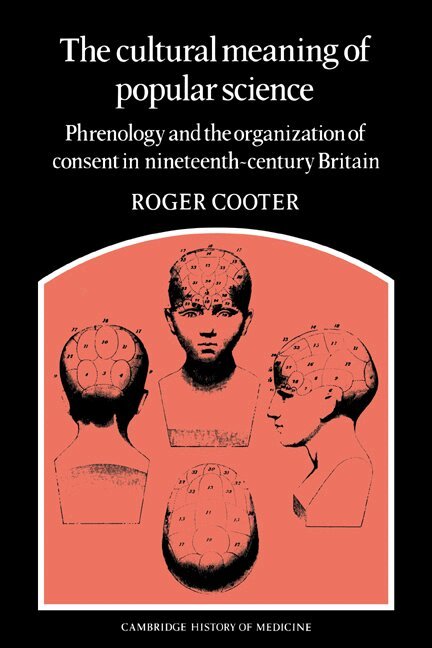
The Cultural Meaning of Popular Science
Phrenology and the Organization of Consent in Nineteenth-Century Britain
Av Roger Cooter, Charles Rosenberg m. fl.
Häftad, 2005
586 kr
Lägg i varukorg
This study of the popularity of phrenology in the second quarter of the nineteenth century concentrates on the social and ideological functions of science during the consolidation of urban industrial society. It is influenced by Foucault, by recent work in the history and sociology of science, by …
Medicine in the Twentieth Century
Av John Pickstone, Roger Cooter
E-bok, 2020
910 kr
Lägg i varukorg
During the twentieth century, medicine has been radically transformed and powerfully transformative. In 1900, western medicine was important to philanthropy and public health, but it was marginal to the state, the industrial economy and the welfare of most individuals. It is now central to these …
Medicine in the Twentieth Century
Av John Pickstone, Roger Cooter
E-bok, 2020
890 kr
Lägg i varukorg
During the twentieth century, medicine has been radically transformed and powerfully transformative. In 1900, western medicine was important to philanthropy and public health, but it was marginal to the state, the industrial economy and the welfare of most individuals. It is now central to these …
In the Name of the Child
Av Roger Cooter
E-bok, 2013
890 kr
Lägg i varukorg
Recent revelations of child abuse have highlighted the need for understanding the historical background to current attitudes towards child health and welfare. In the Name of the Child explores a variety of professional, social, political and cultural constructions of the child in the decades around …
In the Name of the Child
Av Roger Cooter
E-bok, 2013
910 kr
Lägg i varukorg
Recent revelations of child abuse have highlighted the need for understanding the historical background to current attitudes towards child health and welfare. In the Name of the Child explores a variety of professional, social, political and cultural constructions of the child in the decades around …
Companion Encyclopedia of Medicine in the Twentieth Century
Av Roger Cooter, John Pickstone
E-bok, 2016
1765 kr
Lägg i varukorg
During the twentieth century, medicine has been radically transformed and powerfully transformative. In 1900, western medicine was important to philanthropy and public health, but it was marginal to the state, the industrial economy and the welfare of most individuals. It is now central to these …
Medicine in the Twentieth Century
Av Roger Cooter, John Pickstone
Häftad, 2014
770 kr
Lägg i varukorg
During the twentieth century, medicine has been radically transformed and powerfully transformative. In 1900, western medicine was important to philanthropy and public health, but it was marginal to the state, the industrial economy and the welfare of most individuals. It is now central to these …
History of Medicine
Av Roger Cooter, Claudia Stein
2015
12349 kr
Lägg i varukorg
The history of medicine has been a robust field of academic inquiry and popular discussion since the 1970s. The interest in it goes back much further, but it was then that it began to link up with social protest and the counter-culture movement, and with feminist politics in particular. Medicine …
Companion Encyclopedia of Medicine in the Twentieth Century
Av Roger Cooter, John Pickstone
Inbunden, 2016
2578 kr
Lägg i varukorg
During the twentieth century, medicine has been radically transformed and powerfully transformative. In 1900, western medicine was important to philanthropy and public health, but it was marginal to the state, the industrial economy and the welfare of most individuals. It is now central to these …
Studies In The History Of Alternative Medicine
Av Roger Cooter
E-bok, 1988
1596 kr
Lägg i varukorg
A collection of essays focused largely on the 19th century when alternative medicine as opposed to orthodox medicine was not accepted as "professional". Historians in this book explore the dissent which arose in various local and national contexts.
Cultural History of Medicine
Av Roger Cooter
2024
2380 kr
Lägg i varukorg
How has our understanding of medicine evolved over the past 2,500 years? A Cultural History of Medicine, as the first comprehensive and interdisciplinary overview of the cultural history of medicine from ancient times to modernity, discusses this. With six highly illustrated volumes covering 2500 …
Medicine and Modern Warfare
Av Roger Cooter
Häftad, 1999
700 kr
Lägg i varukorg
After years at the margins of medical history, the relationship between war and medicine is at last beginning to move centre-stage. The essays in this volume focus on one important aspect of that relationship: the practice and development of medicine within the armed forces from the late nineteenth …
Medicine in the Twentieth Century
Av Roger Cooter, John Pickstone
Inbunden, 2000
4343 kr
Lägg i varukorg
During the twentieth century, medicine has been radically transformed and powerfully transformative. In 1900, western medicine was important to philanthropy and public health, but it was marginal to the state, the industrial economy and the welfare of most individuals. It is now central to these …
Phrenology in Europe and America
Av Roger Cooter
2001
24478 kr
Tillfälligt slut
The popular nineteenth-century science of phrenology has attracted a great deal of recent scholarly interest. What was once seen as a rather curious and eccentric practice, is now becoming recognised as one of the most significant social and intellectual manifestations of the nineteenth century. …