Roger D. Johnson – författare
Visar alla böcker från författaren Roger D. Johnson. Handla med fri frakt och snabb leverans.
3 produkter
3 produkter
Inbunden, Engelska, 2017
1 200 kr
Skickas inom 10-15 vardagar
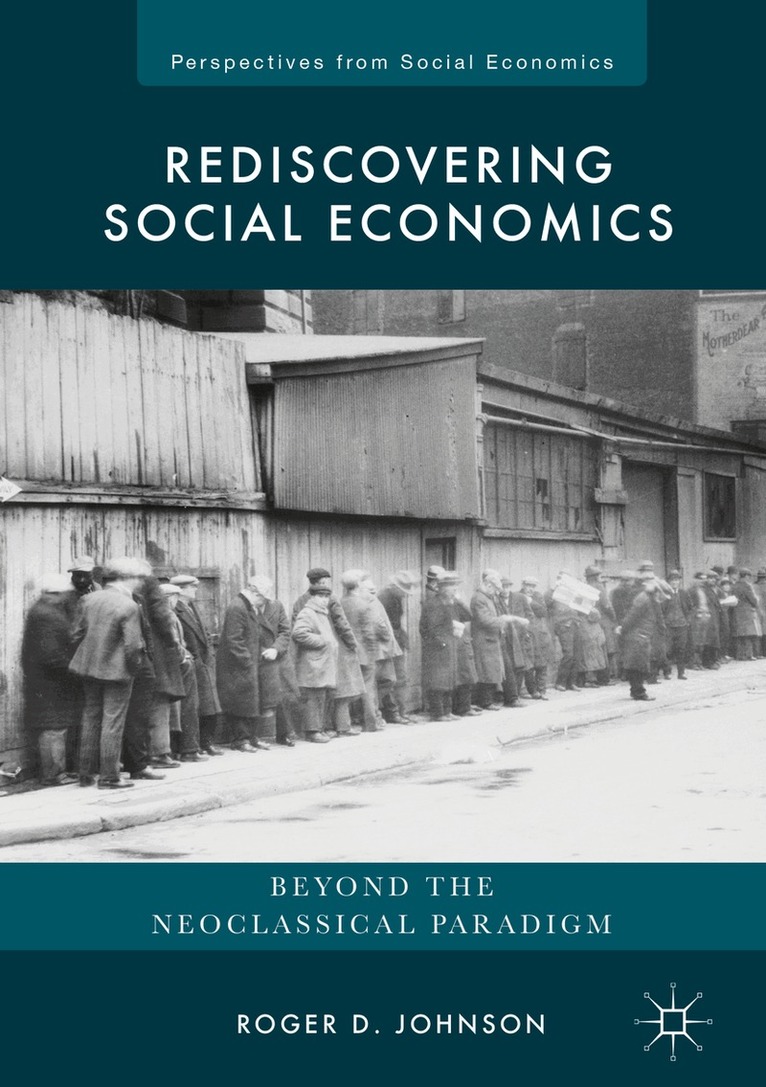
This book argues that economists need to reengage with societal issues, such as justice and fairness in distribution, that inevitably arise when discussing the basic economic problem of unlimited human wants and finite resources.
E-bok
Engelska, 20171 565 kr
Läs direkt efter köp
This book argues that economists need to reengage with societal issues, such as justice and fairness in distribution, that inevitably arise when discussing the basic economic problem of unlimited human wants and finite resources. Approaching the problem through a history of economic thought, Johnson reexamines Adam Smith’s contributions to show how they reach beyond neoclassical models that are too simplistic to reflect the growing interdependencies of market economies. He breaks down supposedly value-free neoclassical postulates to expose normative assumptions about economics and justice, demonstrating, for example, that the concept of market equilibrium is problematic because need-based behavior can produce involuntary unemployment even when a competitive labor market achieves equilibrium.
Häftad, Engelska, 2018
1 236 kr
Skickas inom 10-15 vardagar
This book argues that economists need to reengage with societal issues, such as justice and fairness in distribution, that inevitably arise when discussing the basic economic problem of unlimited human wants and finite resources. Approaching the problem through a history of economic thought, Johnson reexamines Adam Smith’s contributions to show how they reach beyond neoclassical models that are too simplistic to reflect the growing interdependencies of market economies. He breaks down supposedly value-free neoclassical postulates to expose normative assumptions about economics and justice, demonstrating, for example, that the concept of market equilibrium is problematic because need-based behavior can produce involuntary unemployment even when a competitive labor market achieves equilibrium.