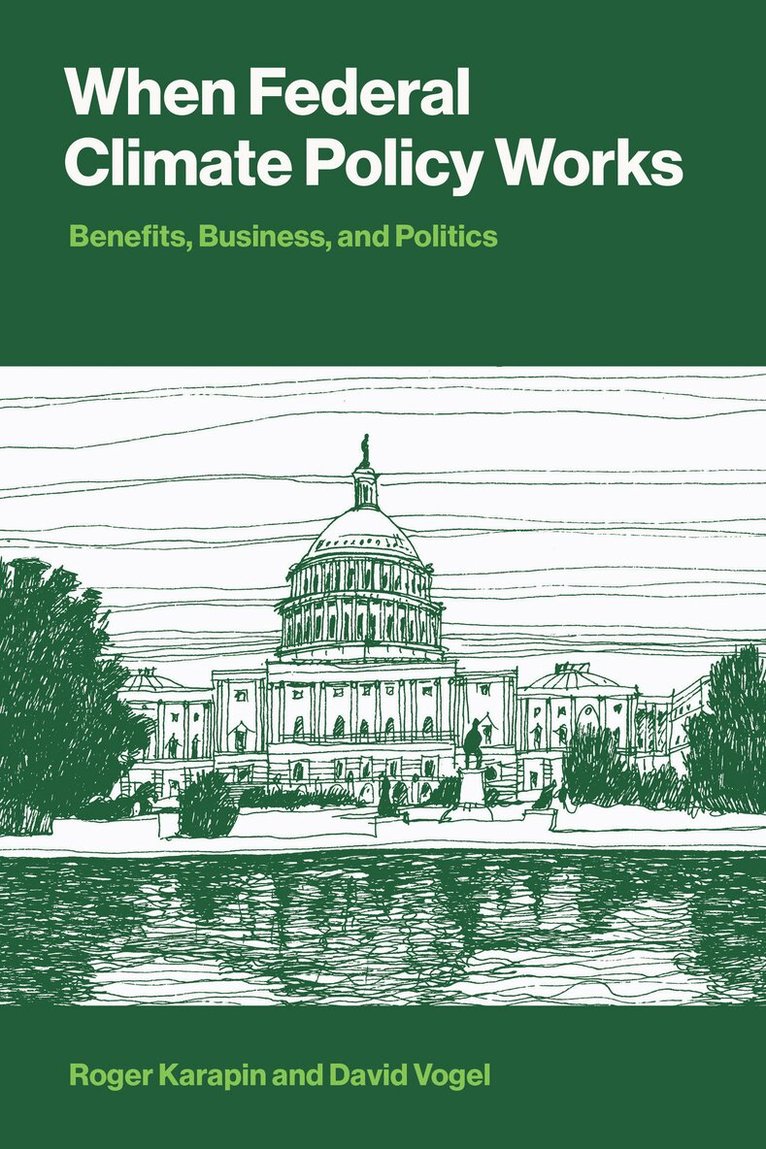
An original analysis of the federal government’s sectoral climate policy accomplishments over the last five decades, with recommendations for policy makers.When Federal Climate Policy Works challenges the widely accepted belief that the federal government has been unable to adopt effective policies to reduce greenhouse gas (GHG) emissions. Roger Karapin and David Vogel argue that the federal government has made measurable progress by adopting more narrowly focused sectoral policies. These have reduced GHG emissions in many sectors: through fuel economy and GHG standards for motor vehicles, the promotion of electric vehicles, mandatory standards and voluntary Energy Star labels for the energy efficiency of appliances and equipment, tax credits for renewable energy investments and production, restrictions on HFCs, and regulations on methane emissions from landfills and oil and gas production.Almost all of these measures began as unintentional climate policies during the 1970s, when they received substantial bipartisan support. Their initial policy frameworks have exhibited substantial continuity even after the policies become repositioned as more politically contentious, explicit climate change policies during the 1990s and later decades. Throughout the last 50 years, policy adoption has depended on including non-climate benefits, gaining business acceptance, and navigating partisan politics.
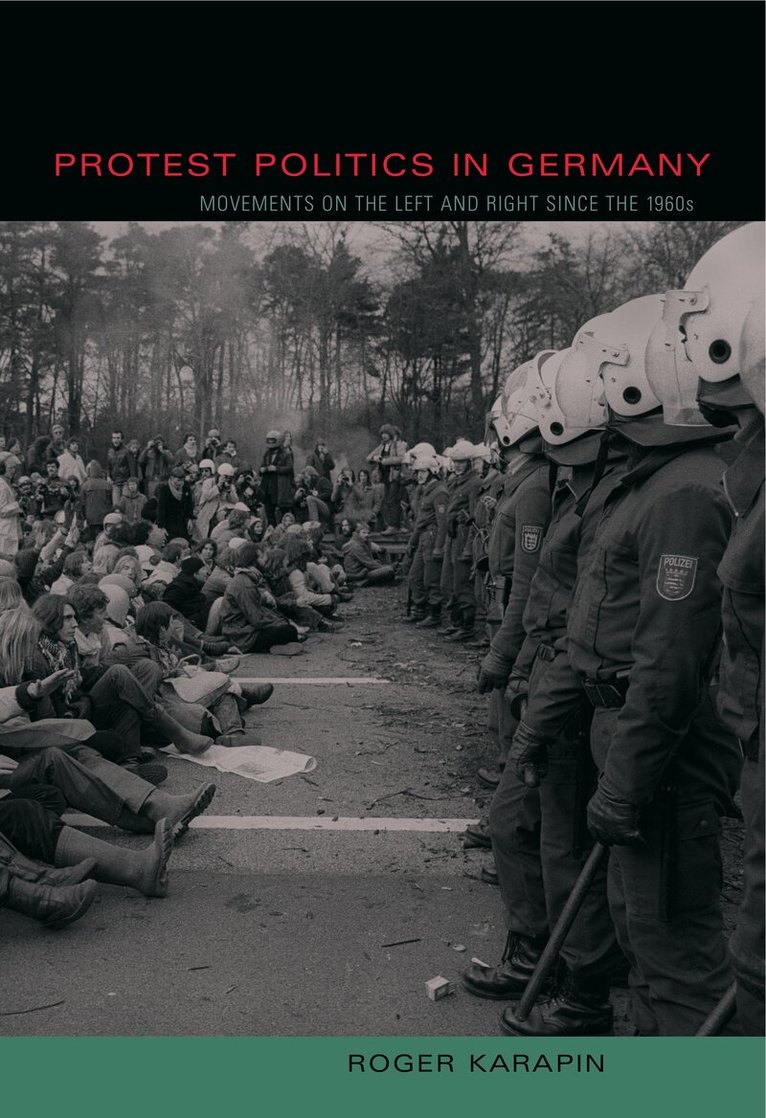
Social movements and the protests they spawn are widely regarded as important to the vibrancy of democracy and its ability to respond constructively to change. In the immediate postwar period, West Germany’s was a “spectator democracy,” with the citizenry largely passive and elites operating mainly through consensus. Beginning with the student demonstrations in the late 1960s, however, Germany experienced waves of left-wing protest that expanded the political agenda and broadened political participation. Later, after the unification of East and West Germany, the country was confronted by new challenges from right-wing groups, which often engaged in violence during the early 1990s.In this book Roger Karapin carefully examines protest movements on both the left and the right in order to understand how they became large and influential and why protesters in different conflicts used quite different methods (ranging from conventional participation to nonviolent disruption to violent militancy). His study of nine cases of protest includes leftist opposition to urban-renewal and nuclear-energy policies in the 1970s and 1980s and rightist opposition to immigration policy in the 1990s. Comparisons of contrasting cases reveal the crucial role played by strategic interaction among protesters, party politicians, and government officials—rather than socioeconomic factors or political institutions—in determining the paths that the movements took.
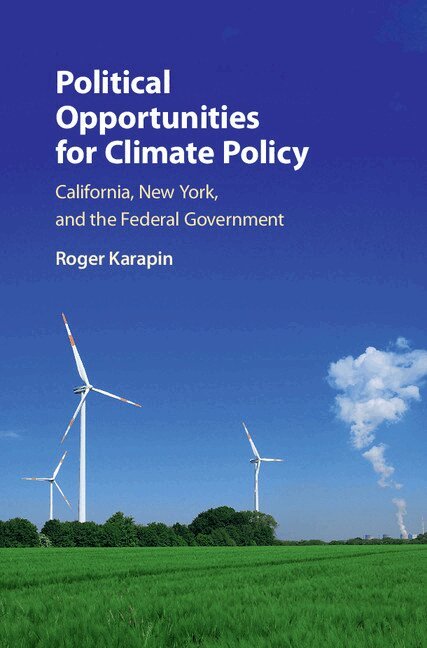
Analysis of climate change policies focuses mainly on the prospects for international agreements or how climate policies should be designed. Yet effective domestic climate policies are essential to any global solution, and we know too little about how and why such policies are adopted. Political Opportunities for Climate Policy examines in depth the causes of effective climate policies in the United States, using a statistical analysis of all fifty states and long-term case studies of California, New York, and the federal government. Roger Karapin analyzes twenty-two episodes in which policies were adopted, blocked, or reversed. He shows that actors and events have positively affected climate policy making, despite the constraints presented by political institutions and powerful fossil fuel industries. Climate policy advocates have succeeded when they mobilized vigorously and astutely during windows of opportunity - which opened when events converged to raise both problem awareness and the political commitment to address them.
An original analysis of the federal government’s sectoral climate policy accomplishments over the last five decades, with recommendations for policy makers.When Federal Climate Policy Works challenges the widely accepted belief that the federal government has been unable to adopt effective policies to reduce greenhouse gas (GHG) emissions. Roger Karapin and David Vogel argue that the federal government has made measurable progress by adopting more narrowly focused sectoral policies. These have reduced GHG emissions in many sectors: through fuel economy and GHG standards for motor vehicles, the promotion of electric vehicles, mandatory standards and voluntary Energy Star labels for the energy efficiency of appliances and equipment, tax credits for renewable energy investments and production, restrictions on HFCs, and regulations on methane emissions from landfills and oil and gas production.Almost all of these measures began as unintentional climate policies during the 1970s, when they received substantial bipartisan support. Their initial policy frameworks have exhibited substantial continuity even after the policies become repositioned as more politically contentious, explicit climate change policies during the 1990s and later decades. Throughout the last 50 years, policy adoption has depended on including non-climate benefits, gaining business acceptance, and navigating partisan politics.
Social movements and the protests they spawn are widely regarded as important to the vibrancy of democracy and its ability to respond constructively to change. In the immediate postwar period, West Germany’s was a “spectator democracy,” with the citizenry largely passive and elites operating mainly through consensus. Beginning with the student demonstrations in the late 1960s, however, Germany experienced waves of left-wing protest that expanded the political agenda and broadened political participation. Later, after the unification of East and West Germany, the country was confronted by new challenges from right-wing groups, which often engaged in violence during the early 1990s.In this book Roger Karapin carefully examines protest movements on both the left and the right in order to understand how they became large and influential and why protesters in different conflicts used quite different methods (ranging from conventional participation to nonviolent disruption to violent militancy). His study of nine cases of protest includes leftist opposition to urban-renewal and nuclear-energy policies in the 1970s and 1980s and rightist opposition to immigration policy in the 1990s. Comparisons of contrasting cases reveal the crucial role played by strategic interaction among protesters, party politicians, and government officials—rather than socioeconomic factors or political institutions—in determining the paths that the movements took.
Analysis of climate change policies focuses mainly on the prospects for international agreements or how climate policies should be designed. Yet effective domestic climate policies are essential to any global solution, and we know too little about how and why such policies are adopted. Political Opportunities for Climate Policy examines in depth the causes of effective climate policies in the United States, using a statistical analysis of all fifty states and long-term case studies of California, New York, and the federal government. Roger Karapin analyzes twenty-two episodes in which policies were adopted, blocked, or reversed. He shows that actors and events have positively affected climate policy making, despite the constraints presented by political institutions and powerful fossil fuel industries. Climate policy advocates have succeeded when they mobilized vigorously and astutely during windows of opportunity - which opened when events converged to raise both problem awareness and the political commitment to address them.