Rohit Parikh – författare
Visar alla böcker från författaren Rohit Parikh. Handla med fri frakt och snabb leverans.
4 produkter
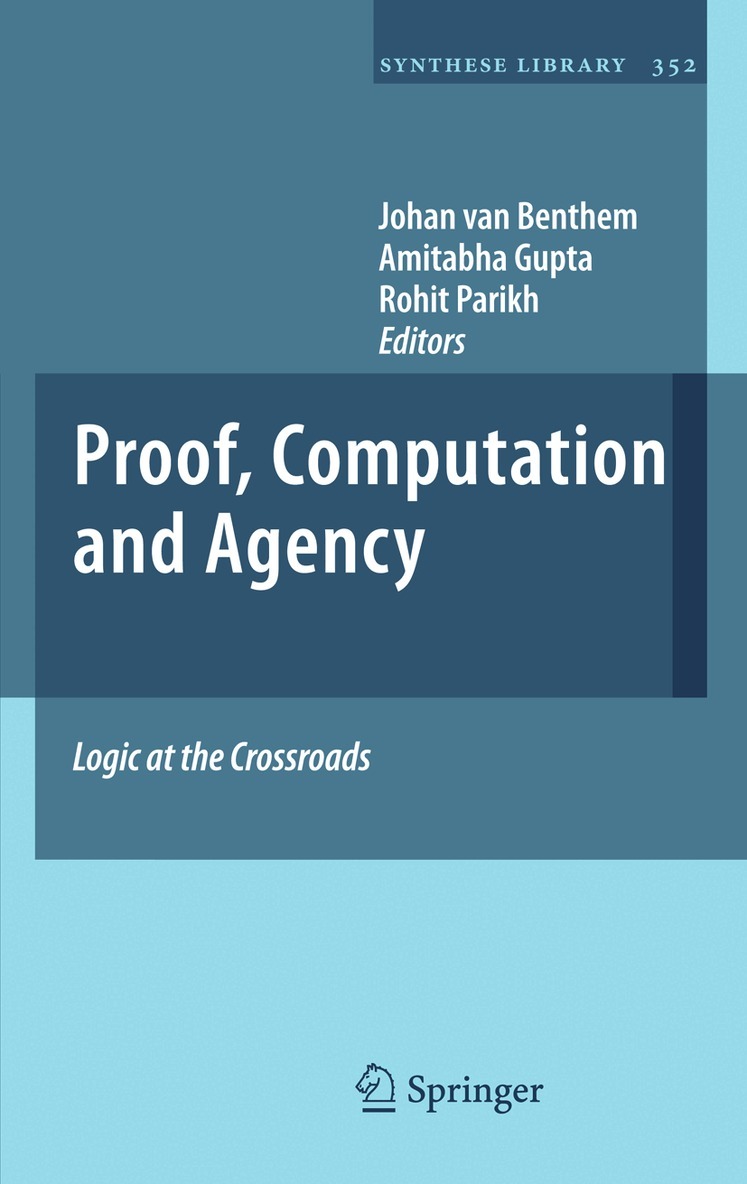
Proof, Computation and Agency
Logic at the Crossroads
Av Johan van Benthem, Amitabha Gupta m. fl.
Inbunden, 2011
1637 kr
Lägg i varukorg
Proof, Computation and Agency: Logic at the Crossroads provides an overview of modern logic and its relationship with other disciplines. As a highlight, several articles pursue an inspiring paradigm called 'social software', which studies patterns of social interaction using techniques from logic …
Proof, Computation and Agency
Logic at the Crossroads
Av Rohit Parikh, Amitabha Gupta m. fl.
E-bok, 2011
2111 kr
Lägg i varukorg
Proof, Computation and Agency: Logic at the Crossroads provides an overview of modern logic and its relationship with other disciplines. As a highlight, several articles pursue an inspiring paradigm called ''social software'', which studies patterns of social interaction using techniques from logic …
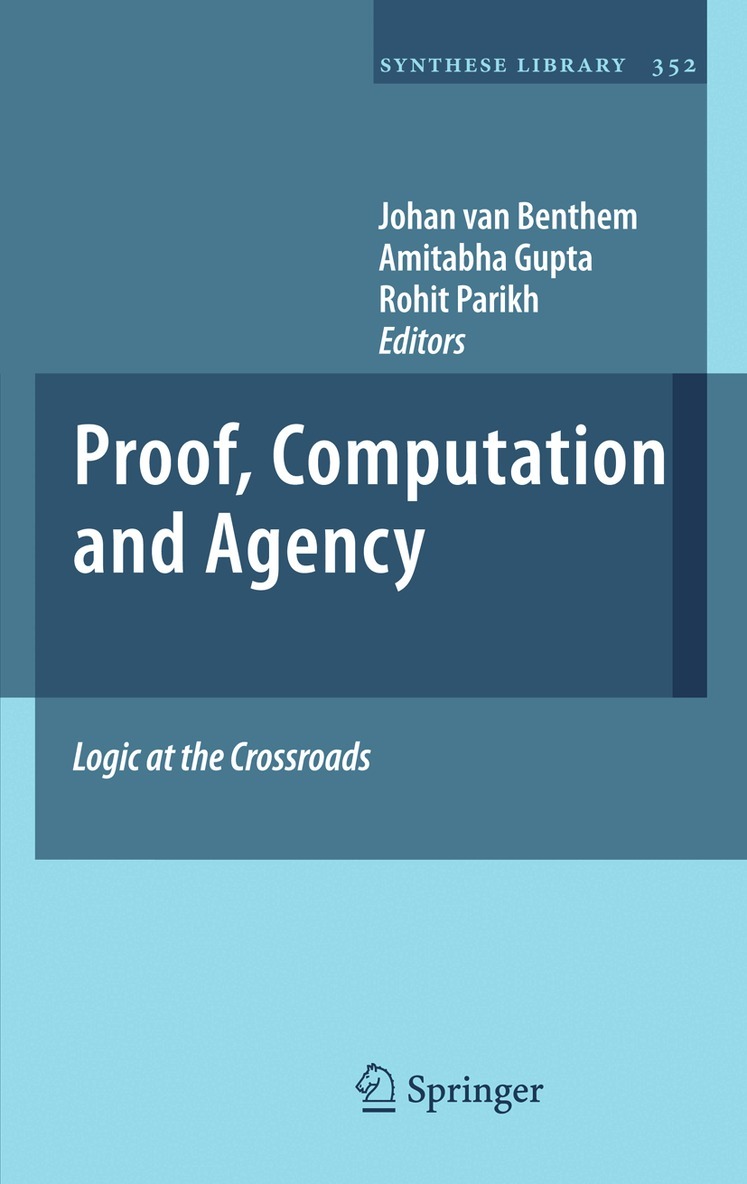
Proof, Computation and Agency
Logic at the Crossroads
Av Johan van Benthem, Amitabha Gupta m. fl.
Häftad, 2013
1637 kr
Lägg i varukorg
Proof, Computation and Agency: Logic at the Crossroads provides an overview of modern logic and its relationship with other disciplines. As a highlight, several articles pursue an inspiring paradigm called 'social software', which studies patterns of social interaction using techniques from logic …