Roland Sussex - Böcker
Visar alla böcker från författaren Roland Sussex. Handla med fri frakt och snabb leverans.
6 produkter
6 produkter
2 394 kr
Skickas inom 7-10 vardagar
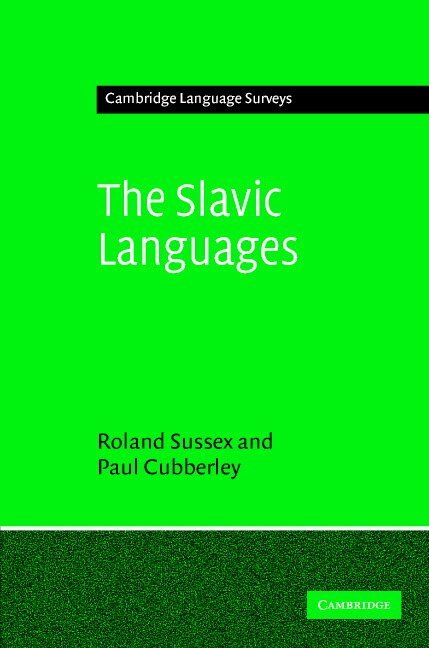
The Slavic group of languages - the fourth largest Indo-European sub-group - is one of the major language families of the modern world. With 297 million speakers, Slavic comprises 13 languages split into three groups: South Slavic, which includes Bosnian, Serbian and Croatian; East Slavic, which includes Russian and Ukrainian; and West Slavic, which includes Polish, Czech and Slovak. This 2006 book, written by two leading scholars in Slavic linguistics, presents a survey of all aspects of the linguistic structure of the Slavic languages, considering in particular those languages that enjoy official status. As well as covering the central issues of phonology, morphology, syntax, word-formation, lexicology and typology, the authors discuss Slavic dialects, sociolinguistic issues, and the socio-historical evolution of the Slavic languages. Accessibly written and comprehensive in its coverage, this book will be welcomed by scholars and students of Slavic languages, as well as linguists across the many branches of the discipline.
747 kr
Skickas inom 7-10 vardagar
The Slavic group of languages - the fourth largest Indo-European sub-group - is one of the major language families of the modern world. With 297 million speakers, Slavic comprises 13 languages split into three groups: South Slavic, which includes Bosnian, Serbian and Croatian; East Slavic, which includes Russian and Ukrainian; and West Slavic, which includes Polish, Czech and Slovak. This 2006 book, written by two leading scholars in Slavic linguistics, presents a survey of all aspects of the linguistic structure of the Slavic languages, considering in particular those languages that enjoy official status. As well as covering the central issues of phonology, morphology, syntax, word-formation, lexicology and typology, the authors discuss Slavic dialects, sociolinguistic issues, and the socio-historical evolution of the Slavic languages. Accessibly written and comprehensive in its coverage, this book will be welcomed by scholars and students of Slavic languages, as well as linguists across the many branches of the discipline.
Del 24 - Multilingual Education
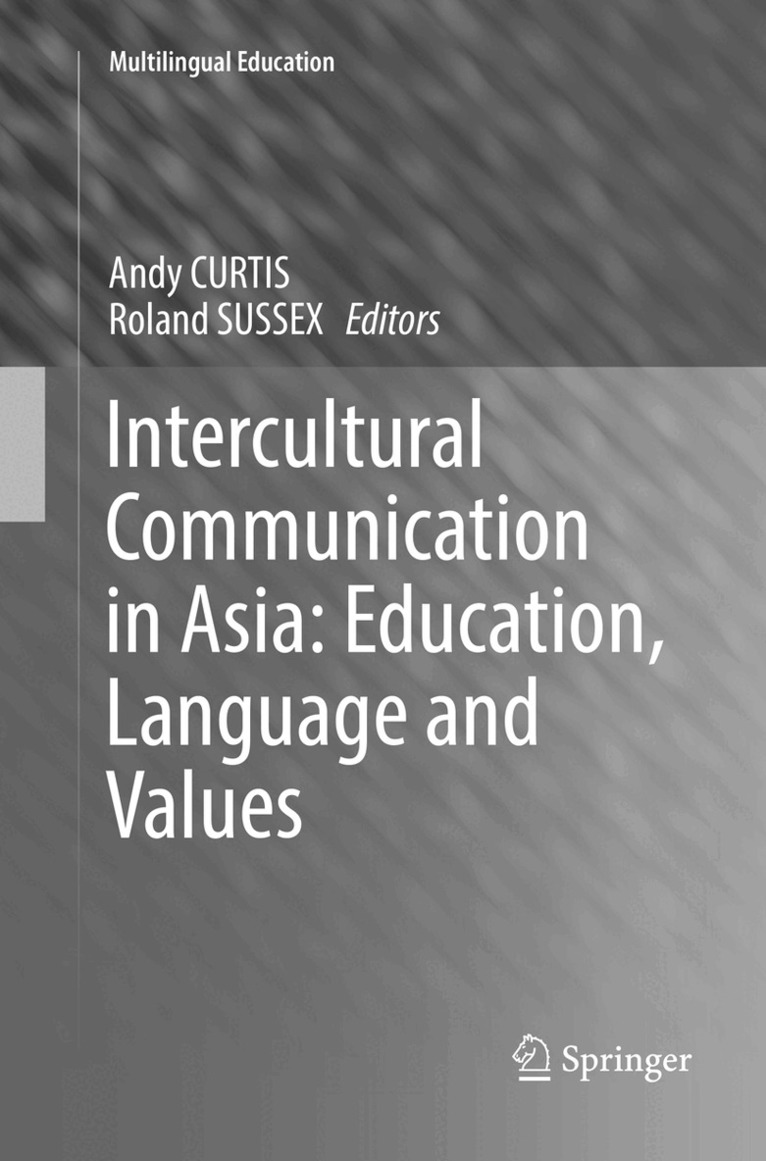
Intercultural Communication in Asia: Education, Language and Values
Häftad, Engelska, 2019
931 kr
Skickas inom 10-15 vardagar
This volume presents in-depth studies on leading themes in education policy and intercultural communication in contemporary Asia, covering empirical as well as theoretical approaches, and offering both an in-depth investigation of their implications, and a synthesis of areas where these topics cohere and point to advances in description, analysis and theory, policy and applications. The studies address key questions that are essential to the future of education in an Asia where intercultural communication is ever more important with the rise of the ASEAN Economic Community and other international initiatives. These questions include the properties of the increasing globalisation of communication and how it plays out in Asia, especially but not exclusively with reference to English, and how we can place intercultural communication in this context, as well as studies that highlight intercultural communication and its underlying value systems and ideologiesin Asia.
Del 24 - Multilingual Education
Intercultural Communication in Asia: Education, Language and Values
Inbunden, Engelska, 2018
1 342 kr
Skickas inom 10-15 vardagar
This volume presents in-depth studies on leading themes in education policy and intercultural communication in contemporary Asia, covering empirical as well as theoretical approaches, and offering both an in-depth investigation of their implications, and a synthesis of areas where these topics cohere and point to advances in description, analysis and theory, policy and applications. The studies address key questions that are essential to the future of education in an Asia where intercultural communication is ever more important with the rise of the ASEAN Economic Community and other international initiatives. These questions include the properties of the increasing globalisation of communication and how it plays out in Asia, especially but not exclusively with reference to English, and how we can place intercultural communication in this context, as well as studies that highlight intercultural communication and its underlying value systems and ideologiesin Asia.
Del 1 - Multilingual Education
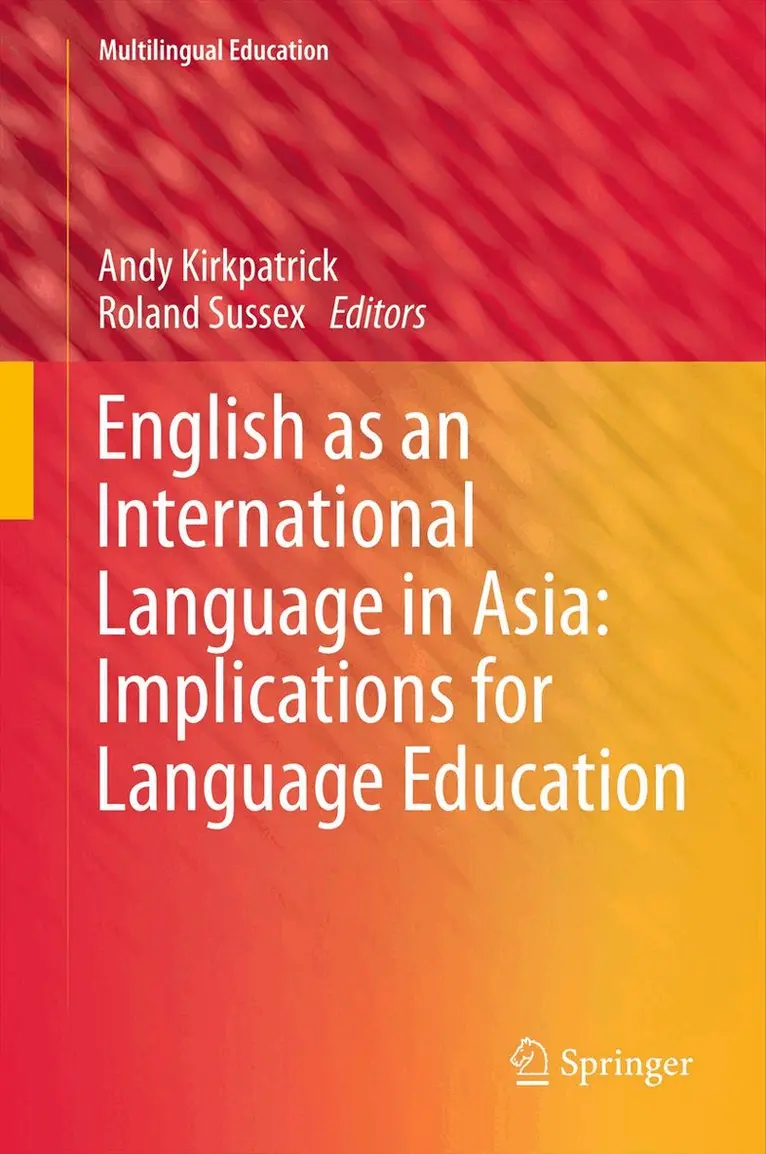
English as an International Language in Asia: Implications for Language Education
Inbunden, Engelska, 2012
1 034 kr
Skickas inom 10-15 vardagar
Even as Anglophone power wanes in Asia, and China and India rise, the role of the English language in the region continues to develop. How are students in Asian nations such as Vietnam, Malaysia and China itself being taught English? This much-needed overview analyzes the differing language education policies of selected countries that also include Indonesia, Japan and Sri Lanka. Noting ASEAN’s adoption of English as its sole working language, it traces the influence of globalization on English language education in Asia: in many systems, it pushes local languages off the curriculum and is taught as a second language after the national one.Informed by a comprehensive review of current research and practice in English teaching in Asia, this volume considers the many different roles English is playing across the region, as well as offering an informed assessment of the prospects of English—and Chinese—being a universal language of communication.
Del 1 - Multilingual Education
English as an International Language in Asia: Implications for Language Education
Häftad, Engelska, 2014
1 034 kr
Skickas inom 10-15 vardagar
Even as Anglophone power wanes in Asia, and China and India rise, the role of the English language in the region continues to develop. How are students in Asian nations such as Vietnam, Malaysia and China itself being taught English? This much-needed overview analyzes the differing language education policies of selected countries that also include Indonesia, Japan and Sri Lanka. Noting ASEAN’s adoption of English as its sole working language, it traces the influence of globalization on English language education in Asia: in many systems, it pushes local languages off the curriculum and is taught as a second language after the national one.Informed by a comprehensive review of current research and practice in English teaching in Asia, this volume considers the many different roles English is playing across the region, as well as offering an informed assessment of the prospects of English—and Chinese—being a universal language of communication.