Roman Duda – författare
Visar alla böcker från författaren Roman Duda. Handla med fri frakt och snabb leverans.
2 produkter
2 produkter
1 436 kr
Skickas inom 5-8 vardagar
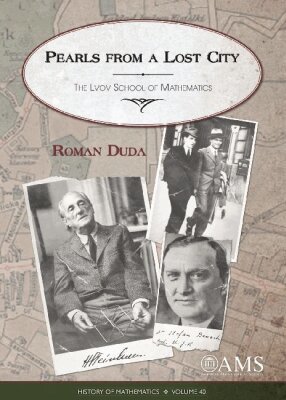
The fame of the Polish school at Lvov rests with the diverse and fundamental contributions of Polish mathematicians working there during the interwar years. In particular, despite material hardship and without a notable mathematical tradition, the school made major contributions to what is now called functional analysis. The results and names of Banach, Kac, Kuratowski, Mazur, Nikodym, Orlicz, Schauder, Sierpinski, Steinhaus, and Ulam, among others, now appear in all the standard textbooks.The vibrant joie de vivre and singular ambience of Lvov's once scintillating social scene are evocatively recaptured in personal recollections. The heyday of the famous Scottish Cafe - unquestionably the most mathematically productive cafeteria of all time - and its precious Scottish Book of highly influential problems are described in detail, revealing the special synergy of scholarship and camaraderie that permanently elevated Polish mathematics from utter obscurity to global prominence.This chronicle of the Lvov school - its legacy and the tumultuous historical events which defined its lifespan - will appeal equally to mathematicians, historians, or general readers seeking a cultural and institutional overview of key aspects of twentieth-century Polish mathematics not described anywhere else in the extant English-language literature.
Del 49 - Polish Studies – Transdisciplinary Perspectives
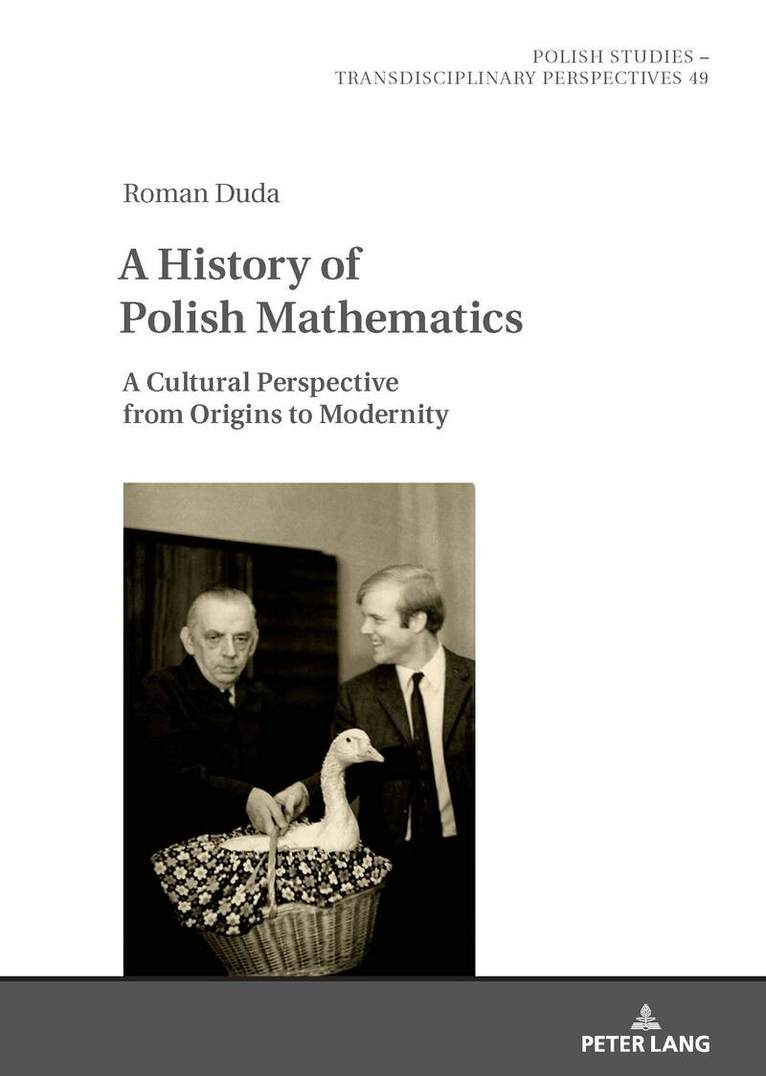
History of Polish Mathematics
A Cultural Perspective from Origins to Modernity
Inbunden, Engelska, 2026
1 377 kr
Skickas inom 3-6 vardagar
The book traces the history of mathematics in the Polish lands from pagan times (the tenth century AD) to the present, with particular attention to the era inaugurated by the reforms of the National Education Commission (1773–1794), through the nineteenth and twentieth centuries until recently. Richly illustrated and thoroughly documented, it recounts the many achievements of Polish mathematicians— including the world-renowned interwar Polish School of Mathematics—alongside the great tragedies, notably the losses caused by the Second World War, as well as the arduous post-war revival. A book for anyone interested in Polish culture and its achievements.