Roman Kuhar – författare
Visar alla böcker från författaren Roman Kuhar. Handla med fri frakt och snabb leverans.
5 produkter
5 produkter
Inbunden, Engelska, 2017
1 813 kr
Skickas inom 10-15 vardagar
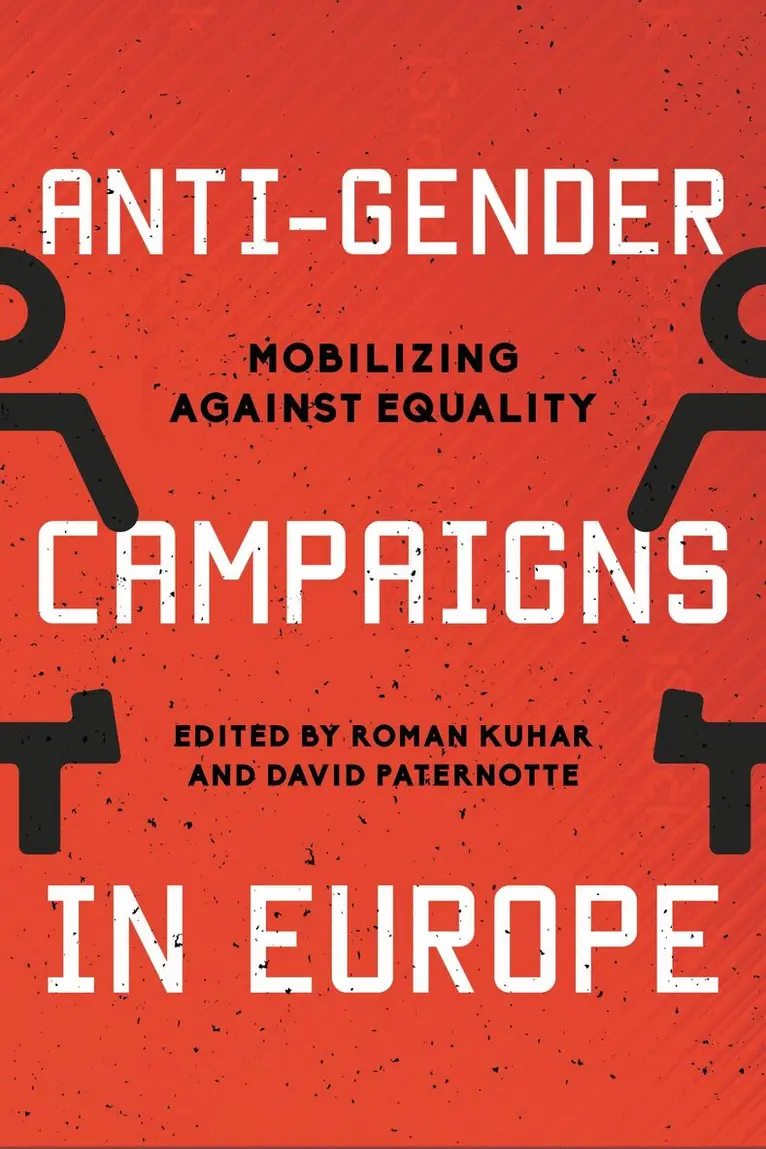
After decades of steady progress in terms of gender and sexual rights, several parts of Europe are facing new waves of resistance to a so-called ‘gender ideology’ or ‘gender theory’. Opposition to progressive gender equality is manifested in challenges to marriage equality, abortion, reproductive technologies, gender mainstreaming, sex education, sexual liberalism, transgender rights, antidiscrimination policies and even to the notion of gender itself.This book examines how an academic concept of gender, when translated by religious organizations such as the Roman Catholic Church, can become a mobilizing tool for, and the target of, social movements. How can we explain religious discourses about sex difference turning intro massive street demonstrations? How do forms of organization and protest travel across borders? Who are the actors behind these movements? This collection is a transnational and comparative attempt to better understand anti-gender mobilizations in Europe. It focuses on national manifestations in eleven European countries, including Russia, from massive street protests to forms of resistance such as email bombarding and street vigils. It examines the intersection of religious politics with rising populism and nationalistic anxieties in contemporary Europe.
Häftad, Engelska, 2018
590 kr
Skickas inom 10-15 vardagar
After decades of steady progress in terms of gender and sexual rights, several parts of Europe are facing new waves of resistance to a so-called ‘gender ideology’ or ‘gender theory’. Opposition to progressive gender equality is manifested in challenges to marriage equality, abortion, reproductive technologies, gender mainstreaming, sex education, sexual liberalism, transgender rights, antidiscrimination policies and even to the notion of gender itself.This book examines how an academic concept of gender, when translated by religious organizations such as the Roman Catholic Church, can become a mobilizing tool for, and the target of, social movements. How can we explain religious discourses about sex difference turning intro massive street demonstrations? How do forms of organization and protest travel across borders? Who are the actors behind these movements? This collection is a transnational and comparative attempt to better understand anti-gender mobilizations in Europe. It focuses on national manifestations in eleven European countries, including Russia, from massive street protests to forms of resistance such as email bombarding and street vigils. It examines the intersection of religious politics with rising populism and nationalistic anxieties in contemporary Europe.
E-bok
Engelska, 2017636 kr
Läs direkt efter köp
After decades of steady progress in terms of gender and sexual rights, several parts of Europe are facing new waves of resistance to a so-called ‘gender ideology’ or ‘gender theory’. Opposition to progressive gender equality is manifested in challenges to marriage equality, abortion, reproductive technologies, gender mainstreaming, sex education, sexual liberalism, transgender rights, antidiscrimination policies and even to the notion of gender itself.This book examines how an academic concept of gender, when translated by religious organizations such as the Roman Catholic Church, can become a mobilizing tool for, and the target of, social movements. How can we explain religious discourses about sex difference turning intro massive street demonstrations? How do forms of organization and protest travel across borders? Who are the actors behind these movements? This collection is a transnational and comparative attempt to better understand anti-gender mobilizations in Europe. It focuses on national manifestations in eleven European countries, including Russia, from massive street protests to forms of resistance such as email bombarding and street vigils. It examines the intersection of religious politics with rising populism and nationalistic anxieties in contemporary Europe.
Inbunden, Engelska, 2025
545 kr
Skickas inom 10-15 vardagar
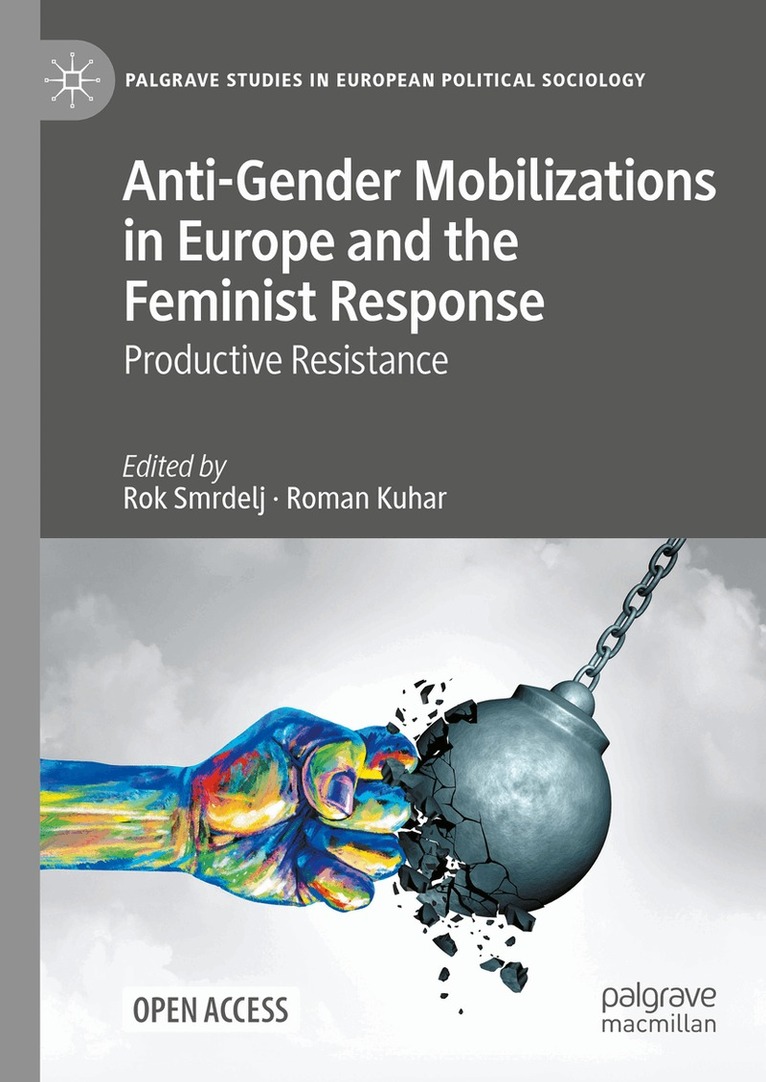
This open access book provides a comprehensive mapping of anti-gender mobilizations in Italy, Slovenia, France, Spain, Turkey, Poland, Greece, and Denmark. In recent years, Europe has witnessed the rise and consolidation of these mobilizations, posing significant challenges to progress in equality politics. While analyzing the key actors, strategies, and discourses driving these movements, the book also shifts its focus to feminist and LGBT+ resistance. Drawing on interviews with activists from eight European countries, it identifies key opposition strategies that increasingly reflect productive resistance. By examining these evolving forms of activism, the book sheds light on the threats posed by anti-gender mobilizations and the innovative responses that sustain feminist and LGBT+ movements in today’s struggles. It will be of interest to researchers and students in gender studies, feminist studies, political sociology, and comparative politics.This publication has been conducted in the context of the FIERCE project. FIERCE has received funding from the European Union's Horizon Europe Research and Innovation programme under Grant Agreement No 101061748. Views and opinions expressed are, however, those of the author only and do not necessarily reflect those of the European Union or European Research Executive Agency (REA). Neither the European Union nor European Research Executive Agency can be held responsible for them.
Inbunden, Engelska, 2026
1 299 kr
Skickas inom 10-15 vardagar
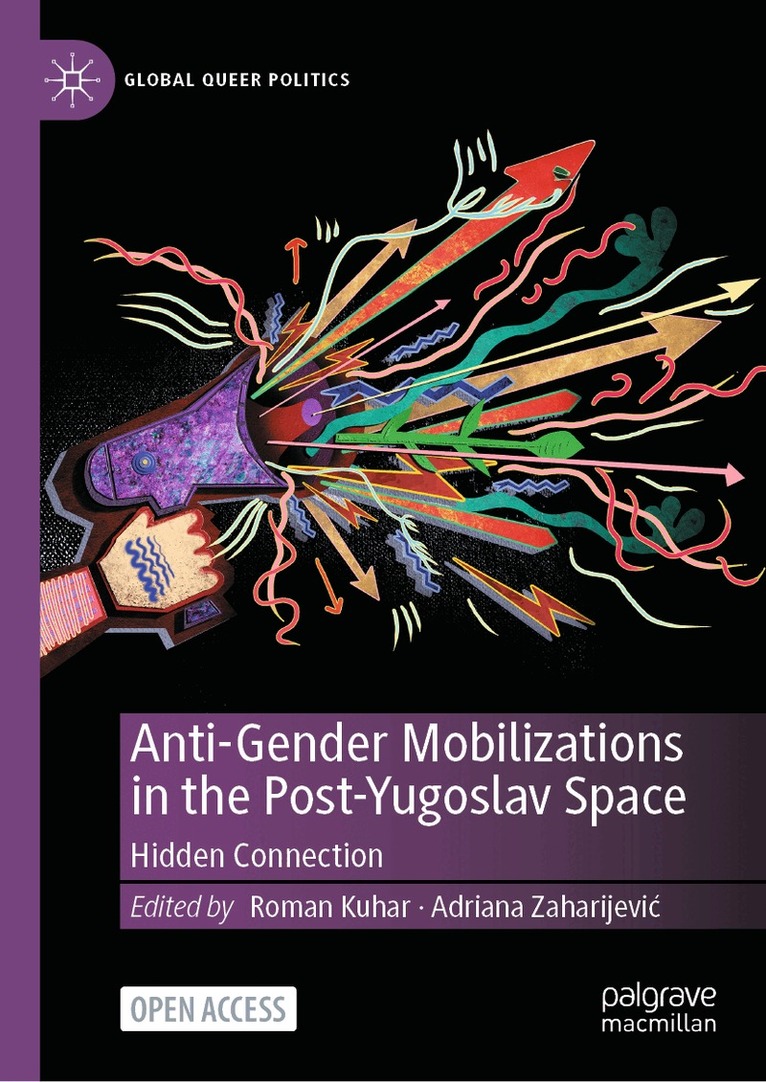
The open access book sheds light on the diverse forms of anti-gender mobilization in the post-Yugoslav space by exploring its historical trajectories, cultural variances, and different religious frames. It offers a meticulous comparative analysis of seven post-socialist countries that shared a common history, which collapsed through wars and through their different paths to “Europeanisation.” Gender scholars and activists have never ceased to build and rebuild ties across the new borders, fighting for freedom of speech, human rights and against their local nationalisms. Today, however, it is precisely the ultraconservative forces that speak the same language of rights but with diametrically opposing illiberal goals. The fiercest opponents in all other respects, the post-Yugoslav ultraconservatives agree that the major threat lies in the specter of “gender.” This volume tells a story about gender as a post-Yugoslav “symbolic glue.” It advances knowledge in the area of anti-gender mobilizations and offers helpful insights for academics, researchers, and policymakers alike.