Ronald D. Fricker, Jr. - Böcker
Visar alla böcker från författaren Ronald D. Fricker, Jr.. Handla med fri frakt och snabb leverans.
5 produkter
5 produkter
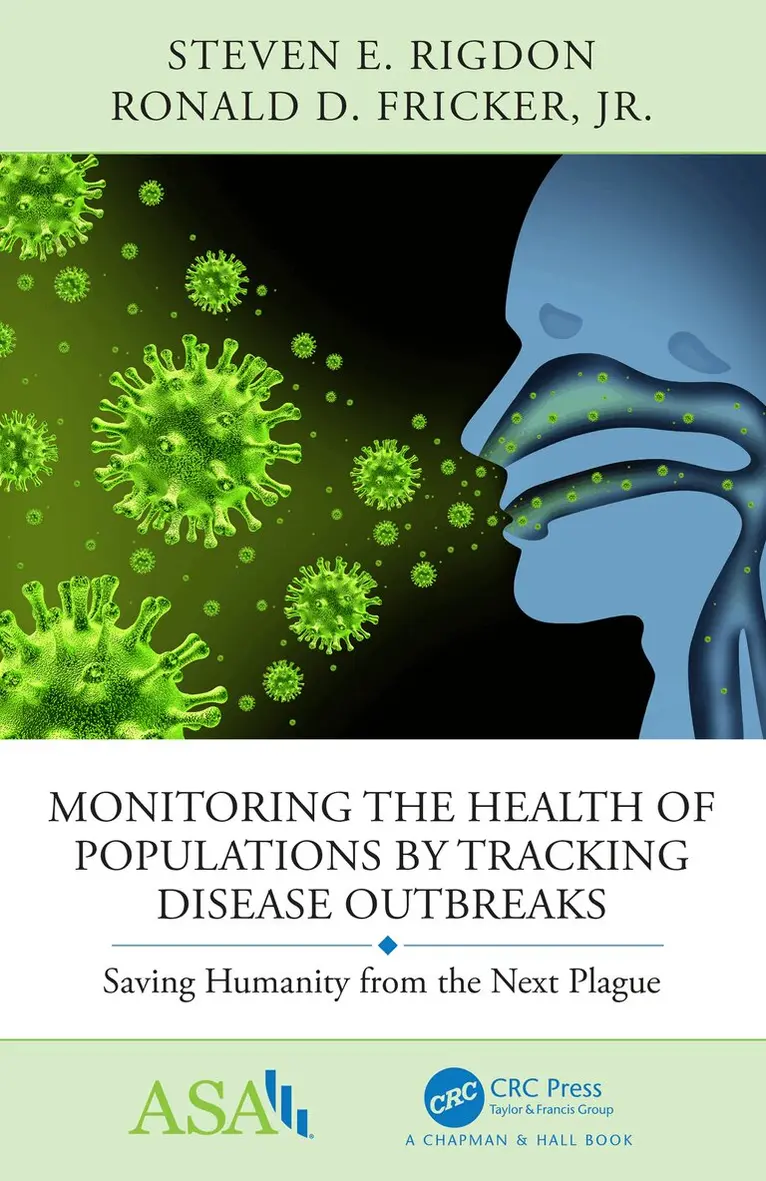
Monitoring the Health of Populations by Tracking Disease Outbreaks
Saving Humanity from the Next Plague
Inbunden, Engelska, 2020
1 258 kr
Skickas inom 10-15 vardagar
With COVID-19 sweeping across the globe with near impunity, it is thwarting governments and health organizations efforts to contain it. Not since the 1918 Spanish Flu have citizens of developed countries experienced such a large-scale disease outbreak that is having devastating health and economic impacts. One reason such outbreaks are not more common has been the success of the public health community, including epidemiologists and biostatisticians, in identifying and then mitigating or eliminating the outbreaks. Monitoring the Health of Populations by Tracking Disease Outbreaks: Saving Humanity from the Next Plague is the story of the application of statistics for disease detection and tracking. The work of public health officials often crucially depends on statistical methods to help discern whether an outbreak may be occurring and, if there is sufficient evidence of an outbreak, then to locate and track it. Statisticians also help collect critical information, and they analyze the resulting data to help investigators zero in on a cause for a disease. With the recent outbreaks of diseases such as swine and bird flu, Ebola, and now COVID-19, the role that epidemiologists and biostatisticians play is more important than ever.Features:· Discusses the crucial roles of statistics in early disease detection.· Outlines the concepts and methods of disease surveillance.· Covers surveillance techniques for communicable diseases like Zika and chronic diseases such as cancer.· Gives real world examples of disease investigations including smallpox, syphilis, anthrax, yellow fever, and microcephaly (and its relationship to the Zika virus).Via the process of identifying an outbreak, finding its cause, and developing a plan to prevent its reoccurrence, this book tells the story of how medical and public health professionals use statistics to help mitigate the effects of disease. This book will help readers understand how statisticians and epidemiologists help combat the spread of such diseases in order to improve public health across the world.
235 kr
Tillfälligt slut
928 kr
Skickas inom 7-10 vardagar
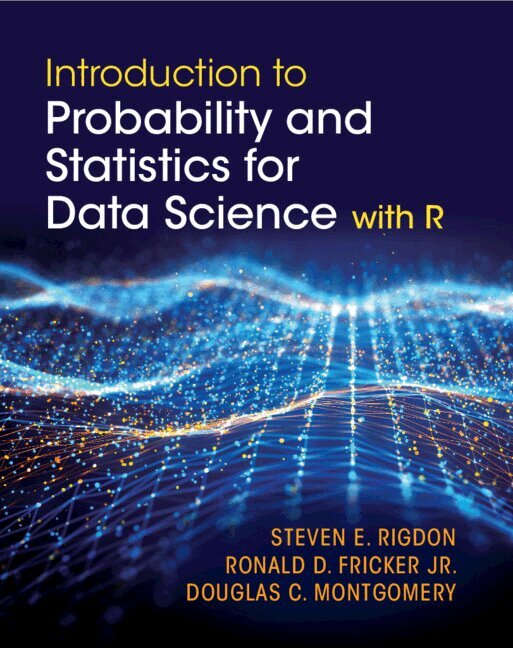
Introduction to Probability and Statistics for Data Science provides a solid course in the fundamental concepts, methods and theory of statistics for students in statistics, data science, biostatistics, engineering, and physical science programs. It teaches students to understand, use, and build on modern statistical techniques for complex problems. The authors develop the methods from both an intuitive and mathematical angle, illustrating with simple examples how and why the methods work. More complicated examples, many of which incorporate data and code in R, show how the method is used in practice. Through this guidance, students get the big picture about how statistics works and can be applied. This text covers more modern topics such as regression trees, large scale hypothesis testing, bootstrapping, MCMC, time series, and fewer theoretical topics like the Cramer-Rao lower bound and the Rao-Blackwell theorem. It features more than 250 high-quality figures, 180 of which involve actual data. Data and R are code available on our website so that students can reproduce the examples and do hands-on exercises.
2 031 kr
Skickas inom 7-10 vardagar
Introduction to Probability and Statistics for Data Science provides a solid course in the fundamental concepts, methods and theory of statistics for students in statistics, data science, biostatistics, engineering, and physical science programs. It teaches students to understand, use, and build on modern statistical techniques for complex problems. The authors develop the methods from both an intuitive and mathematical angle, illustrating with simple examples how and why the methods work. More complicated examples, many of which incorporate data and code in R, show how the method is used in practice. Through this guidance, students get the big picture about how statistics works and can be applied. This text covers more modern topics such as regression trees, large scale hypothesis testing, bootstrapping, MCMC, time series, and fewer theoretical topics like the Cramer-Rao lower bound and the Rao-Blackwell theorem. It features more than 250 high-quality figures, 180 of which involve actual data. Data and R are code available on our website so that students can reproduce the examples and do hands-on exercises.
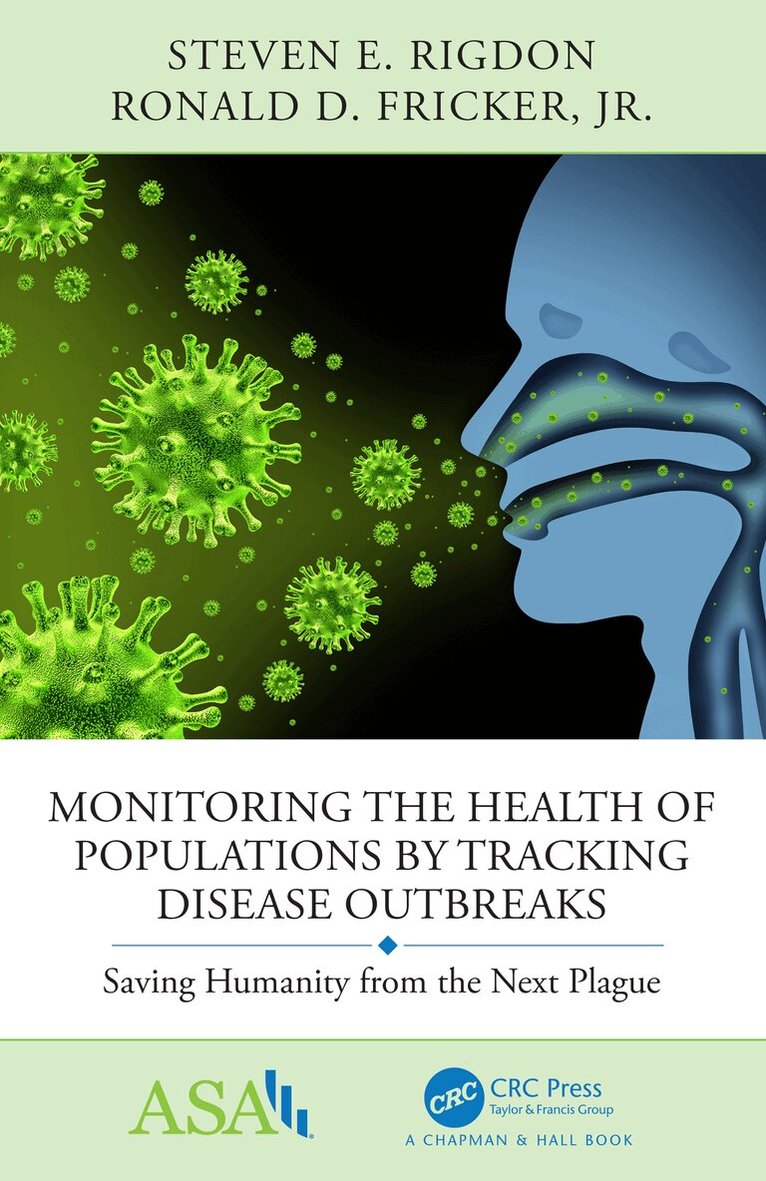
Monitoring the Health of Populations by Tracking Disease Outbreaks
Saving Humanity from the Next Plague
Häftad, Engelska, 2020
480 kr
Skickas inom 10-15 vardagar
With COVID-19 sweeping across the globe with near impunity, it is thwarting governments and health organizations efforts to contain it. Not since the 1918 Spanish Flu have citizens of developed countries experienced such a large-scale disease outbreak that is having devastating health and economic impacts. One reason such outbreaks are not more common has been the success of the public health community, including epidemiologists and biostatisticians, in identifying and then mitigating or eliminating the outbreaks. Monitoring the Health of Populations by Tracking Disease Outbreaks: Saving Humanity from the Next Plague is the story of the application of statistics for disease detection and tracking. The work of public health officials often crucially depends on statistical methods to help discern whether an outbreak may be occurring and, if there is sufficient evidence of an outbreak, then to locate and track it. Statisticians also help collect critical information, and they analyze the resulting data to help investigators zero in on a cause for a disease. With the recent outbreaks of diseases such as swine and bird flu, Ebola, and now COVID-19, the role that epidemiologists and biostatisticians play is more important than ever.Features:· Discusses the crucial roles of statistics in early disease detection.· Outlines the concepts and methods of disease surveillance.· Covers surveillance techniques for communicable diseases like Zika and chronic diseases such as cancer.· Gives real world examples of disease investigations including smallpox, syphilis, anthrax, yellow fever, and microcephaly (and its relationship to the Zika virus).Via the process of identifying an outbreak, finding its cause, and developing a plan to prevent its reoccurrence, this book tells the story of how medical and public health professionals use statistics to help mitigate the effects of disease. This book will help readers understand how statisticians and epidemiologists help combat the spread of such diseases in order to improve public health across the world.