Ronald G. Bercaw - Böcker
Visar alla böcker från författaren Ronald G. Bercaw. Handla med fri frakt och snabb leverans.
6 produkter
6 produkter
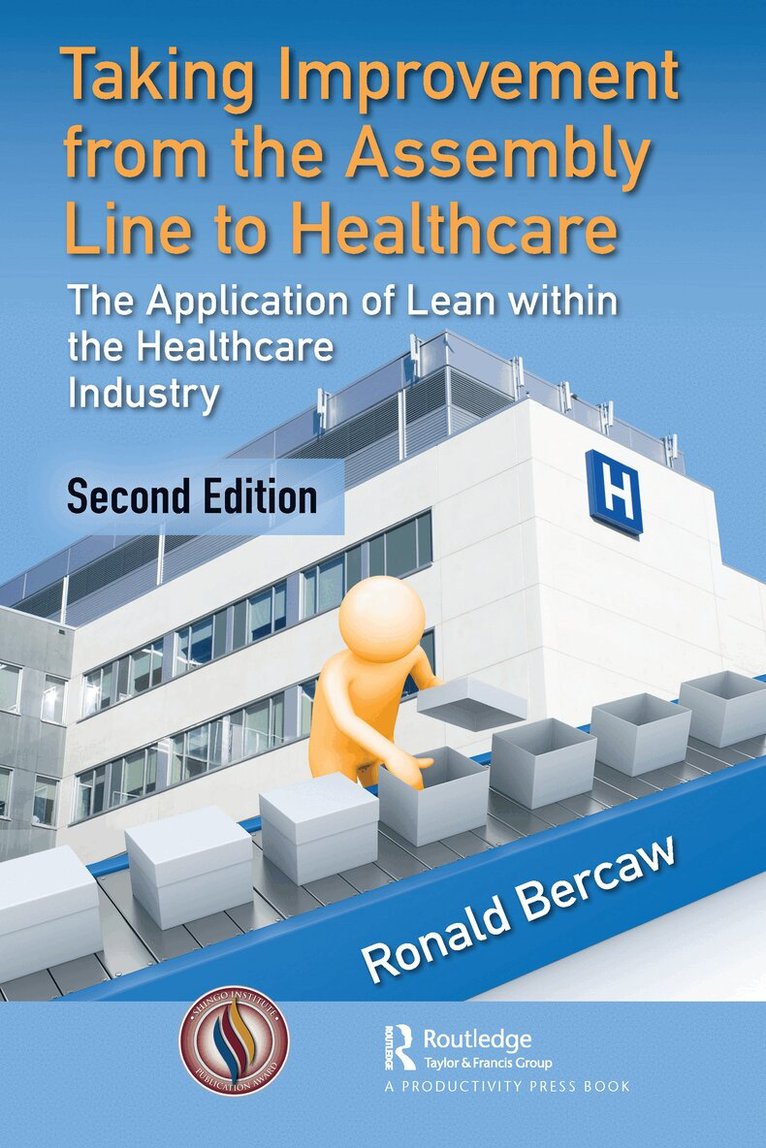
Taking Improvement from the Assembly Line to Healthcare
The Application of Lean within the Healthcare Industry
Häftad, Engelska, 2021
593 kr
Skickas inom 10-15 vardagar
Quality healthcare is a cornerstone of any healthy society. In the U.S., we have access to sophisticated medical technology, world renowned physicians, highly trained nurses and hospital personnel, advanced pharmaceuticals, and innovations in diagnosis and treatment. But for all of our sophistication, serious problems afflict healthcare systems across the U.S. today – problems that cause severe hardship for families in communities large and small. Considering its impact on society, healthcare is arguably our most important industry. Good health is a key aspect of a productive and fulfilling life no matter what a person’s age, cultural background, social status or career. To live well and provide for ourselves and others, we all depend on a strong healthcare system that can help us prevent illness and access effective treatment when we need it. Needless to say, building and maintaining that robust healthcare system is no easy task.According to a report by the Institute of Medicine, up to 98,000 deaths per year occur in U.S. hospitals as a result of adverse events. In other words, errors in hospitals cause more annual deaths than acceptable and are totally preventable. With the healthcare system in such critical condition, Lean is the best possible treatment as it moves to eliminate waste and improve processes.The revised edition of Taking Improvement from the Assembly Line to Healthcare supplies step-by-step guidance on how to implement Lean methods to achieve world-class improvement with the healthcare industry. The updated edition of this Shingo award winner book provides specific examples of Lean implementation in emergency medicine, diagnostic imaging, orthopedic clinics, general internal medicine, administration, and community care. Highlighting quality, safety, and financial evidence as to why immediate change is both possible and essential, the book provides a firm foundation in Lean improvement and the tools used to deliver sustainable solutions. This revised edition presents new and updated client interviews and how the process has changed or been enhanced, what worked and what didn’t work. New case studies from U.S. and Canada provide readers with the real-world understanding needed to embark and sustain a successful improvement journey.
Taking Improvement from the Assembly Line to Healthcare
The Application of Lean within the Healthcare Industry
Inbunden, Engelska, 2021
2 012 kr
Skickas inom 10-15 vardagar
Quality healthcare is a cornerstone of any healthy society. In the U.S., we have access to sophisticated medical technology, world renowned physicians, highly trained nurses and hospital personnel, advanced pharmaceuticals, and innovations in diagnosis and treatment. But for all of our sophistication, serious problems afflict healthcare systems across the U.S. today – problems that cause severe hardship for families in communities large and small. Considering its impact on society, healthcare is arguably our most important industry. Good health is a key aspect of a productive and fulfilling life no matter what a person’s age, cultural background, social status or career. To live well and provide for ourselves and others, we all depend on a strong healthcare system that can help us prevent illness and access effective treatment when we need it. Needless to say, building and maintaining that robust healthcare system is no easy task.According to a report by the Institute of Medicine, up to 98,000 deaths per year occur in U.S. hospitals as a result of adverse events. In other words, errors in hospitals cause more annual deaths than acceptable and are totally preventable. With the healthcare system in such critical condition, Lean is the best possible treatment as it moves to eliminate waste and improve processes.The revised edition of Taking Improvement from the Assembly Line to Healthcare supplies step-by-step guidance on how to implement Lean methods to achieve world-class improvement with the healthcare industry. The updated edition of this Shingo award winner book provides specific examples of Lean implementation in emergency medicine, diagnostic imaging, orthopedic clinics, general internal medicine, administration, and community care. Highlighting quality, safety, and financial evidence as to why immediate change is both possible and essential, the book provides a firm foundation in Lean improvement and the tools used to deliver sustainable solutions. This revised edition presents new and updated client interviews and how the process has changed or been enhanced, what worked and what didn’t work. New case studies from U.S. and Canada provide readers with the real-world understanding needed to embark and sustain a successful improvement journey.
496 kr
Skickas inom 10-15 vardagar
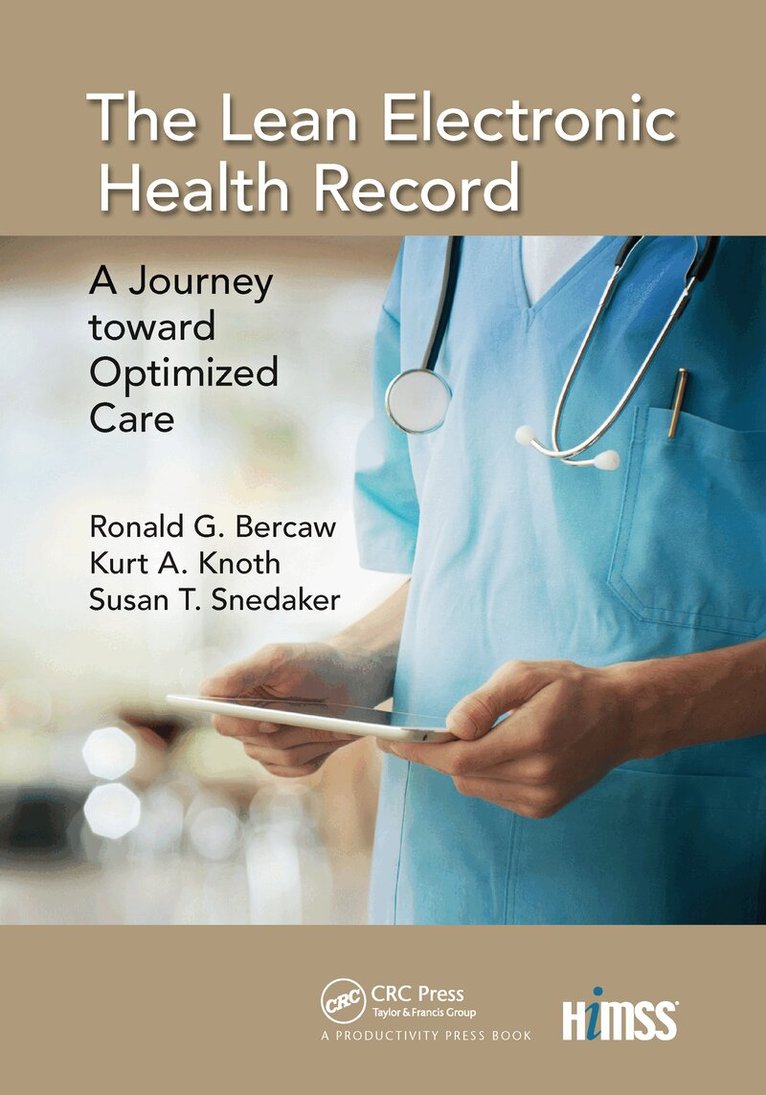
The Electronic Health Record (EHR) is a reflection of the way your organization conducts business. If you’re looking to make lasting improvements in the delivery of care, you must start with looking at the system from your patient’s perspective to understand what is of value and what is simply waste. When you begin seeing in this way, you’ll begin building in this way. When you begin building in this way, you’ll begin driving improvements in your care delivery. Only then will your EHR be able to support lasting improvements, driving better patient care and outcomes at lower costs. Healthcare organizations are under increasing pressure to improve on all fronts. This can be achieved, but only by changing the very way we look at care. No longer can we look at care just from the organization or provider’s perspective; we must start with the end in mind – the patient. Compelling case studies, discussed throughout this book, demonstrate that modifying processes and workflows using Lean methodologies lead to substantial improvements. These changes must be undertaken in a clear, consistent, and methodical manner. When implementing an EHR based on existing workflows and sometimes antiquated processes, organizations struggle to sustain improvements. Many organizations have deployed an EHR and now face optimization challenges, including the decision to move to a new EHR vendor. The financial implications of upgrading, optimizing or replacing an EHR system are significant and laden with risk. Choose the wrong vendor, the wrong system, or the wrong approach and you may struggle under the weight of that decision for decades. Organizations that successfully leverage the convergence of needs – patients demanding better care, providers needing more efficient workflows and organizations desiring better financials – will survive and thrive. This book ties together current healthcare challenges with proven Lean methodologies to provide a clear, concise roadmap to help organizations drive real improvements in the selection, implementation, and on-going management of their EHR systems. Improving patient care, improving the provider experience and reducing organizational costs are the next frontier in the use of EHRs and this book provides a roadmap to that desired future state.
579 kr
Skickas inom 10-15 vardagar
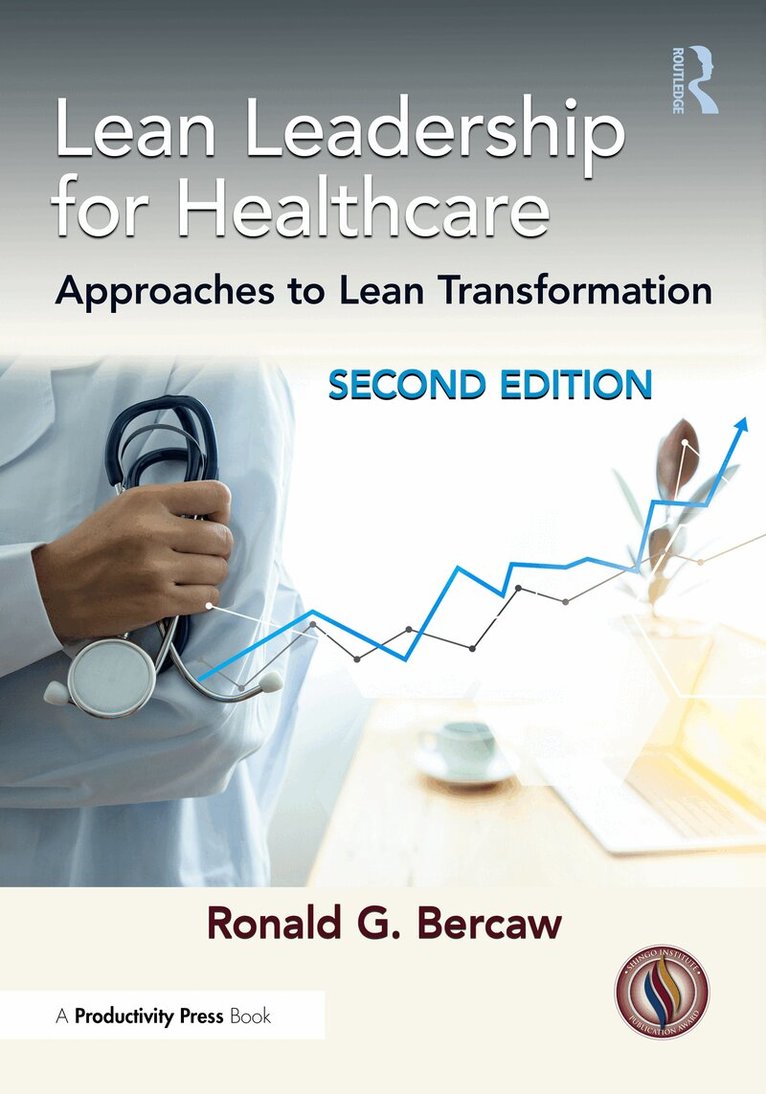
The second edition of this Shingo Prize-winning book builds and expands on the first edition. When originally published over ten years ago, there was a need to understand how to lead process and cultural transformation within the healthcare industry. The perfect storm of rising costs, decreasing reimbursements, substandard quality, a shortage of resources, and a new run of better technology and electronic health systems requires leadership to navigate in a different environment.Since the original book, lean improvements have been made to the governance of process and quality improvement programs, and to the management of operations using the daily management system. The core of the book remains the same; however, the results have been updated and made more current, given access to better data and enhanced use of the electronic health record. Extraordinarily good advice is given throughout this book on best practices of what to do and what not to do in leading large-scale change based on another ten years of hands-on experience of the author working in large and small healthcare systems across the country, including case studies that share the time-tested insights of healthcare team members and leaders. The book outlines a management system for sustaining lean improvements and provides the lean leadership approaches, thoughts, and visual tools needed to guide organizations along the path toward world-class healthcare performance. It walks the reader through developing an improvement strategy, laying out a detailed transformation roadmap for initiating, accelerating, and sustaining lean improvements and delivering world-class improvement of outcomes and culture, discussing leadership behaviors necessary for success, and closes with actions that can be used to mitigate risk. It reviews the fundamentals of lean and explains how to link a strategy of continuous improvement to corporate strategy to achieve operational excellence. The book also describes how to mitigate the risk of failure when undergoing large-scale corporate change, including what can go wrong and how to prevent these failures.Updated and refreshed, Lean Leadership for Healthcare remains the gold standard for end-to-end delivery of lean transformation in healthcare. This book is ideal for leaders in the healthcare industry looking to initiate or accelerate lean improvements to clinical and non-clinical processes.Ronald G. Bercaw is the President of Breakthrough Horizons, LTD, a management consulting company specializing in World-Class Improvement through the application of the Toyota Business System, or “lean.” With over 38 years of experience in operations, his hands-on, lean management experience was gained through multiple enterprise transformations in different industries including custom packaging, power reliability electronics assembly, and test and measurement products. Educated at Purdue University, he learned the details and disciplined applications of lean principles, habits, and tools from both the Shingijutsu Sensei and their first-generation disciples. Since leaving industry, Ron has consulting experience in the healthcare sector (U.S. and Canada health systems including primary care, acute care, and community applications of both clinical and back shop operations), the commercial sector (administration, manufacturing, distribution, supply chain, and engineering), and the public sector (U.S. Army, U.S. Navy, U.S. Air Force including Depot Repair Operations, the Pentagon, and Surgeon General Assignments). Ron is also a recognized author with the release of four books, including Shingo award-winners entitled Taking Improvement from the Assembly Line to Healthcare, and Lean Leadership for Healthcare. He is a co-author of The Lean Electronic Health Record, along with Susan Snedaker and Kurt Knoth, as part of the HIMSS book series.
2 012 kr
Skickas inom 10-15 vardagar
The second edition of this Shingo Prize-winning book builds and expands on the first edition. When originally published over ten years ago, there was a need to understand how to lead process and cultural transformation within the healthcare industry. The perfect storm of rising costs, decreasing reimbursements, substandard quality, a shortage of resources, and a new run of better technology and electronic health systems requires leadership to navigate in a different environment.Since the original book, lean improvements have been made to the governance of process and quality improvement programs, and to the management of operations using the daily management system. The core of the book remains the same; however, the results have been updated and made more current, given access to better data and enhanced use of the electronic health record. Extraordinarily good advice is given throughout this book on best practices of what to do and what not to do in leading large-scale change based on another ten years of hands-on experience of the author working in large and small healthcare systems across the country, including case studies that share the time-tested insights of healthcare team members and leaders. The book outlines a management system for sustaining lean improvements and provides the lean leadership approaches, thoughts, and visual tools needed to guide organizations along the path toward world-class healthcare performance. It walks the reader through developing an improvement strategy, laying out a detailed transformation roadmap for initiating, accelerating, and sustaining lean improvements and delivering world-class improvement of outcomes and culture, discussing leadership behaviors necessary for success, and closes with actions that can be used to mitigate risk. It reviews the fundamentals of lean and explains how to link a strategy of continuous improvement to corporate strategy to achieve operational excellence. The book also describes how to mitigate the risk of failure when undergoing large-scale corporate change, including what can go wrong and how to prevent these failures.Updated and refreshed, Lean Leadership for Healthcare remains the gold standard for end-to-end delivery of lean transformation in healthcare. This book is ideal for leaders in the healthcare industry looking to initiate or accelerate lean improvements to clinical and non-clinical processes.Ronald G. Bercaw is the President of Breakthrough Horizons, LTD, a management consulting company specializing in World-Class Improvement through the application of the Toyota Business System, or “lean.” With over 38 years of experience in operations, his hands-on, lean management experience was gained through multiple enterprise transformations in different industries including custom packaging, power reliability electronics assembly, and test and measurement products. Educated at Purdue University, he learned the details and disciplined applications of lean principles, habits, and tools from both the Shingijutsu Sensei and their first-generation disciples. Since leaving industry, Ron has consulting experience in the healthcare sector (U.S. and Canada health systems including primary care, acute care, and community applications of both clinical and back shop operations), the commercial sector (administration, manufacturing, distribution, supply chain, and engineering), and the public sector (U.S. Army, U.S. Navy, U.S. Air Force including Depot Repair Operations, the Pentagon, and Surgeon General Assignments). Ron is also a recognized author with the release of four books, including Shingo award-winners entitled Taking Improvement from the Assembly Line to Healthcare, and Lean Leadership for Healthcare. He is a co-author of The Lean Electronic Health Record, along with Susan Snedaker and Kurt Knoth, as part of the HIMSS book series.
747 kr
Skickas inom 10-15 vardagar
The Electronic Health Record (EHR) is a reflection of the way your organization conducts business. If you’re looking to make lasting improvements in the delivery of care, you must start with looking at the system from your patient’s perspective to understand what is of value and what is simply waste. When you begin seeing in this way, you’ll begin building in this way. When you begin building in this way, you’ll begin driving improvements in your care delivery. Only then will your EHR be able to support lasting improvements, driving better patient care and outcomes at lower costs.Healthcare organizations are under increasing pressure to improve on all fronts. This can be achieved, but only by changing the very way we look at care. No longer can we look at care just from the organization or provider’s perspective; we must start with the end in mind – the patient. Compelling case studies, discussed throughout this book, demonstrate that modifying processes and workflows using Lean methodologies lead to substantial improvements. These changes must be undertaken in a clear, consistent, and methodical manner. When implementing an EHR based on existing workflows and sometimes antiquated processes, organizations struggle to sustain improvements.Many organizations have deployed an EHR and now face optimization challenges, including the decision to move to a new EHR vendor. The financial implications of upgrading, optimizing or replacing an EHR system are significant and laden with risk. Choose the wrong vendor, the wrong system, or the wrong approach and you may struggle under the weight of that decision for decades. Organizations that successfully leverage the convergence of needs – patients demanding better care, providers needing more efficient workflows and organizations desiring better financials – will survive and thrive.This book ties together current healthcare challenges with proven Lean methodologies to provide a clear, concise roadmap to help organizations drive real improvements in the selection, implementation, and on-going management of their EHR systems. Improving patient care, improving the provider experience and reducing organizational costs are the next frontier in the use of EHRs and this book provides a roadmap to that desired future state.