Ronald Holzhacker - Böcker
Visar alla böcker från författaren Ronald Holzhacker. Handla med fri frakt och snabb leverans.
7 produkter
7 produkter
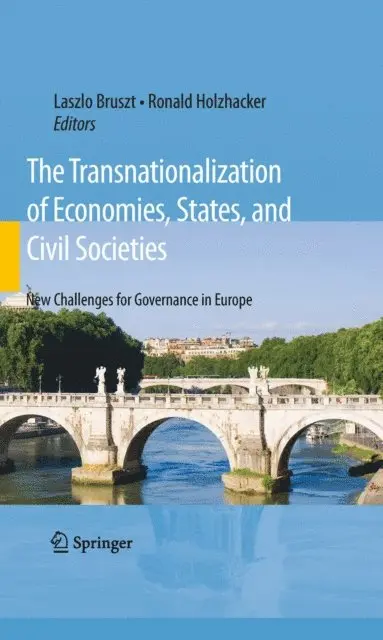
Transnationalization of Economies, States, and Civil Societies
New Challenges for Governance in Europe
Inbunden, Engelska, 2009
1 069 kr
Skickas inom 10-15 vardagar
7. 1. 1 Research Question The electricity sector has undergone and continues to experience a fundamental transformation. Liberalization, deregulation and re-regulation have spread around the world, which has led to a far-reaching restructuring of the sector. In Europe, this trend has been reinforced by a European Union (EU) directive adopted in 1996. This directive alone, however, cannot suf ciently explain how and why most co- tries, some of them not members of the EU, decided to liberalize their electricity sectors. First, the directive gave large leeway to the member states about how to implement liberalization, and second, the phenomenon is an almost global trend, not limited to Europe. Therefore, Europeanization as an explanation for the electr- ity market's liberalization has been criticized for overemphasizing the impact of the EU (Fligstein and Merand 2001; Jordana et al. 2006; Levi-Faur 2004; Verdier and Breen 2001). A more encompassing approach to explain why governments decided to lib- alize their electricity markets is offered by the recent research agenda of trans- tionalization. Transnationalization can be de ned as '[...] the regular interactions between state and non-state actors across national boundaries aimed at shaping political and social outcomes at home, abroad, and in an emerging global sphere of governance' (Orenstein and Schmitz 2006: 7).The approach of transnationalization includes both state and nonstate actors.
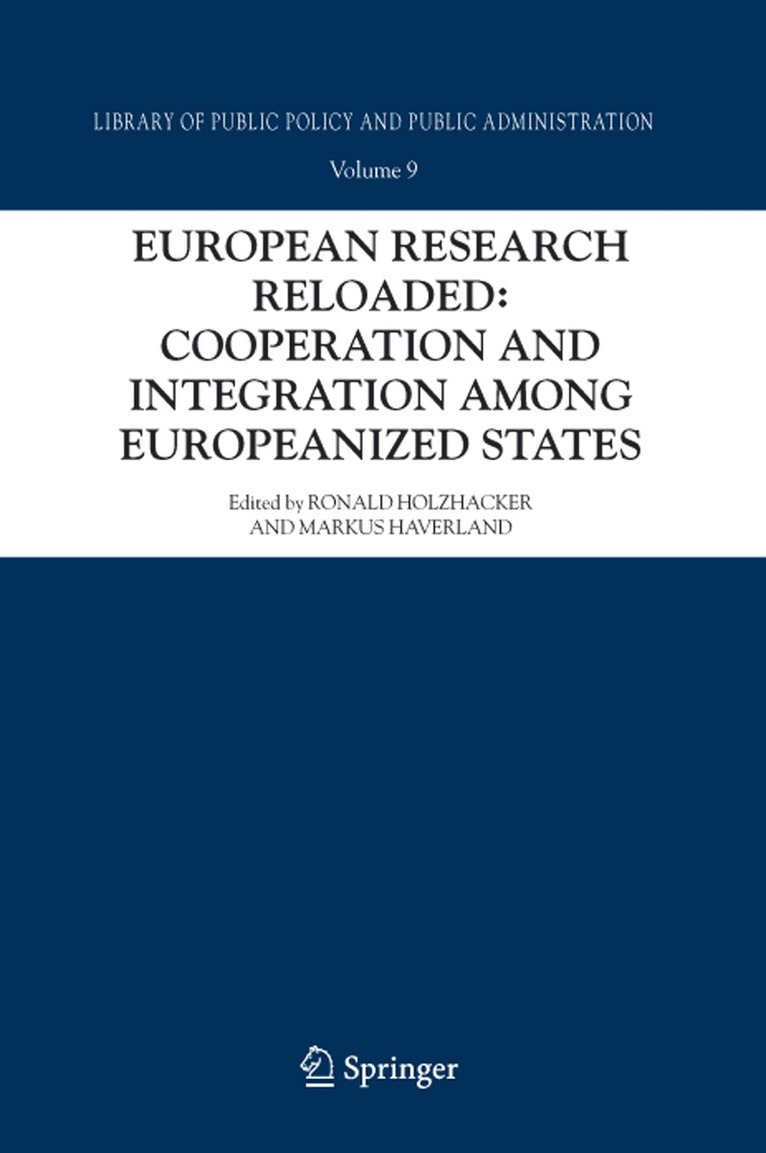
European Research Reloaded: Cooperation and Integration among Europeanized States
Inbunden, Engelska, 2006
1 069 kr
Skickas inom 10-15 vardagar
The Three Waves of European Research European cooperation and integration has continued to progress forward over the past five decades, with an ever deepening impact on the member states. The first wave of research into these processes concerned European integration, the process of institution building and policy developments at the European Union (EU) level. The second wave, on Europeanization used integration as an explanatory factor in understanding domestic political change and continuity related to the EU. What is now necessary is to link our understanding of these ‘bottom-up’ and ‘top-down’ processes of integration and Europeanization in the EU. This book argues that a third wave of research on the EU is needed to adequately understand the increased interconnectedness between the European and national political levels. We posit that this third wave should be sensitive to the temporal dimension of European integration and Europeanization. In particular, we seek to link the processes of European integration and Europeanization in a new way by asking the question: how has Europeanization affected current modes of integration and cooperation in the EU? Part I. Europeanization of the Member States. Preparing the ground for the third wave, the first part of the book concerns Europeanization. In order to fully understand the feedback of Europeanization on cooperation and integration it is important to analyze how European integration has had an impact on member states in the first place, in particular indirectly, beyond the direct mechanism of compliance with European policies.
Transnationalization of Economies, States, and Civil Societies
New Challenges for Governance in Europe
Häftad, Engelska, 2014
1 069 kr
Skickas inom 10-15 vardagar
7. 1. 1 Research Question The electricity sector has undergone and continues to experience a fundamental transformation. Liberalization, deregulation and re-regulation have spread around the world, which has led to a far-reaching restructuring of the sector. In Europe, this trend has been reinforced by a European Union (EU) directive adopted in 1996. This directive alone, however, cannot suf ciently explain how and why most co- tries, some of them not members of the EU, decided to liberalize their electricity sectors. First, the directive gave large leeway to the member states about how to implement liberalization, and second, the phenomenon is an almost global trend, not limited to Europe. Therefore, Europeanization as an explanation for the electr- ity market's liberalization has been criticized for overemphasizing the impact of the EU (Fligstein and Merand 2001; Jordana et al. 2006; Levi-Faur 2004; Verdier and Breen 2001). A more encompassing approach to explain why governments decided to lib- alize their electricity markets is offered by the recent research agenda of trans- tionalization. Transnationalization can be de ned as '[...] the regular interactions between state and non-state actors across national boundaries aimed at shaping political and social outcomes at home, abroad, and in an emerging global sphere of governance' (Orenstein and Schmitz 2006: 7).The approach of transnationalization includes both state and nonstate actors.
Democratic Governance and European Integration
Linking Societal and State Processes of Democracy
Inbunden, Engelska, 2007
1 988 kr
Skickas inom 7-10 vardagar
As the power and scope of the European Union moves further, beyond traditional forms of international cooperation between sovereign states, it is important to analyse how these developments are impacting upon national institutions and processes of democratic representation and legitimacy in the member countries. The authors in this book identify four core processes of democratic governance present in any democratic political system that link societal and state processes of decision-making: opinion formation, interest intermediation, national executive decision-making and national parliamentary scrutiny. From a normative perspective they discuss what impacts this process of Europeanization has on democracy in the evolving system. They conclude that more changes are seen within the state-centric than in the societal-centred processes of democracy, thus the public seems to have been 'left behind' in the process of constructing Europe. The empirical research and normative discussion presented in this book are designed to further our knowledge concerning the Europeanization of social and state processes of democracy and to contribute to the continuing dialogue on democracy in the European Union.This book will be of great interest to academics and researchers of political science, public policy and international relations, as well as those interested in European studies and comparative politics.
Del 1 - Political Ecology in the Asia Pacific Region
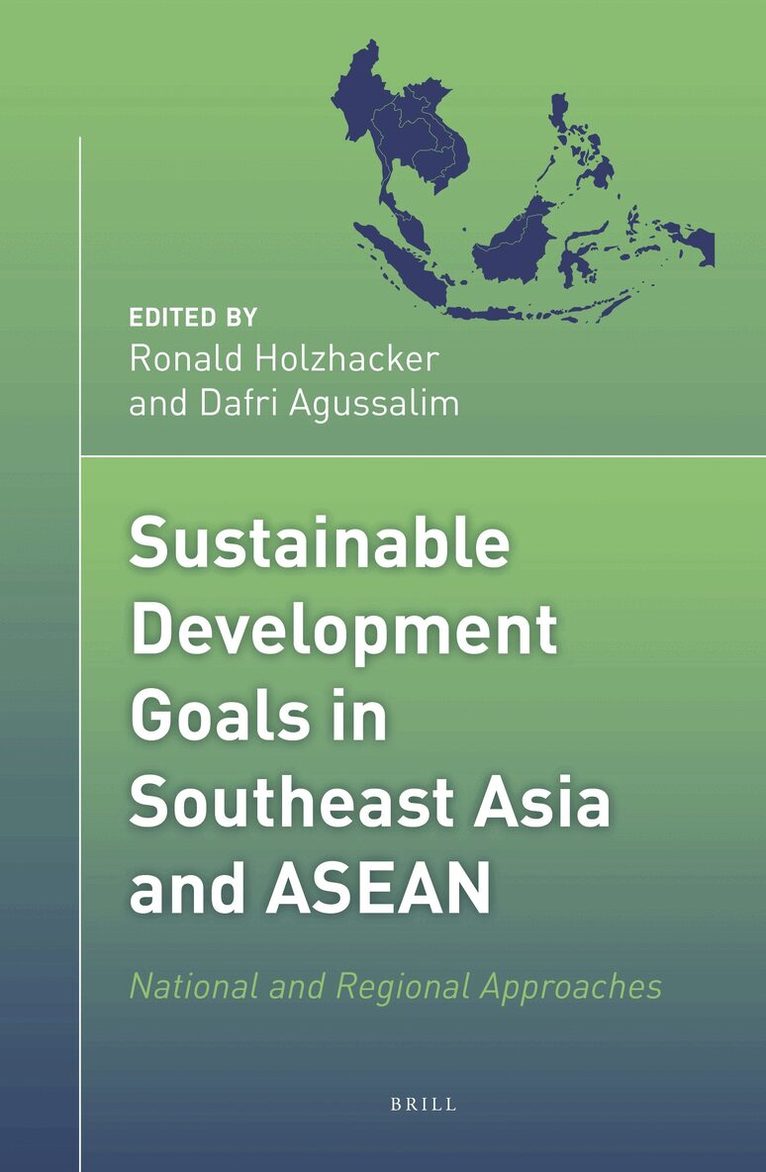
Sustainable Development Goals in Southeast Asia and ASEAN
National and Regional Approaches
Inbunden, Engelska, 2019
2 109 kr
Skickas inom 5-8 vardagar
The international community has come together to pursue certain fundamental, common goals over the coming period to 2030 to make progress toward ending poverty and hunger, improving social and economic well-being, preserving the environment and combating climate change, and maintaining peace. The Sustainable Development Goals (SDGs) have been agreed to by states, which have in turn adopted national targets and action plans.This volume studies the governance and implementation of these goals in Southeast Asia, in particular the difficulties in the shift from the international to the national, the multi-level challenges of implementation, and the involvement of stakeholders, civil society, and citizens in the process. Contributors to this volume are scholars from across Southeast Asia who research these issues in developing (Cambodia, Laos, Myanmar), middle-income (Indonesia, Malaysia, Philippines, Thailand, Vietnam), and developed countries (Brunei, Singapore) in the region. The perspectives on governance and the SDGs emerge from the fields of political science, international relations, geography, economics, law, health, and the natural sciences.
Transformative Futures of Cities: Climate and Sustainable Development in Southeast Asia
Inbunden, Engelska, 2026
3 069 kr
Kommande
Del 9 - Library of Public Policy and Public Administration
European Research Reloaded: Cooperation and Integration among Europeanized States
Häftad, Engelska, 2011
1 069 kr
Skickas inom 10-15 vardagar
The Three Waves of European Research European cooperation and integration has continued to progress forward over the past five decades, with an ever deepening impact on the member states. The first wave of research into these processes concerned European integration, the process of institution building and policy developments at the European Union (EU) level. The second wave, on Europeanization used integration as an explanatory factor in understanding domestic political change and continuity related to the EU. What is now necessary is to link our understanding of these ‘bottom-up’ and ‘top-down’ processes of integration and Europeanization in the EU. This book argues that a third wave of research on the EU is needed to adequately understand the increased interconnectedness between the European and national political levels. We posit that this third wave should be sensitive to the temporal dimension of European integration and Europeanization. In particular, we seek to link the processes of European integration and Europeanization in a new way by asking the question: how has Europeanization affected current modes of integration and cooperation in the EU? Part I. Europeanization of the Member States. Preparing the ground for the third wave, the first part of the book concerns Europeanization. In order to fully understand the feedback of Europeanization on cooperation and integration it is important to analyze how European integration has had an impact on member states in the first place, in particular indirectly, beyond the direct mechanism of compliance with European policies.