Ronald J. Hill – författare
Visar alla böcker från författaren Ronald J. Hill. Handla med fri frakt och snabb leverans.
12 produkter
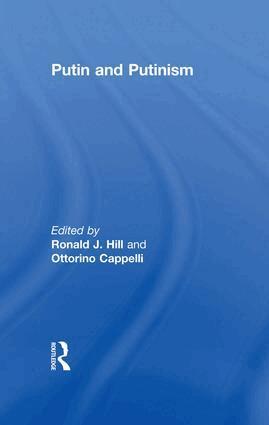
Putin and Putinism
Av Ronald J. Hill, Ottorino Cappelli
Inbunden, 2009
2585 kr
Lägg i varukorg
After two terms as president of the Russian Federation, Vladimir Putin handed over to his hand-picked successor Dmitri Medvedev on 7 May 2008, and became prime minister. As president, Putin moved swiftly and effectively to overcome the chaotic legacy of his predecessor, post-Soviet Russia’s first …
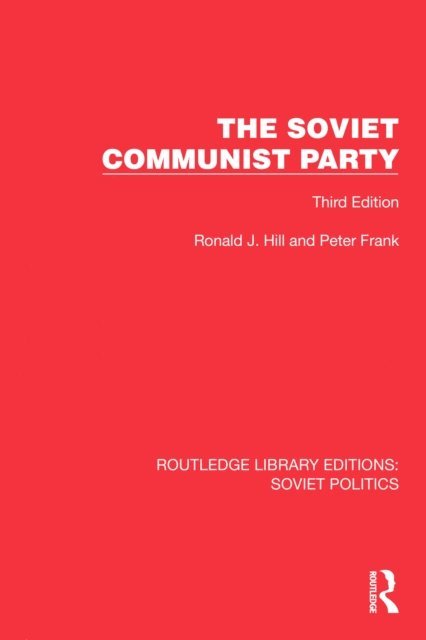
Soviet Communist Party
Third Edition
Av Ronald J. Hill, Peter Frank
Inbunden, 2024
1566 kr
Lägg i varukorg
The Soviet Communist Party (1986) provides a concise and accessible description, analysis and assessment of the Communist Party of the Soviet Union (CPSU) and its place in the Soviet political system. It covers the Party’s structures, membership, personnel and functions, and relations with the …
Soviet Communist Party
Third Edition
Av Ronald J. Hill, Peter Frank
Häftad, 2025
487 kr
Lägg i varukorg
The Soviet Communist Party (1986) provides a concise and accessible description, analysis and assessment of the Communist Party of the Soviet Union (CPSU) and its place in the Soviet political system. It covers the Party’s structures, membership, personnel and functions, and relations with the …
Soviet Communist Party
Third Edition
Av Peter Frank, Ronald J. Hill
E-bok, 2024
542 kr
Lägg i varukorg
The Soviet Communist Party (1986) provides a concise and accessible description, analysis and assessment of the Communist Party of the Soviet Union (CPSU) and its place in the Soviet political system. It covers the Party’s structures, membership, personnel and functions, and relations with the …
Soviet Communist Party
Third Edition
Av Peter Frank, Ronald J. Hill
E-bok, 2024
554 kr
Lägg i varukorg
The Soviet Communist Party (1986) provides a concise and accessible description, analysis and assessment of the Communist Party of the Soviet Union (CPSU) and its place in the Soviet political system. It covers the Party’s structures, membership, personnel and functions, and relations with the …
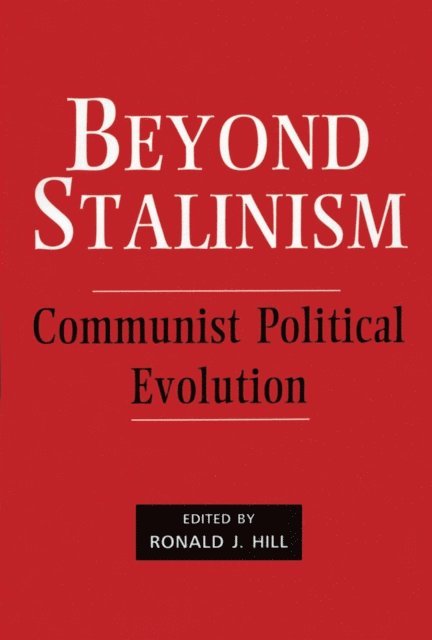
Beyond Stalinism
Communist Political Evolution
E-bok, 2014
864 kr
Lägg i varukorg
First Published in 1992. The present collection of essays brings together the concepts of change and development, by using the concept of evolution to explore various forms of change in the communist and ''post-communist'' world. The author''s experience of living in the provinces of the Soviet …
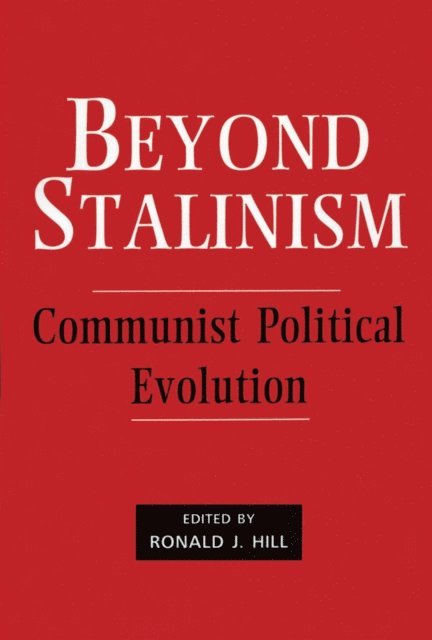
Beyond Stalinism
Communist Political Evolution
E-bok, 2014
883 kr
Lägg i varukorg
First Published in 1992. The present collection of essays brings together the concepts of change and development, by using the concept of evolution to explore various forms of change in the communist and ''post-communist'' world. The author''s experience of living in the provinces of the Soviet …
Putin and Putinism
Av Ronald J. Hill, Ottorino Cappelli
Häftad, 2015
771 kr
Lägg i varukorg
After two terms as president of the Russian Federation, Vladimir Putin handed over to his hand-picked successor Dmitri Medvedev on 7 May 2008, and became prime minister. As president, Putin moved swiftly and effectively to overcome the chaotic legacy of his predecessor, post-Soviet Russia’s first …
Beyond Stalinism
Communist Political Evolution
Häftad, 2016
750 kr
Lägg i varukorg
First Published in 1992. The present collection of essays brings together the concepts of change and development, by using the concept of evolution to explore various forms of change in the communist and 'post-communist' world. The author's experience of living in the provinces of the Soviet Union …
Putin and Putinism
Av Ottorino Cappelli, Ronald J. Hill
E-bok, 2013
883 kr
Lägg i varukorg
After two terms as president of the Russian Federation, Vladimir Putin handed over to his hand-picked successor Dmitri Medvedev on 7 May 2008, and became prime minister. As president, Putin moved swiftly and effectively to overcome the chaotic legacy of his predecessor, post-Soviet Russia’s first …
Putin and Putinism
Av Ottorino Cappelli, Ronald J. Hill
E-bok, 2013
864 kr
Lägg i varukorg
After two terms as president of the Russian Federation, Vladimir Putin handed over to his hand-picked successor Dmitri Medvedev on 7 May 2008, and became prime minister. As president, Putin moved swiftly and effectively to overcome the chaotic legacy of his predecessor, post-Soviet Russia’s first …
Beyond Stalinism
Communist Political Evolution
Inbunden, 1992
1503 kr
Tillfälligt slut
First Published in 1992. The present collection of essays brings together the concepts of change and development, by using the concept of evolution to explore various forms of change in the communist and 'post-communist' world. The author's experience of living in the provinces of the Soviet Union …