Ronald Numbers - Böcker
Visar alla böcker från författaren Ronald Numbers. Handla med fri frakt och snabb leverans.
4 produkter
4 produkter
1 011 kr
Skickas inom 7-10 vardagar
When and where did science begin? Historians have offered different answers to these questions, some pointing to Babylonian observational astronomy, some to the speculations of natural philosophers of ancient Greece. Others have opted for early modern Europe, which saw the triumph of Copernicanism and the birth of experimental science, while yet another view is that the appearance of science was postponed until the nineteenth century. Rather than posit a modern definition of science and search for evidence of it in the past, the contributors to "Wrestling with Nature" examine how students of nature themselves, in various cultures and periods of history, have understood and represented their work. The aim of each chapter is to explain the content, goals, methods, practices, and institutions associated with the investigation of nature and to articulate the strengths, limitations, and boundaries of these efforts from the perspective of the researchers themselves.With contributions from experts representing different historical periods and different disciplinary specializations, this volume offers a fresh perspective on the history of science and on what it meant, in other times and places, to wrestle with nature.
394 kr
Skickas inom 7-10 vardagar
When and where did science begin? Historians have offered different answers to these questions, some pointing to Babylonian observational astronomy, some to the speculations of natural philosophers of ancient Greece. Others have opted for early modern Europe, which saw the triumph of Copernicanism and the birth of experimental science, while yet another view is that the appearance of science was postponed until the nineteenth century. Rather than posit a modern definition of science and search for evidence of it in the past, the contributors to "Wrestling with Nature" examine how students of nature themselves, in various cultures and periods of history, have understood and represented their work. The aim of each chapter is to explain the content, goals, methods, practices, and institutions associated with the investigation of nature and to articulate the strengths, limitations, and boundaries of these efforts from the perspective of the researchers themselves.With contributions from experts representing different historical periods and different disciplinary specializations, this volume offers a fresh perspective on the history of science and on what it meant, in other times and places, to wrestle with nature.
325 kr
Skickas inom 10-15 vardagar
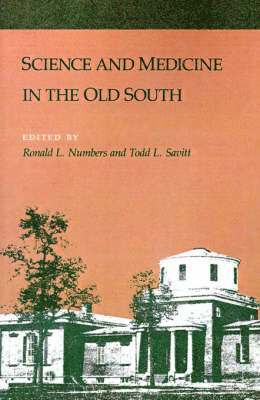
With a few notable exceptions, historians have tended to ignore the role that science and medicine played in the antebellum South. The fourteen essays in Science and Medicine in the Old South help to redress that neglect by considering scientific and medical developments in the early nineteenth-century South and by showing the ways in which the South's scientific and medical activities differed from those of other regions. The book is divided into two sections. The essays in the first section examine the broad background of science in the South between 1830 and 1860; the second section addresses medicine specifically.The essays frequently counterpoint each other. In the first section, Ronald Numbers and Janet Numbers argue that he South's failure to ""keep pace"" with the North in scientific areas resulted from demographic factors. William Scarborough asserts that slavery produced a social structure that encouraged agricultural and political careers rather than scientific and industrial ones. Charles Dew offers a strong indictment of slavery, suggesting that the conservative influence of the institution severely discouraged the adoption of modern technologies. Other essays examine institutions of higher learning in the South, southern scientific societies, and the relationship between science and theology.The section on medicine in the Old South also examines the ways in which the medical needs and practices of the Old South were both similar to and distinct from those of other regions. K. David Patterson argues that slavery in effect imported African diseases into the Southeast and created a ""modified West African disease environment."" James H. Cassedy points out that land-management policies determined by slavery- land clearing, soil exhaustion- also helped created a distinctive disease environment. Other contributors discuss southern public health problems, domestic medicine, slave folk beliefs, and the special medical needs of blacks.Science and Medicine in the Old South is a long-overdue examination of these segments of the southern cultural milieu. These essays will do much to clarify misconceptions about the time and the region; moreover, they suggest directions for future research.
315 kr
Skickas inom 10-15 vardagar