Ronald Pawly - Böcker
Visar alla böcker från författaren Ronald Pawly. Handla med fri frakt och snabb leverans.
15 produkter
15 produkter
153 kr
Skickas inom 10-15 vardagar
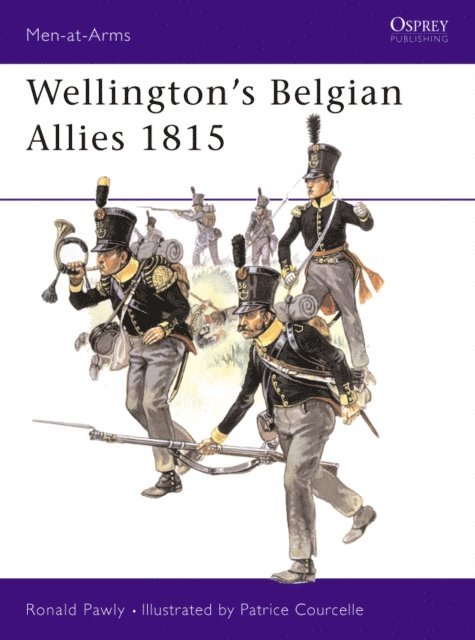
Early British accounts of the Dutch-Belgian troops' part in Quatre Bras and Waterloo were, at best, grudging, and have been repeated ever since without serious examination. Contemporary documents in Continental archives now reveal the truth - that these troops, representing a third of Wellington's army, fought hard and took heavy casualties. An expert Napoleonic researcher and art historian present the evidence regarding the Belgian units; explain their complex origins; and illustrate the text with many new monochrome studies and colour plates of troop uniforms.
153 kr
Skickas inom 10-15 vardagar
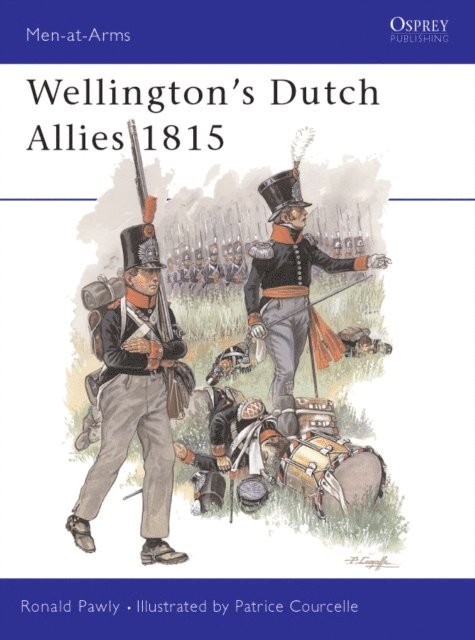
About half of Wellington's army at Waterloo, 1815, was made up of Dutch and Belgian troops. After Napoleon's first defeat in 1814 the Allied powers formed a new (and short-lived) 'kingdom of Holland and Belgium' under the house of Orange. The joint army was a mixture of patriots who had rebelled against Napoleon's occupation; and recent ex-troops of Napoleon's army; the Dutch and Belgian units were mutually suspicious, and were kept entirely separate; most officers had served Napoleon in Russia and Germany. This book shows that despite criticism from the British, many units fought extremely well at Quatre Bras and Waterloo defending some decisive points.
153 kr
Skickas inom 10-15 vardagar
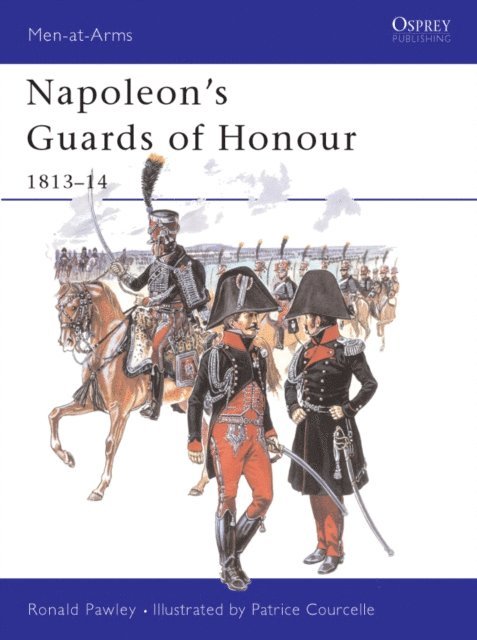
After the disastrous Russian campaign in 1812, Napoleon was desperate to scrape together a new army to resist the inevitable Allied offensive in Germany. Particularly short of cavalry, he levied four complete regiments of "Guards of Honour" - totalling no less than 10,000 men - from the upper classes of Europe. This title details the history, organization and uniforms of this cavalry corps raised by Napoleon's last dazzling campaigns in 1813 and 1814. Supported by quotes from period letters and memoirs, and illustrated with portraits and photographs of surviving items of their hussar-style uniforms, it looks at these troubled troops' successes and failures.
153 kr
Skickas inom 10-15 vardagar
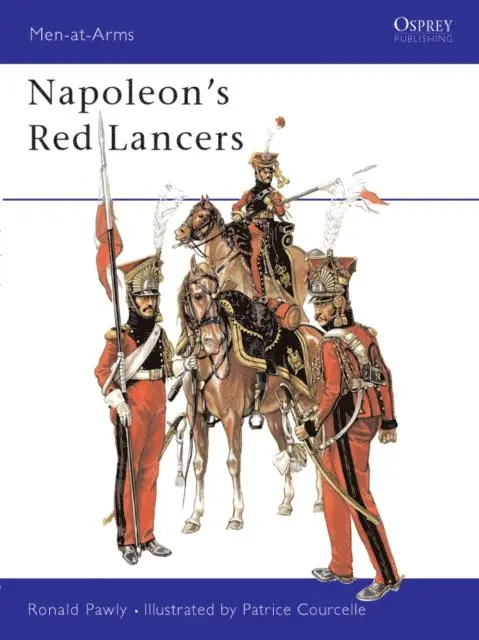
One of the most famous regiments of Napoleon's cavalry, the (Dutch) 2nd Light Horse Lancers of the Imperial Guard were universally known as the Red Lancers from their scarlet uniforms. They distinguished themselves in Russia 1812, at terrible cost; were rebuilt stronger than ever, and fought in the 1813-14 German and French campaigns; and rallied to Napoleon in 1815, charging the British squares at Waterloo. This book covers their organisation, uniforms, weapons and tactics in detail. It is based on surviving regimental documents, and rare private diaries and portraits in European family archives.
175 kr
Skickas inom 10-15 vardagar
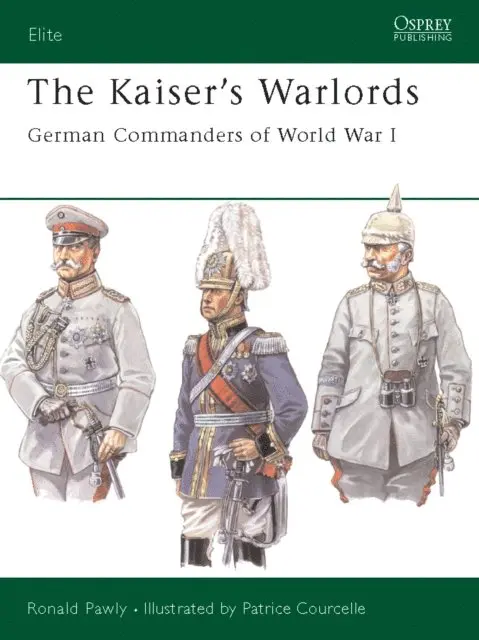
The turn of the 20th century saw Imperial Germany as essentially a militarist state.Its growing industrial resources and wealth were harnessed to the task of increasing German military power, at a time of aggressive expansionist diplomacy in competition with Britain and France. After her victories over Austria in the 1860s and France in 1870, Germany's General Staff enjoyed tremendous professional prestige throughout Europe, and was the model for all aspects of command and control. This richly illustrated volume discusses the Imperial German army - essentially that of Prussia, Bavaria and Saxony with smaller contingents from the lesser states - and its generals, the men who planned, initiated, and to a large extent controlled the course of World War I.
149 kr
Skickas inom 10-15 vardagar
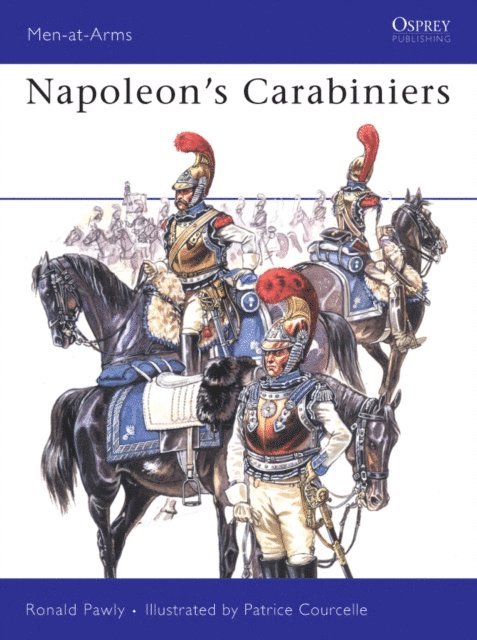
The two regiments of Carabiniers were reorganized in 1802 as part of Napoleon's cavalry reforms on taking the Consulate. They were the elite of the heavy horse, selected from the best men of the more numerous Cuirassier regiments and distinguished by tall bearskins. They fought in all Napoleon's early triumphs - Austerlitz, Friedland, Eckmuehl, Essling and Wagram. After this victorious campaign their dress was changed. They were issued cuirasses and helmets of brass, which were striking against their new white and sky-blue uniform. This book incorporates research and striking illustrations to tell the story of these brave men and detail their uniforms and equipment.
175 kr
Skickas inom 10-15 vardagar
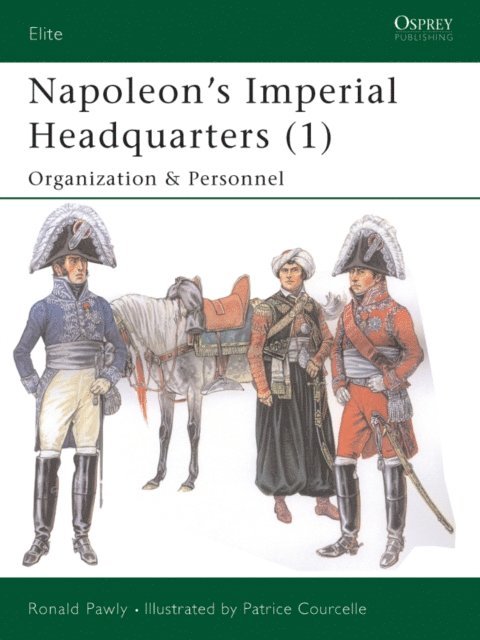
Napoleon's military successes were due to a large degree to the efficiency of his command and control systems or 'headquarters'. These comprised the Great Imperial Headquarters and the Small Imperial Headquarters, both staffed by members of the Military Household and the Civil Household including officers and men of many different departments. This book shows how their functions slotted together into a system that provided the Emperor with all the information he needed to make decisions; with the means to turn those decisions into specific orders, and to distribute them quickly; and with all the protection, logistic and other back-up services that allowed his court to function while on campaign.
175 kr
Skickas inom 10-15 vardagar
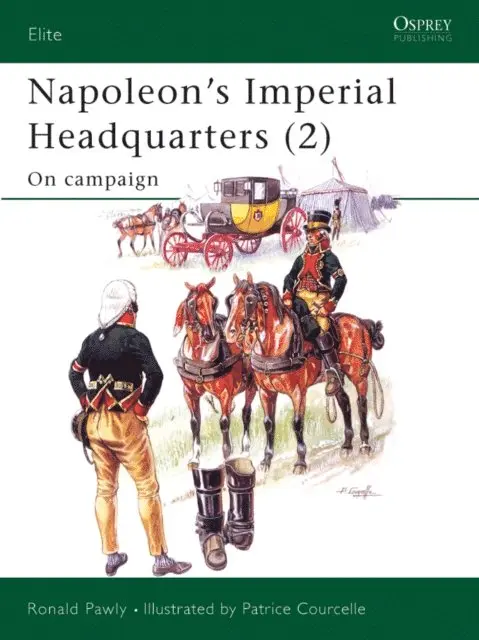
Napoleon's unrivalled career of victory was due not only to his genius, but also to the efficient system of command by which he controlled his armies. This, the second of two books looking at Napoleon's Imperial Headquarters, focuses on his campaign headquarters, examining the integration of the military and civil households within both the campaign and battlefield headquarters. The headquarters' organisation and lines of communication are discussed in detail as are Marshal Berthier's (chief of general staff) staff departments which included intelligence and the commissariat.
153 kr
Skickas inom 10-15 vardagar
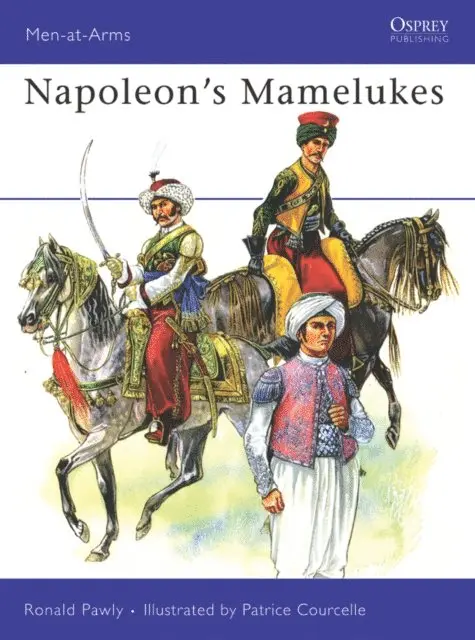
Exploring the history of Napoleon's Mamelukes throughout the Napoleonic wars, this book features detailed illustrations that enhance the story of this extraordinary unit.
153 kr
Skickas inom 10-15 vardagar
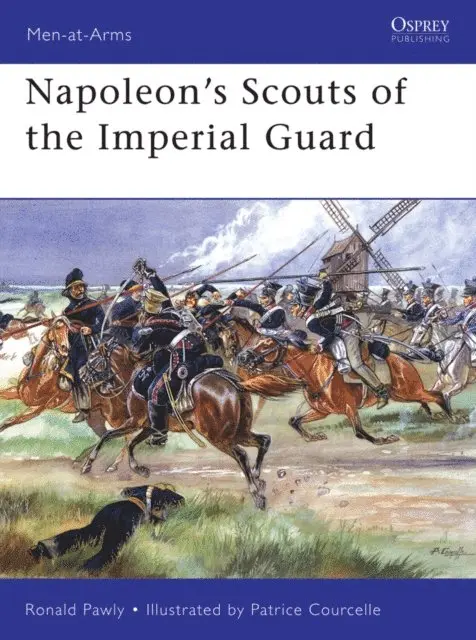
Napoleon's last 'Campaign of France' in 1814 proved to be one of his most brilliant. He relied as never before on committing his elite Imperial Guard cavalry to battle. He raised three new regiments of crack "claireurs" - 'Scouts', which were attached to the Guard Mounted Grenadiers, Empress's Dragoons and Polish Lancers respectively which would counterattack the Cossacks and gather vital information. Each regiment had its own style of uniform, but part of each was armed with lances. Although they were short-lived, these Scout units greatly distinguished themselves in the last battles of the collapsing Empire.
153 kr
Skickas inom 10-15 vardagar
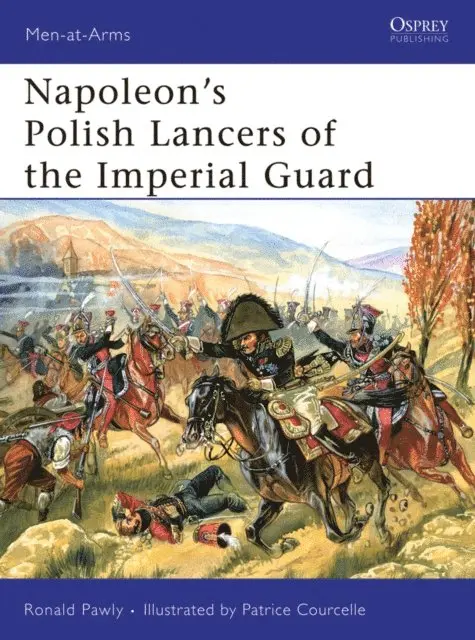
Napoleon's Polish Lancers of the Guard were unique in their appearance and in their loyalty. This book will reveal their varied and colourful uniforms as well as their long and loyal service for the Bonaparte cause. The Poles were the only foreign contingent never to defect from Napoleon's cause, a squadron even accompanied Napoleon into exile on Elba, and reformed in 1815 to charge at Waterloo. They introduced the use of the lance to the French army, adding a new tactical dimension to the use of cavalry on the battlefield and demonstrated its deadly effects in all of Napoleon most famous victories. Brave and ruthless in equal measures, this is a fascinating insight into the fighting lives of the legendary Polish Lancers.
153 kr
Skickas inom 10-15 vardagar
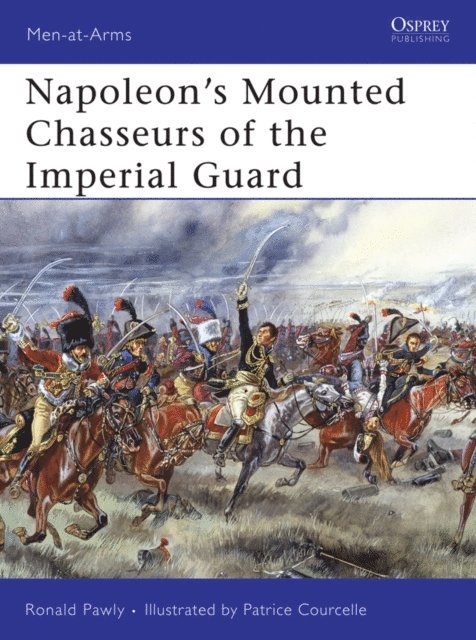
This is a concise history of the hand-picked elite cavalry guard that served as Napoleon's close personal escort and were committed to the most dangerous areas of combat on the battlefield. Formed from his original escort of 'Guides' and the 'Consular Guard' in 1799, the Mounted Chasseurs were a personal favourite of Napoleon's - who wore their uniform on campaign. Ronald Pawly's unique research in regimental archives provides unprecedented detail on individual soldiers and officers. With the Guard's colourful uniforms recreated in dazzling full colour artwork and accounts of their actions at the most critical Napoleonic battles, this is a critical insight into the soldiers who comprised an elite unit whose fighting prowess and devotion to their emperor has become legendary.
153 kr
Skickas inom 10-15 vardagar
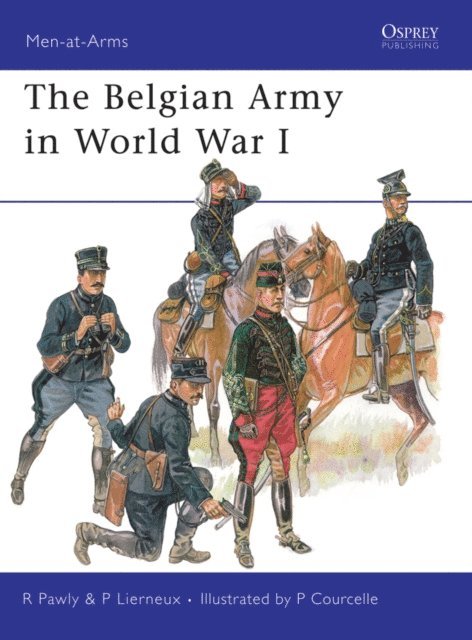
While small in numbers, the Belgian Army played a vital role in World War 2 that is often overlooked. Germany's invasion of neutral Belgium, which led Britain to declare war in August 1914, should have been swift and fierce yet the unexpected heroic defence, against great odds, of Belgian fortresses, frustrated the German Schlieffen Plan for a thrust to Paris and a lightning victory. The plucky Belgian resistance proved successful in buying time for French and British troops to mobilize and report to the front, where the Belgians would then go on to fight, stubbornly defending the northern end of the Allied trench line for the rest of the war. In this work, discover the story of this determined Army, from their organization and commanders, to their uniforms and equipment. The only main combatant army of World War I not previously covered by Osprey, this volume will be an important addition to any enthusiast's collection, accompanied by detailed artwork and archive photographs.
153 kr
Skickas inom 10-15 vardagar
Mounted upon their huge black horses, the Mounted Grenadiers of the Imperial Guard were the senior heavy cavalry unit of the French army and were never defeated in battle. Their long list of battle honours earned them the nicknames 'the Giants' and 'the Gods'. In this latest addition to the Osprey mini-series on the Imperial Guard, author Ronald Pawly tells the story of this famous unit using unparalleled documentary and pictorial sources. Along with detailed artwork depicting the unit's colourful uniforms, this book gives a history of the unit's organization and record drawn from original letters, orders, and inspection reports that still survive in the Paris Archives. Interspersed are the stories of some of the individuals that served in the Mounted Grenadiers and helped to make it one of the most storied units to have served in Napoleon's army.
153 kr
Skickas inom 10-15 vardagar
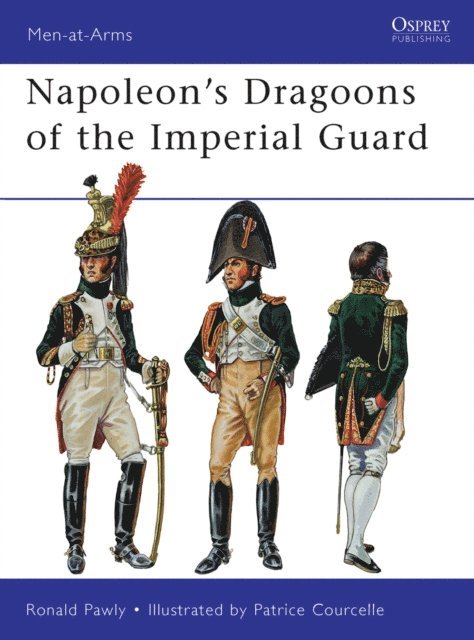
The Dragoons of Napoleon's Imperial Guard were a legendary regiment that fought with the Emperor in many famous battles across Europe.Dressed in distinctive green uniforms and classically inspired copper helmets, the Dragoons of the Imperial Guard were raised in 1806 by the same criteria as other Guard units – by selection of picked, literate veterans from Line regiments who had six to ten years of service, and citations for bravery in at least two campaigns. The following year they were named Dragons de l'Impératrice in a unique compliment to the Empress Josephine. As a ceremonial regiment it enjoyed many privileges, but it also saw combat on a number of occasions, including the battles of Essling and Wagram (1809), the Russian campaign (1812, when it suffered severe losses), at Bautzen, Wachau and Leipzig (1813), in the 1814 Campaign of France, and at Ligny and Waterloo (1815).Lavishly illustrated and based on a wealth of archival sources, this study by noted authority Ronald Pawly celebrates the colourful history and appearance of this regiment.