Ronald T. Michener – författare
Visar alla böcker från författaren Ronald T. Michener. Handla med fri frakt och snabb leverans.
12 produkter
12 produkter
Häftad, Engelska, 2012
365 kr
Skickas inom 10-15 vardagar
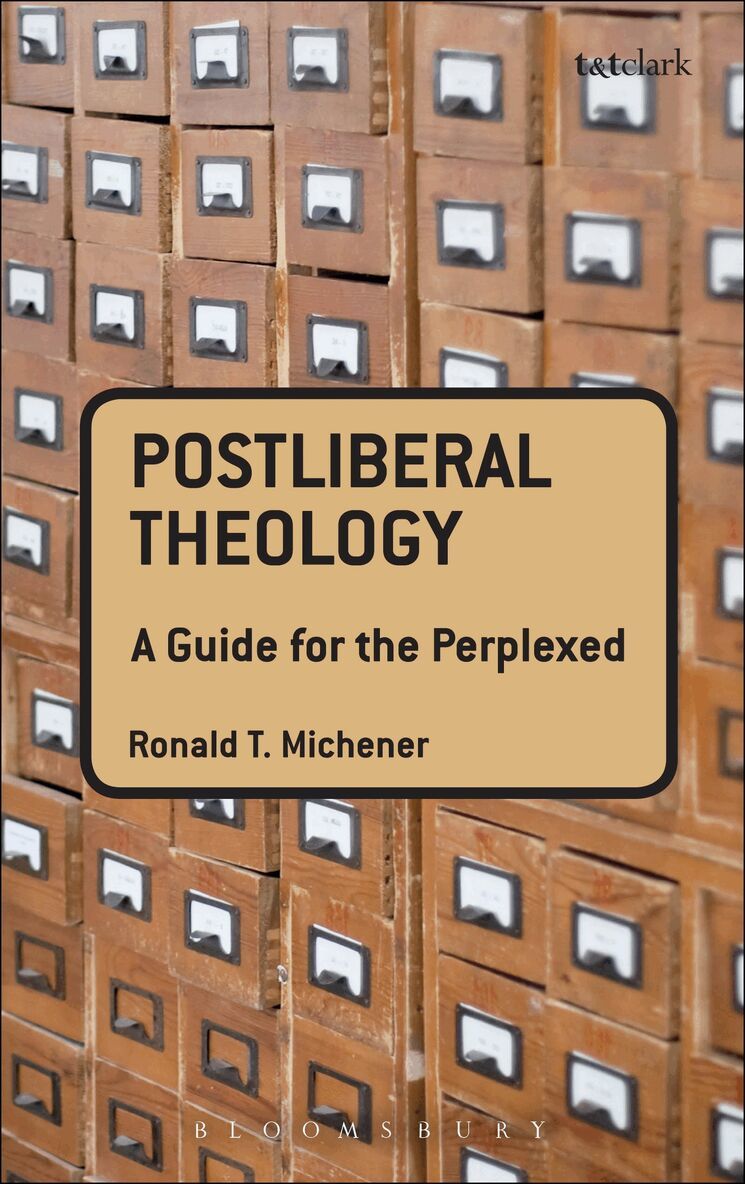
Postliberal theology is a movement in contemporary theology that rejects both the Enlightenment appeal to a 'universal rationality' and the liberal assumption of an immediate religious experience common to all humanity. The movement initially began in the 1980's with its association to Yale Divinity School. Theologians such as Hans Frei, Paul Holmer, David Kelsey, and George Lindbeck were influential and were significantly influenced by theologians such as Karl Barth, Clifford Geertz, and Ludwig Wittgenstein. Postliberalism uses a narrative approach to theology, such as developed by Hans Frei, and argues that all thought and experience is historically and socially mediated. Michener provide the reader with an accessible introductory overview of the origins, current thought, potential problems, and future possibilities of postliberal theology. The basic philosphical and theological background are be briefly discussed, along with the seminal and predominant theologians identified with the movement. Michener shows how postliberalism emerges from the context of the postmodern critique of Enlightenment rationalism and empiricism.Postliberal theology is extremely critical of classical liberal theology, rather than an advancement of its agenda.
E-bok
PDF, Engelska, 2013380 kr
Läs direkt efter köp
Postliberal theology is a movement in contemporary theology that rejects both the Enlightenment appeal to a ''universal rationality'' and the liberal assumption of an immediate religious experience common to all humanity. The movement initially began in the 1980''s with its association to Yale Divinity School. Theologians such as Hans Frei, Paul Holmer, David Kelsey, and George Lindbeck were influential and were significantly influenced by theologians such as Karl Barth, Clifford Geertz, and Ludwig Wittgenstein. Postliberalism uses a narrative approach to theology, such as developed by Hans Frei, and argues that all thought and experience is historically and socially mediated.Michener provide the reader with an accessible introductory overview of the origins, current thought, potential problems, and future possibilities of postliberal theology. The basic philosphical and theological background are be briefly discussed, along with the seminal and predominant theologians identified with the movement. Michener shows how postliberalism emerges from the context of the postmodern critique of Enlightenment rationalism and empiricism. Postliberal theology is extremely critical of classical liberal theology, rather than an advancement of its agenda.
E-bok
Engelska, 2013380 kr
Läs direkt efter köp
Postliberal theology is a movement in contemporary theology that rejects both the Enlightenment appeal to a ''universal rationality'' and the liberal assumption of an immediate religious experience common to all humanity. The movement initially began in the 1980''s with its association to Yale Divinity School. Theologians such as Hans Frei, Paul Holmer, David Kelsey, and George Lindbeck were influential and were significantly influenced by theologians such as Karl Barth, Clifford Geertz, and Ludwig Wittgenstein. Postliberalism uses a narrative approach to theology, such as developed by Hans Frei, and argues that all thought and experience is historically and socially mediated.Michener provide the reader with an accessible introductory overview of the origins, current thought, potential problems, and future possibilities of postliberal theology. The basic philosphical and theological background are be briefly discussed, along with the seminal and predominant theologians identified with the movement. Michener shows how postliberalism emerges from the context of the postmodern critique of Enlightenment rationalism and empiricism. Postliberal theology is extremely critical of classical liberal theology, rather than an advancement of its agenda.
Inbunden, Engelska, 2012
1 386 kr
Skickas inom 10-15 vardagar
Postliberal theology is a movement in contemporary theology that rejects both the Enlightenment appeal to a 'universal rationality' and the liberal assumption of an immediate religious experience common to all humanity. The movement initially began in the 1980's with its association to Yale Divinity School. Theologians such as Hans Frei, Paul Holmer, David Kelsey, and George Lindbeck were influential and were significantly influenced by theologians such as Karl Barth, Clifford Geertz, and Ludwig Wittgenstein. Postliberalism uses a narrative approach to theology, such as developed by Hans Frei, and argues that all thought and experience is historically and socially mediated. Michener provide the reader with an accessible introductory overview of the origins, current thought, potential problems, and future possibilities of postliberal theology. The basic philosphical and theological background are be briefly discussed, along with the seminal and predominant theologians identified with the movement. Michener shows how postliberalism emerges from the context of the postmodern critique of Enlightenment rationalism and empiricism.Postliberal theology is extremely critical of classical liberal theology, rather than an advancement of its agenda.
Inbunden, Engelska, 2007
2 249 kr
Skickas inom 10-15 vardagar
Engaging Deconstructive Theology presents an evangelical approach for theological conversation with postmodern thinkers. Themes are considered from Derrida, Foucault, Mark C. Taylor, Rorty, and Cupitt, developing dialogue from an open-minded evangelical perspective. Ron Michener draws upon insights from radical postmodern thought and seeks to advance an apologetic approach to the Christian faith that acknowledges a mosaic of human sources including experience, literature, and the imagination.
Häftad, Engelska, 2010
369 kr
Skickas inom 3-6 vardagar
Häftad, Engelska, 2021
651 kr
Skickas inom 10-15 vardagar
Engaging Deconstructive Theology presents an evangelical approach for theological conversation with postmodern thinkers. Themes are considered from Derrida, Foucault, Mark C. Taylor, Rorty, and Cupitt, developing dialogue from an open-minded evangelical perspective. Ron Michener draws upon insights from radical postmodern thought and seeks to advance an apologetic approach to the Christian faith that acknowledges a mosaic of human sources including experience, literature, and the imagination.
E-bok
Engelska, 2016746 kr
Läs direkt efter köp
Engaging Deconstructive Theology presents an evangelical approach for theological conversation with postmodern thinkers. Themes are considered from Derrida, Foucault, Mark C. Taylor, Rorty, and Cupitt, developing dialogue from an open-minded evangelical perspective. Ron Michener draws upon insights from radical postmodern thought and seeks to advance an apologetic approach to the Christian faith that acknowledges a mosaic of human sources including experience, literature, and the imagination.
E-bok
PDF, Engelska, 2016746 kr
Läs direkt efter köp
Engaging Deconstructive Theology presents an evangelical approach for theological conversation with postmodern thinkers. Themes are considered from Derrida, Foucault, Mark C. Taylor, Rorty, and Cupitt, developing dialogue from an open-minded evangelical perspective. Ron Michener draws upon insights from radical postmodern thought and seeks to advance an apologetic approach to the Christian faith that acknowledges a mosaic of human sources including experience, literature, and the imagination.
Häftad, Engelska, 2024
602 kr
Skickas inom 5-8 vardagar
Inbunden, Engelska, 2024
765 kr
Skickas inom 5-8 vardagar
E-bok
Engelska, 2024856 kr
Läs direkt efter köp
Postconservative theology may be said to parallel with "postliberal theology" at its best. Orthodox, biblical, but open to new insights about how to interpret Scripture. But the new insights must be faithful as well as fresh. Postconservative theology is not the same as "progressive theology," which tends to lean toward indeterminant faith expressions, whereas "postconservative" allows for particular faith commitments and expressions but understands that the constructive task of theology is never finished. Authors emphasize various interpretive theological lenses used for doing theology among various postconservative theologians, rather than emphasizing the philosophical background to hermeneutical theory present in other works, such as past influential thinkers (including Gadamer, Grondin, Ricoeur, Heidegger, etc.). This resource could also function as a companion to Evangelical Theological Method: Five Views (2018). This emphasis of the chapters will not be on the nuts and bolts of "how to" interpret, but rather on the theological impulses that govern various lenses (Bible, cultural context, etc.) for doing theology and the way Scripture functions with respect to the practice of interpretation.