Rosa Brooks – författare
Visar alla böcker från författaren Rosa Brooks. Handla med fri frakt och snabb leverans.
7 produkter
7 produkter
Häftad, Engelska, 2006
513 kr
Skickas inom 7-10 vardagar
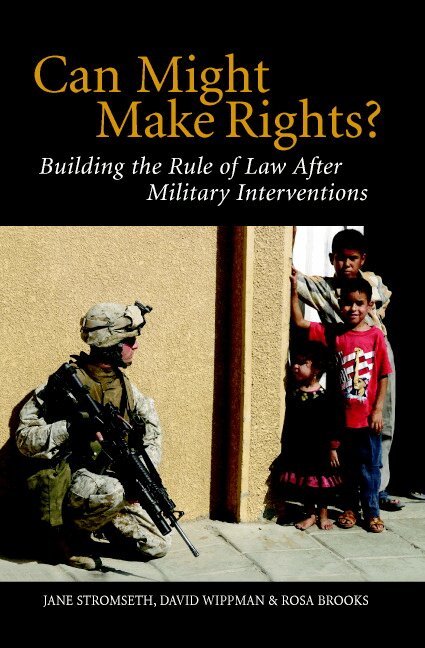
This book looks at why it's so difficult to create 'the rule of law' in post-conflict societies such as Iraq and Afghanistan, and offers critical insights into how policy-makers and field-workers can improve future rule of law efforts. A must-read for policy-makers, field-workers, journalists and students trying to make sense of the international community's problems in Iraq and elsewhere, this book shows how a narrow focus on building institutions such as courts and legislatures misses the more complex cultural issues that affect societal commitment to the values associated with the rule of law. The authors place the rule of law in context, showing the interconnectedness between the rule of law and other post-conflict priorities, such as reestablishing security. The authors outline a pragmatic, synergistic approach to the rule of law which promises to reinvigorate debates about transitions to democracy and post-conflict reconstruction.
Inbunden, Engelska, 2006
627 kr
Skickas inom 7-10 vardagar
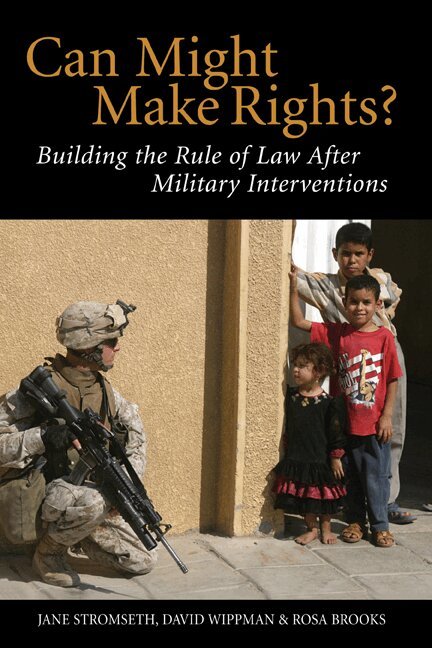
This book looks at why it's so difficult to create 'the rule of law' in post-conflict societies such as Iraq and Afghanistan, and offers critical insights into how policy-makers and field-workers can improve future rule of law efforts. A must-read for policy-makers, field-workers, journalists and students trying to make sense of the international community's problems in Iraq and elsewhere, this book shows how a narrow focus on building institutions such as courts and legislatures misses the more complex cultural issues that affect societal commitment to the values associated with the rule of law. The authors place the rule of law in context, showing the interconnectedness between the rule of law and other post-conflict priorities, such as reestablishing security. The authors outline a pragmatic, synergistic approach to the rule of law which promises to reinvigorate debates about transitions to democracy and post-conflict reconstruction.
E-bok
Engelska, 2021100 kr
Läs direkt efter köp
Häftad, Engelska, 2022
172 kr
Skickas
Häftad, Engelska, 2017
260 kr
Skickas inom 3-6 vardagar
E-bok
Engelska, 2016120 kr
Läs direkt efter köp
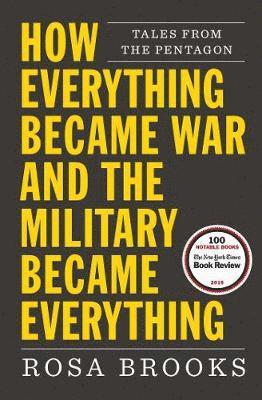
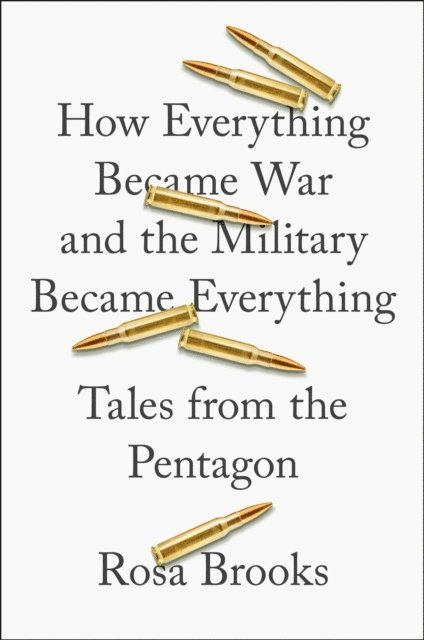
“A dynamic work of reportage” (The New York Times) written “with clarity and...wit” (The New York Times Book Review) about what happens when the ancient boundary between war and peace is erased.Once, war was a temporary state of affairs. Today, America’s wars are everywhere and forever: our enemies change constantly and rarely wear uniforms, and virtually anything can become a weapon. As war expands, so does the role of the US military. Military personnel now analyze computer code, train Afghan judges, build Ebola isolation wards, eavesdrop on electronic communications, develop soap operas, and patrol for pirates. You name it, the military does it. In this “ambitious and astute” (The Washington Post) work, Rosa Brooks “provides a masterful analysis” (San Francisco Chronicle) of this seismic shift in how America wages war from an unconventional perspective—that of a former top Pentagon official who is the daughter of two anti-war protesters and married to an Army Green Beret. By turns a memoir, a work of journalism, a scholarly exploration of history, anthropology, and law, How Everything Became War and the Military Became Everything is an “illuminating” (The New York Times), “eloquent” (The Boston Globe), “courageous” (US News & World Report), and “essential” (The Dallas Morning News) examination of the role of the military today. Above all, it is a rallying cry, for Brooks issues an urgent warning: When the boundaries around war disappear, we undermine both America’s founding values and the international rules and organizations that keep our world from sliding towards chaos.
Ljudbok
Engelska, 2016401 kr
Lyssna direkt efter köp
“A dynamic work of reportage” (The New York Times) written “with clarity and...wit” (The New York Times Book Review) about what happens when the ancient boundary between war and peace is erased.Once, war was a temporary state of affairs. Today, America’s wars are everywhere and forever: our enemies change constantly and rarely wear uniforms, and virtually anything can become a weapon. As war expands, so does the role of the US military. Military personnel now analyze computer code, train Afghan judges, build Ebola isolation wards, eavesdrop on electronic communications, develop soap operas, and patrol for pirates. You name it, the military does it. In this “ambitious and astute” (The Washington Post) work, Rosa Brooks “provides a masterful analysis” (San Francisco Chronicle) of this seismic shift in how America wages war from an unconventional perspective—that of a former top Pentagon official who is the daughter of two anti-war protesters and married to an Army Green Beret. By turns a memoir, a work of journalism, a scholarly exploration of history, anthropology, and law, How Everything Became War and the Military Became Everything is an “illuminating” (The New York Times), “eloquent” (The Boston Globe), “courageous” (US News & World Report), and “essential” (The Dallas Morning News) examination of the role of the military today. Above all, it is a rallying cry, for Brooks issues an urgent warning: When the boundaries around war disappear, we undermine both America’s founding values and the international rules and organizations that keep our world from sliding towards chaos.