Rosa María Jiménez Catalán - Böcker
Visar alla böcker från författaren Rosa María Jiménez Catalán. Handla med fri frakt och snabb leverans.
5 produkter
5 produkter
Del 41 - Second Language Acquisition
Content and Language Integrated Learning
Evidence from Research in Europe
Häftad, Engelska, 2009
489 kr
Skickas inom 5-8 vardagar
This book contributes to the growth of interest in Content and Language Integrated Learning (CLIL), an approach to second/foreign language learning that requires the use of the target language to learn content. Within the framework of European strategies to promote multilingualism, CLIL has begun to be used extensively in a variety of language learning contexts, and at different educational systems and language programmes. This book brings together critical analyses on theoretical and implementation issues of Content and Language Integrated Learning, and empirical studies on the effectiveness of this type of instruction on learners’ language competence. The basic theoretical assumption behind this book is that through successful use of the language to learn content, learners will develop their language proficiency more effectively while they learn the academic content specified in the curricula.
Del 41 - Second Language Acquisition
Content and Language Integrated Learning
Evidence from Research in Europe
Inbunden, Engelska, 2009
1 450 kr
Tillfälligt slut
This book contributes to the growth of interest in Content and Language Integrated Learning (CLIL), an approach to second/foreign language learning that requires the use of the target language to learn content. Within the framework of European strategies to promote multilingualism, CLIL has begun to be used extensively in a variety of language learning contexts, and at different educational systems and language programmes. This book brings together critical analyses on theoretical and implementation issues of Content and Language Integrated Learning, and empirical studies on the effectiveness of this type of instruction on learners’ language competence. The basic theoretical assumption behind this book is that through successful use of the language to learn content, learners will develop their language proficiency more effectively while they learn the academic content specified in the curricula.
Del 67 - Educational Linguistics
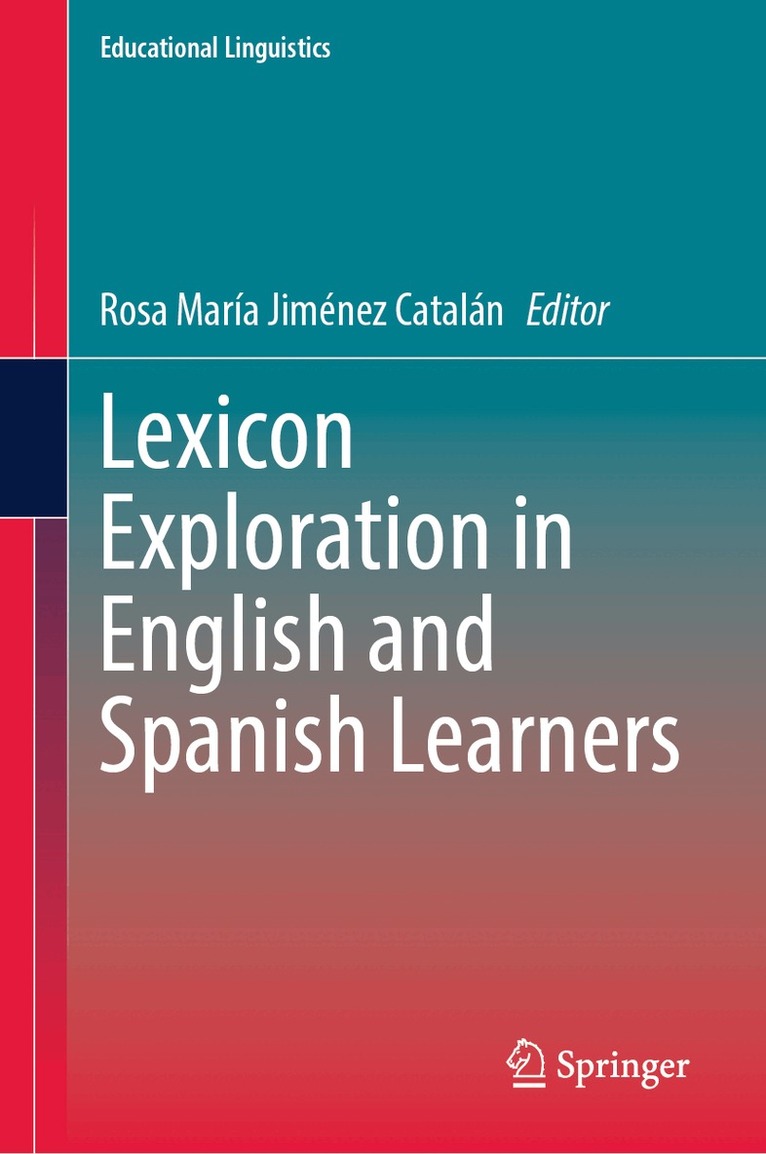
Lexicon Exploration in English and Spanish Learners
Inbunden, Engelska, 2025
1 531 kr
Skickas inom 7-10 vardagar
This book delves into psycholinguistic and cognitive aspects of lexical activation, availability, and production in English or Spanish as additional languages in classroom settings. Instead of focusing sociologically and pedagogically on lexical availability, this collective work adopts a cognitive approach. Ten studies, conducted by experienced researchers, employ a uniform methodology based on lexical availability tests in classroom contexts. Notably, each study permits learners to produce as many responses as possible within two minutes, revealing common associations and network patterns in lexical production.The book is innovative not only in providing cognitive data from Spanish learners of English, but also from Greek, Polish, and North American learners of Spanish, expanding the scope beyond traditional research on word associations. While acknowledging the pioneering work in word associations among French and English learners, this book distinguishes itself by using lexical availability tests to explore word associations and networks in the mental lexicon of English or Spanish learners in classroom contexts. Notably, it offers lexical data from children and adolescents learning English in primary or secondary schools, as well as Spanish learners in high school and university settings, filling a gap in research on younger learners and languages other than English. The book addresses the need for empirical data on the mental lexicon of English or Spanish learners, particularly in primary or secondary classrooms, a scarcely investigated educational context.
Del 17 - Educational Linguistics
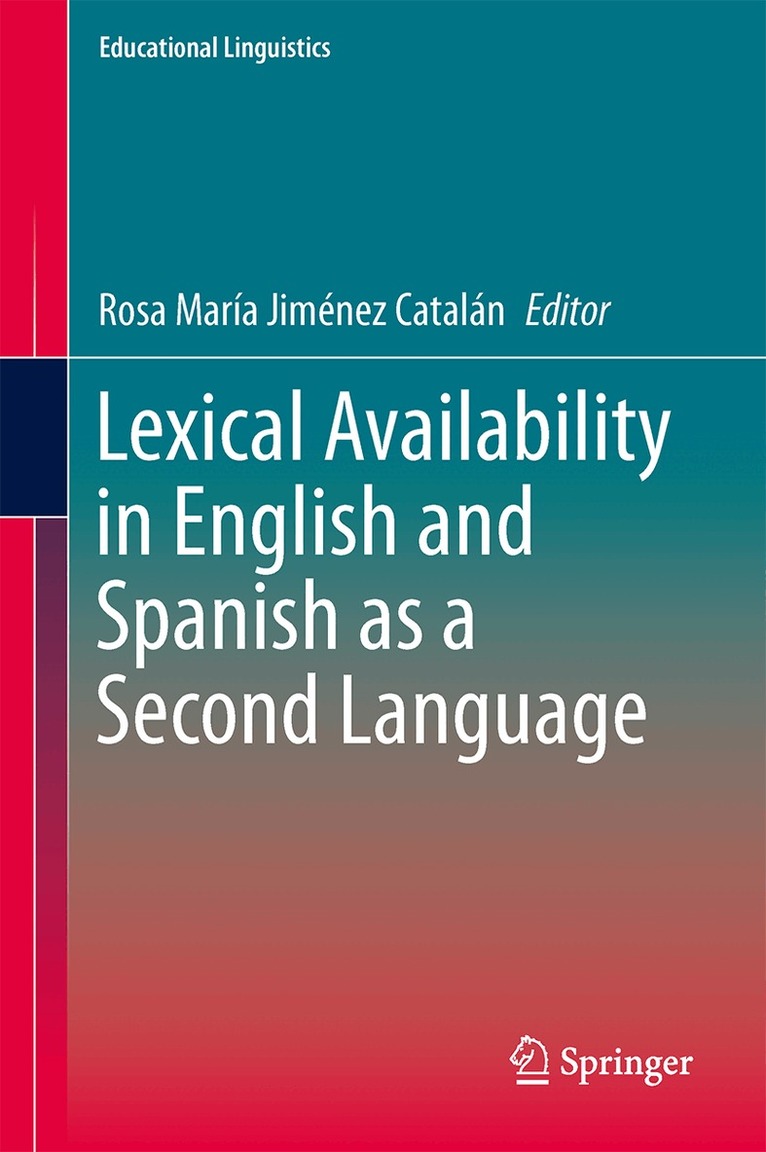
Lexical Availability in English and Spanish as a Second Language
Inbunden, Engelska, 2013
1 096 kr
Skickas inom 10-15 vardagar
? This volume contributes to the research in two different research areas: lexical availability studies and vocabulary research in second or foreign languages.
Del 17 - Educational Linguistics
Lexical Availability in English and Spanish as a Second Language
Häftad, Engelska, 2016
1 096 kr
Skickas inom 10-15 vardagar
This volume contributes to the research in two different research areas: lexical availability studies and vocabulary research in second or foreign languages. Lexical availability is defined as the words that immediately come to mind as a response to a stimulus provided by topics related to domains closely connected to daily life: for instance animals, food and drink, daily activities, politics, or poverty. Lexical availability is a dimension of learners’ receptive and productive lexical competence, and, consequently, an important variable of learners’ communicative competence. Written by leading researchers in Spanish and English applied linguistics, the studies presented in this volume offer the reader findings and insights from studies conducted in learners with different mother tongues, who learn English or Spanish as their second or third language. “This book made me aware of an approach to vocabulary acquisition which has a long tradition in European research, but has been somewhat neglected by English-speaking researchers. The methodology was pioneered in France where it developed into the Francais Fondamental project - an influential approach to the vocabulary needs of learners of French. It was also taken up by Spanish researchers, and more recently developed by the team at La Rioja University. Where English-language research has focused on the frequency of words in large corpora and the implications of this feature for L2 vocabulary acquisition, the lexical availability tradition takes a much more learner-centred approach to L2 vocabulary skills, directly reflecting learners' needs and learners' ability to do things with small, effective vocabularies. This leads to a set of research priorities that look refreshingly different from the ones we are used to. Read this book. It might change the way you think about vocabulary research.” Paul Meara, Swansea University, Wales, UK