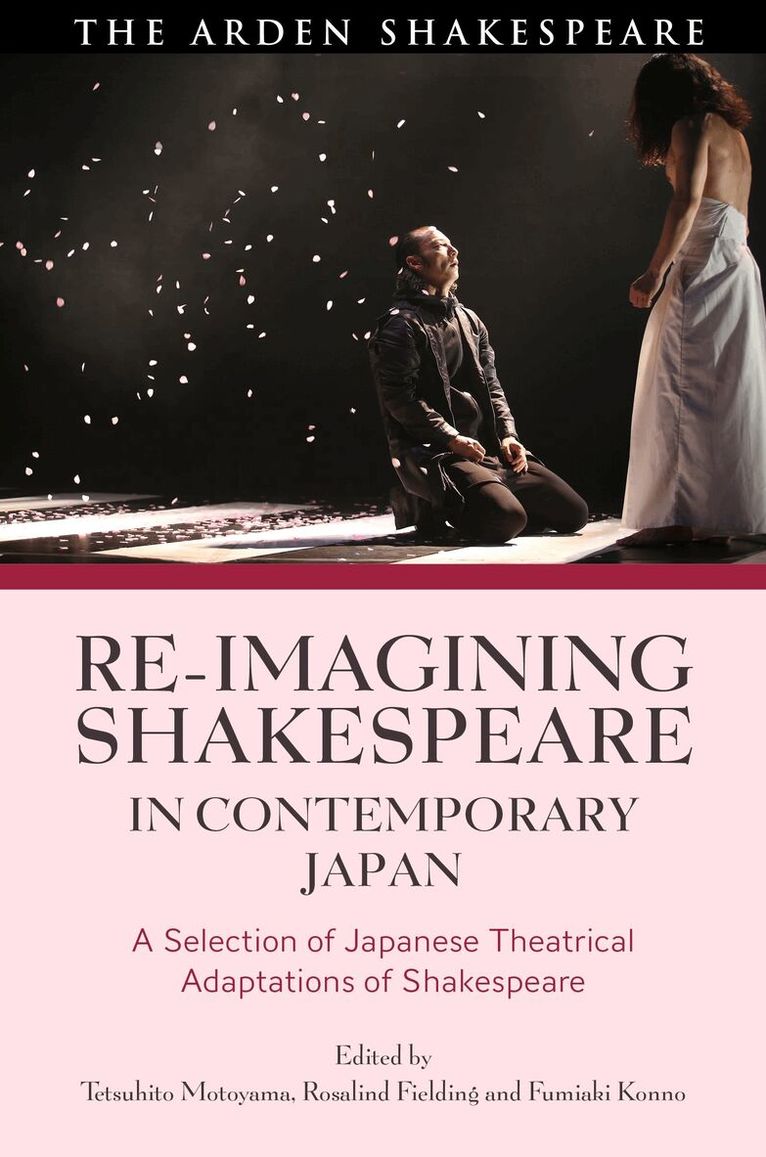
An anthology of three exciting Japanese adaptations of Shakespeare that engage with issues such as changing family values, racial diversity, the 2011 Great East Japan Earthquake and terrorism, together with a contextualizing introduction.The anthology makes contemporary Japanese adaptations of Shakespeare by three independent theatre companies available to a wider English language audience. The three texts are concerned with the social issues Japan faces today and Japan’s perception of its cultural history. This unique collection is thus both a valuable resource for the fields of Shakespeare and adaptation studies as well as for a better understanding of contemporary Japanese theatre.
An anthology of three exciting Japanese adaptations of Shakespeare that engage with issues such as changing family values, racial diversity, the 2011 Great East Japan Earthquake and terrorism, together with a contextualizing introduction.The anthology makes contemporary Japanese adaptations of Shakespeare by three independent theatre companies available to a wider English language audience. The three texts are concerned with the social issues Japan faces today and Japan''s perception of its cultural history. This unique collection is thus both a valuable resource for the fields of Shakespeare and adaptation studies as well as for a better understanding of contemporary Japanese theatre.
An anthology of three exciting Japanese adaptations of Shakespeare that engage with issues such as changing family values, racial diversity, the 2011 Great East Japan Earthquake and terrorism, together with a contextualizing introduction.The anthology makes contemporary Japanese adaptations of Shakespeare by three independent theatre companies available to a wider English language audience. The three texts are concerned with the social issues Japan faces today and Japan’s perception of its cultural history. This unique collection is thus both a valuable resource for the fields of Shakespeare and adaptation studies as well as for a better understanding of contemporary Japanese theatre.
This book offers fresh, critical insights into Shakespeare in Hong Kong, Japan, and Taiwan. It recognises that Shakespeare in East Asian education is not confined to the classroom or lecture hall but occurs on diverse stages. It covers multiple aspects of education: policy, pedagogy, practice, and performance. Beyond researchers in these areas, this book is for those teaching and learning Shakespeare in the region, those teaching and learning English as an Additional Language anywhere in the world, and those making educational policies, resources, or theatre productions with young people in East Asia.