Rosamund Allen - Böcker
Visar alla böcker från författaren Rosamund Allen. Handla med fri frakt och snabb leverans.
2 produkter
2 produkter
364 kr
Skickas inom 5-8 vardagar
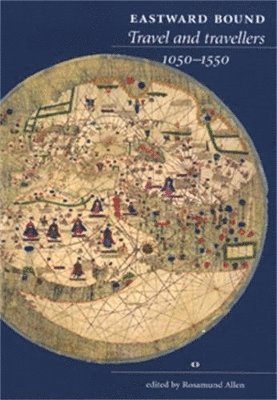
Eastward bound looks at travel and travellers in the medieval period. An international range of distinguished contributors offer discussions on a wide range of themes, from the experiences of Crusaders on campaign, to the lives of pilgrims, missionaries and traders in the Middle East. It examines their modes of travel, equipment and methods of navigation, and considers their expectations and experiences en route. The contributions also look at the variety of motives - public and private - behind the decision to travel eastwards. Other essays discuss the attitudes of Middle-Eastern rulers to their visitors. In so doing they provide a valuable perspective and insight into the behaviour of the Europeans and non-Europeans alike.There have been few such accessible volumes, covering such a broad range of material. The book will be of use to students and scholars involved in the history, literature and historical geography of the medieval period.
Del 52 - DQR Studies in Literature
Reading La3amon’s Brut
Approaches and Explorations
Inbunden, Engelska, 2013
4 495 kr
Skickas inom 5-8 vardagar
For La3amon, or Lawman (both forms are used), a parish priest living on the Welsh March c.1200, the criteria of language, race and territory all provided ways of defining the nation state, which is why his Brut commands a diverse readership to-day. The range of view-points in this book reflects the breadth and complexity of La3amon’s own vision of the way his world is moulded by past conquests and racial tensions. The Brut is an open-ended narrative of Britain, its peoples, and its place-names as they changed under new rulers, and tells, for the first time in English, the rise and fall of Arthur, highlighting his role in the unfolding history of Britain. Beginning with its legendary founder, Brutus, the story is imagined anew, and although it concludes with an Anglo-Saxon kingdom, La3amon’s closing words remind us that changes will come: i-wurðe þet iwurðe: i-wurðe Godes wille. Amen.This book offers detailed discussion and new perspectives. Its contributors explore aspects of behaviour and attitudes, personal and national identity and governance, language, metre, and the reception of La3amon’s Brut in later times. Comparisons are made with Latin writings and with French, Welsh, Spanish and Icelandic, placing La3amon firmly within a European network of readers and redactors.The book will interest those working on medieval chronicles, as well as specialists in medieval law, custom, English language and literature, and comparative literature.