Rose Marie San Juan - Böcker
Visar alla böcker från författaren Rose Marie San Juan. Handla med fri frakt och snabb leverans.
5 produkter
5 produkter
1 298 kr
Skickas inom 7-10 vardagar
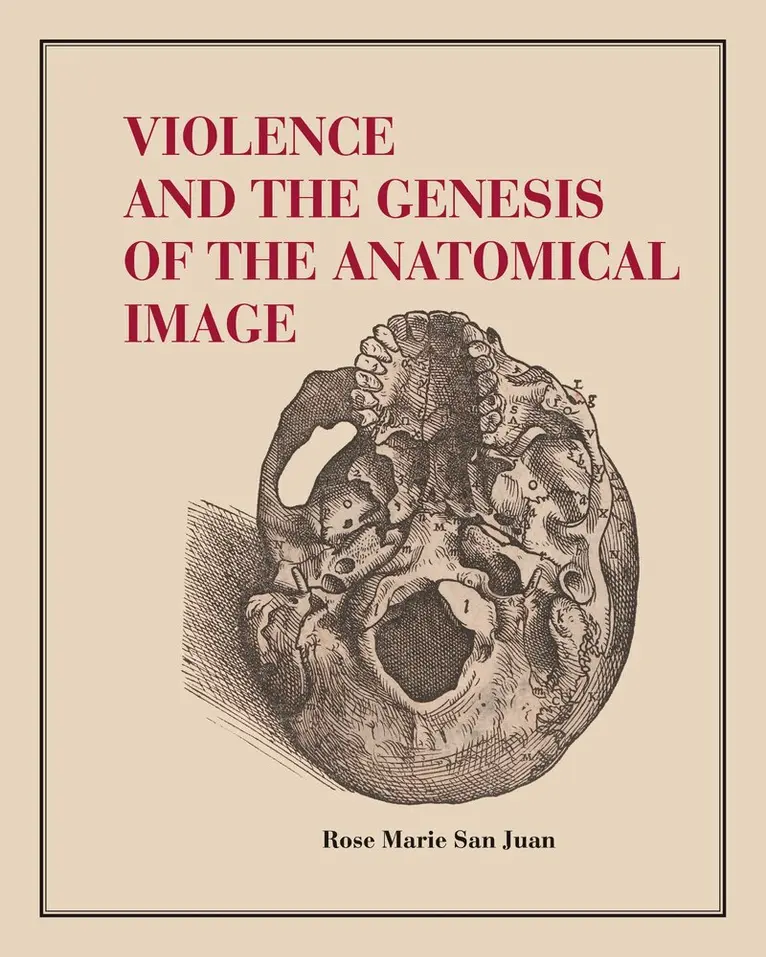
Nothing excited early modern anatomists more than touching a beating heart. In his 1543 treatise, Andreas Vesalius boasts that he was able to feel life itself through the membranes of a heart belonging to a man who had just been executed, a comment that appears near the woodcut of a person being dissected while still hanging from the gallows. In this highly original book, Rose Marie San Juan confronts the question of violence in the making of the early modern anatomical image.Engaging the ways in which power operated in early modern anatomical images in Europe and, to a lesser extent, its colonies, San Juan examines literal violence upon bodies in a range of civic, religious, pedagogical, and “exploratory” contexts. She then works through the question of how bodies were thought to be constituted—systemic or piecemeal, singular or collective—and how gender determines this question of constitution. In confronting the issue of violence in the making of the anatomical image, San Juan explores not only how violence transformed the body into a powerful and troubling double but also how this kind of body permeated attempts to produce knowledge about the world at large.Provocative and challenging, this book will be of significant interest to scholars across fields in early modern studies, including art history and visual culture, science, and medicine.
437 kr
Skickas inom 7-10 vardagar
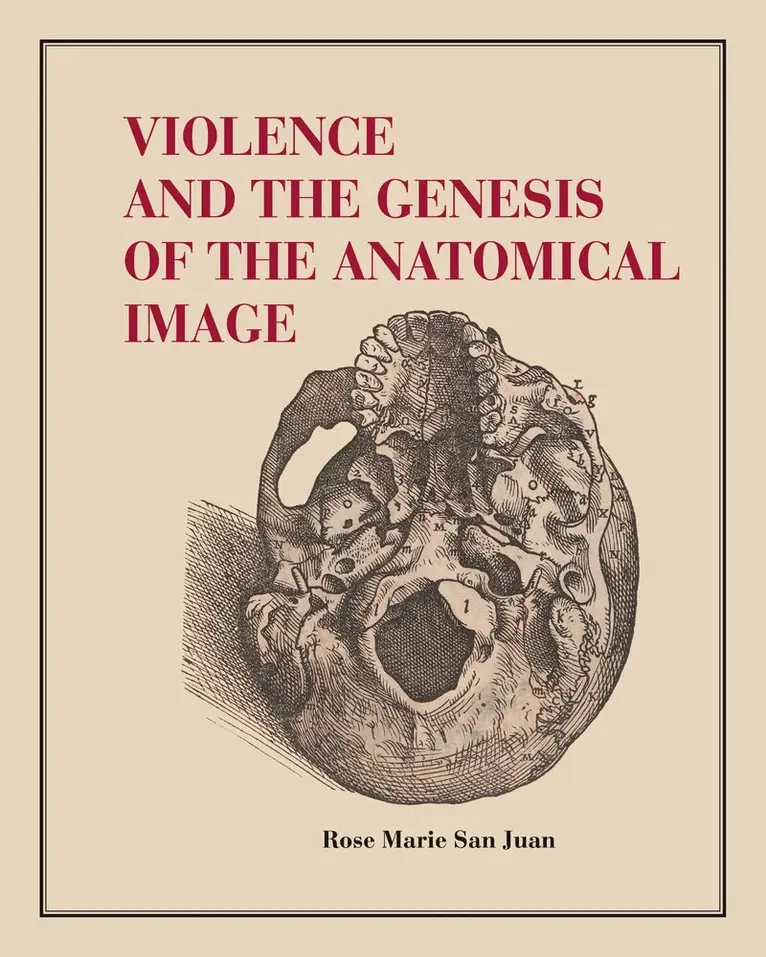
Nothing excited early modern anatomists more than touching a beating heart. In his 1543 treatise, Andreas Vesalius boasts that he was able to feel life itself through the membranes of a heart belonging to a man who had just been executed, a comment that appears near the woodcut of a person being dissected while still hanging from the gallows. In this highly original book, Rose Marie San Juan confronts the question of violence in the making of the early modern anatomical image.Engaging the ways in which power operated in early modern anatomical images in Europe and, to a lesser extent, its colonies, San Juan examines literal violence upon bodies in a range of civic, religious, pedagogical, and “exploratory” contexts. She then works through the question of how bodies were thought to be constituted—systemic or piecemeal, singular or collective—and how gender determines this question of constitution. In confronting the issue of violence in the making of the anatomical image, San Juan explores not only how violence transformed the body into a powerful and troubling double but also how this kind of body permeated attempts to produce knowledge about the world at large.Provocative and challenging, this book will be of significant interest to scholars across fields in early modern studies, including art history and visual culture, science, and medicine.
Vertiginous Mirrors
The Animation of the Visual Image and Early Modern Travel
Inbunden, Engelska, 2011
1 202 kr
Skickas inom 5-8 vardagar
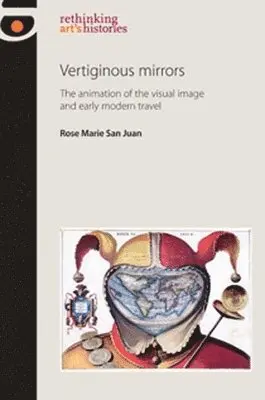
In early modern Europe, the visual image began to move, not only as it traveled across great distances but also due to the introduction of innovative visual formats that produced animation within the image itself.This book traces the arduous journeys of visual images through evidence of their use and reproduction along missionary routes from Europe to India, Japan, China, Brazil and Chile. It argues that missionary world travel was crucial to the early modern re-animation of the image through devices such as the reflection of the mirror, the multiple registers of vision of the anthropomorphic image, the imaginative and disorienting possibilities of the utopic image, and even the reconstitution of the sacred image with memories of the relation of travel to life and death. Within the journeys traced in the book, the visual image forged new connections between different locations and across different cultures, accumulating increasingly entangled histories. Even more intriguingly, these images frequently returned to Europe, changed but still recognisable, there to be used again with an awareness of their earlier travels.
1 560 kr
Skickas inom 3-6 vardagar
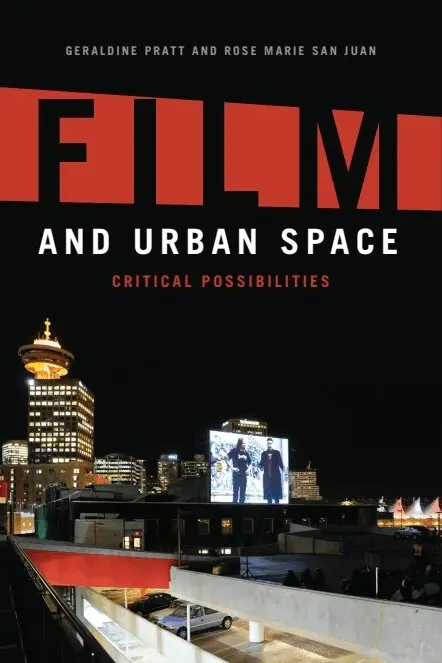
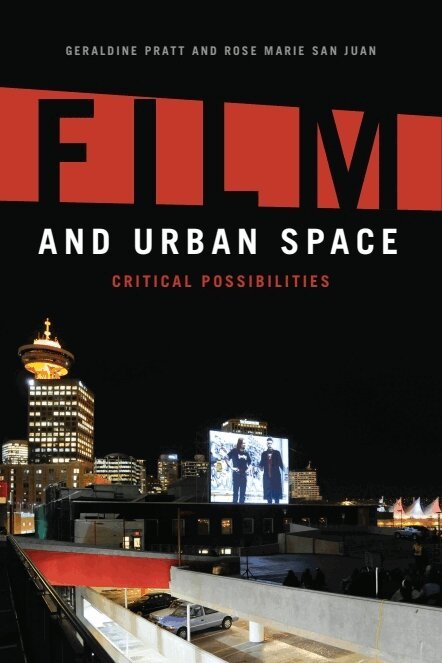
Film and Urban Space: Critical Possibilities traces recurring debates about what constitutes film’s political potential and argues that the relation between film and urban space has been crucial to these debates and their historical transformations. The book demonstrates that in the attempt to follow certain prescriptions – shooting on location, disrupting normalizing time, experimenting with memory, interlinking the spaces of screen and cinema – films invariably use the relation between film and urban space as a kind of laboratory, testing anew received prescriptions but invariably encountering new opportunities and new limits. A wide range of key films, from Dziga Vertov’s 1928 Man with a Movie Camera to Jia Zhangke’s 2008 24 City, are discussed in depth, each offering an argument for how the encounter between specific manifestations of modern urban space and politically engaged film strategies has served to challenge the status quo and stimulate critical thinking.
328 kr
Skickas inom 11-20 vardagar
Film and Urban Space: Critical Possibilities traces recurring debates about what constitutes film’s political potential and argues that the relation between film and urban space has been crucial to these debates and their historical transformations. The book demonstrates that in the attempt to follow certain prescriptions – shooting on location, disrupting normalizing time, experimenting with memory, interlinking the spaces of screen and cinema – films invariably use the relation between film and urban space as a kind of laboratory, testing anew received prescriptions but invariably encountering new opportunities and new limits. A wide range of key films, from Dziga Vertov’s 1928 Man with a Movie Camera to Jia Zhangke’s 2008 24 City, are discussed in depth, each offering an argument for how the encounter between specific manifestations of modern urban space and politically engaged film strategies has served to challenge the status quo and stimulate critical thinking.