Ross Guberman – författare
Visar alla böcker från författaren Ross Guberman. Handla med fri frakt och snabb leverans.
6 produkter
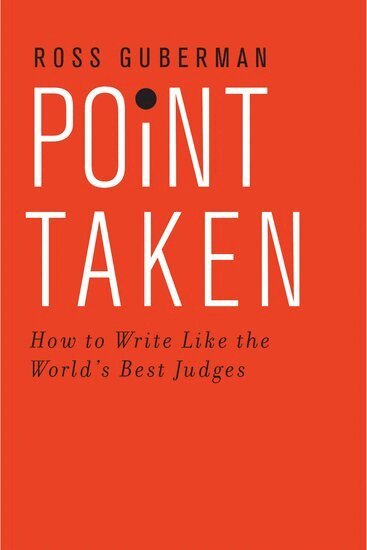
Point Taken
How To Write Like the World's Best Judges
Häftad, 2015
654 kr
Lägg i varukorg
In Point Taken, Ross Guberman delves into the work of the best judicial opinion-writers and offers a step-by-step method based on practical and provocative examples. Featuring numerous cases and opinions from 35 prolific judges - from Learned Hand to Antonin Scalia - Point Taken, explores what it …
Point Taken
How to Write Like the World''s Best Judges
E-bok, 2015
456 kr
Lägg i varukorg
In Point Taken , Ross Guberman delves into the work of the best judicial opinion-writers and offers a step-by-step method based on practical and provocative examples. Featuring numerous cases and opinions from 34 esteemed judges - from Learned Hand to Antonin Scalia - Point Taken , explores what it …
Point Taken
How to Write Like the World''s Best Judges
E-bok, 2015
456 kr
Lägg i varukorg
In Point Taken , Ross Guberman delves into the work of the best judicial opinion-writers and offers a step-by-step method based on practical and provocative examples. Featuring numerous cases and opinions from 34 esteemed judges - from Learned Hand to Antonin Scalia - Point Taken , explores what it …
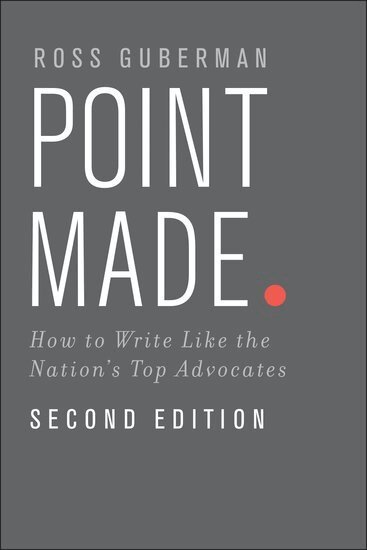
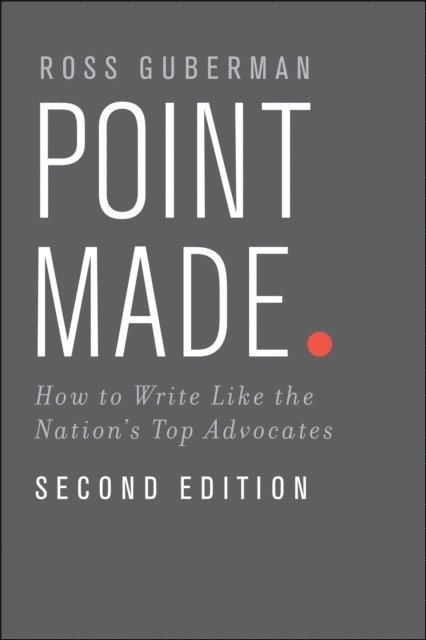
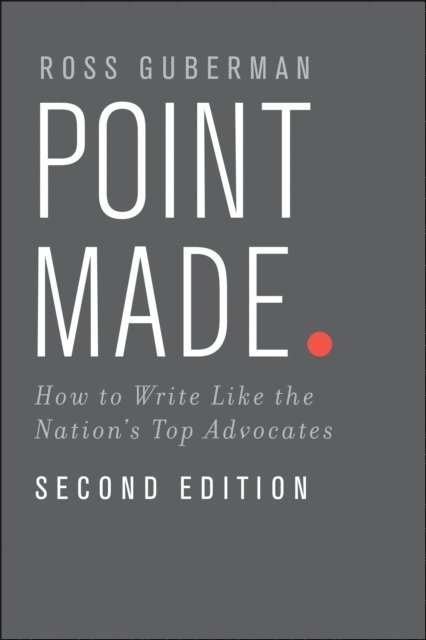
Point Made
How to Write Like the Nation's Top Advocates
Häftad, 2014
501 kr
Lägg i varukorg
With Point Made, legal writing expert, Ross Guberman, throws a life preserver to attorneys, who are under more pressure than ever to produce compelling prose. What is the strongest opening for a motion or brief? How to draft winning headings? How to tell a persuasive story when the record is dry …
Point Made
How to Write Like the Nation''s Top Advocates
E-bok, 2014
388 kr
Lägg i varukorg
With Point Made , legal writing expert, Ross Guberman, throws a life preserver to attorneys, who are under more pressure than ever to produce compelling prose. What is the strongest opening for a motion or brief? How to draft winning headings? How to tell a persuasive story when the record is dry …
Point Made
How to Write Like the Nation''s Top Advocates
E-bok, 2014
388 kr
Lägg i varukorg
With Point Made , legal writing expert, Ross Guberman, throws a life preserver to attorneys, who are under more pressure than ever to produce compelling prose. What is the strongest opening for a motion or brief? How to draft winning headings? How to tell a persuasive story when the record is dry …