Roundtable on Evidence-Based Medicine – författare
Visar alla böcker från författaren Roundtable on Evidence-Based Medicine. Handla med fri frakt och snabb leverans.
6 produkter
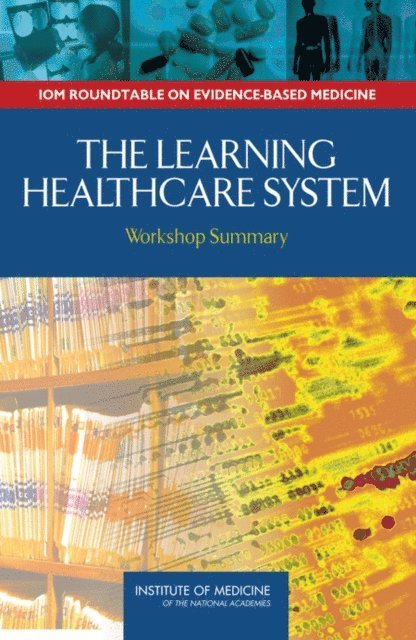
Learning Healthcare System
Workshop Summary
Av Roundtable on Evidence-Based Medicine, Institute of Medicine m. fl.
E-bok, 2007
794 kr
Lägg i varukorg
As our nation enters a new era of medical science that offers the real prospect of personalized health care, we will be confronted by an increasingly complex array of health care options and decisions. The Learning Healthcare System considers how health care is structured to develop and to apply …
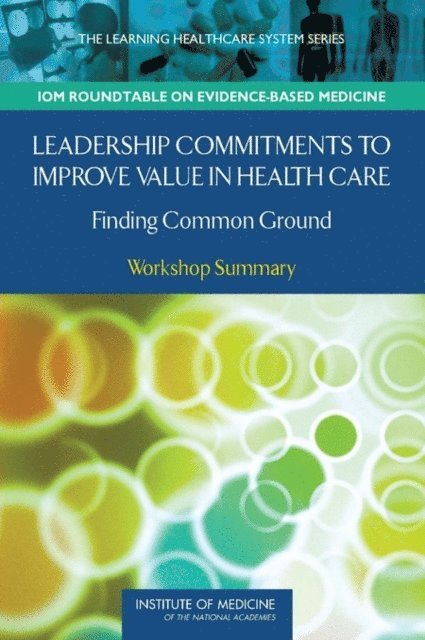
Leadership Commitments to Improve Value in Health Care
Finding Common Ground: Workshop Summary
Av LeighAnne Olsen, W. Alexander Goolsby m. fl.
E-bok, 2009
1008 kr
Lägg i varukorg
This volume reports on discussions among multiple stakeholders about ways they might help transform health care in the United States. The U.S. healthcare system consists of a complex network of decentralized and loosely associated organizations, services, relationships, and participants. Each of …
Learning Healthcare System
Workshop Summary
Av Roundtable on Evidence-Based Medicine, Institute of Medicine m. fl.
E-bok, 2007
838 kr
Lägg i varukorg
As our nation enters a new era of medical science that offers the real prospect of personalized health care, we will be confronted by an increasingly complex array of health care options and decisions. The Learning Healthcare System considers how health care is structured to develop and to apply …
Leadership Commitments to Improve Value in Health Care
Finding Common Ground: Workshop Summary
Av LeighAnne Olsen, W. Alexander Goolsby m. fl.
E-bok, 2009
1427 kr
Lägg i varukorg
This volume reports on discussions among multiple stakeholders about ways they might help transform health care in the United States. The U.S. healthcare system consists of a complex network of decentralized and loosely associated organizations, services, relationships, and participants. Each of …
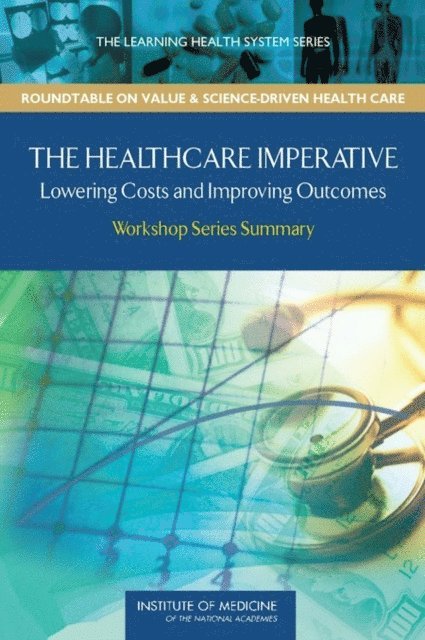
Healthcare Imperative
Lowering Costs and Improving Outcomes: Workshop Series Summary
Av Roundtable on Evidence-Based Medicine, Institute of Medicine m. fl.
E-bok, 2010
1654 kr
Lägg i varukorg
The United States has the highest per capita spending on health care of any industrialized nation but continually lags behind other nations in health care outcomes including life expectancy and infant mortality. National health expenditures are projected to exceed $2.5 trillion in 2009. Given …
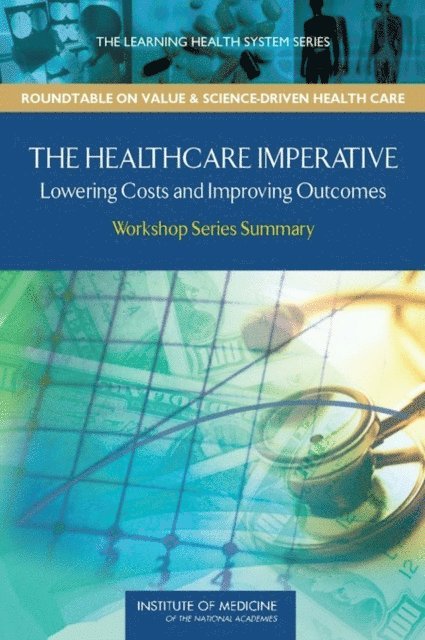
Healthcare Imperative
Lowering Costs and Improving Outcomes: Workshop Series Summary
Av Roundtable on Evidence-Based Medicine, Institute of Medicine m. fl.
E-bok, 2010
1783 kr
Lägg i varukorg
The United States has the highest per capita spending on health care of any industrialized nation but continually lags behind other nations in health care outcomes including life expectancy and infant mortality. National health expenditures are projected to exceed $2.5 trillion in 2009. Given …