Roxana Moreno - Böcker
Visar alla böcker från författaren Roxana Moreno. Handla med fri frakt och snabb leverans.
3 produkter
3 produkter
3 280 kr
Skickas inom 5-8 vardagar
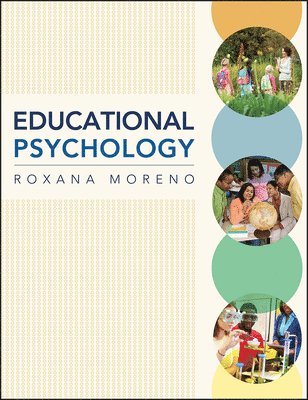
Educational Psychology First Edition will help students meet the challenges of today's classrooms. Future teachers want practical suggestions for why and how to use theory in the classroom. To support their preparation, this textbook emphasizes three challenges in teacher education: understanding and addressing the needs of the diversity of learners in the classroom, applying theories and research to the classroom, and critically examining teaching practices through reflection, problem-solving, and critical thinking.
398 kr
Skickas inom 7-10 vardagar
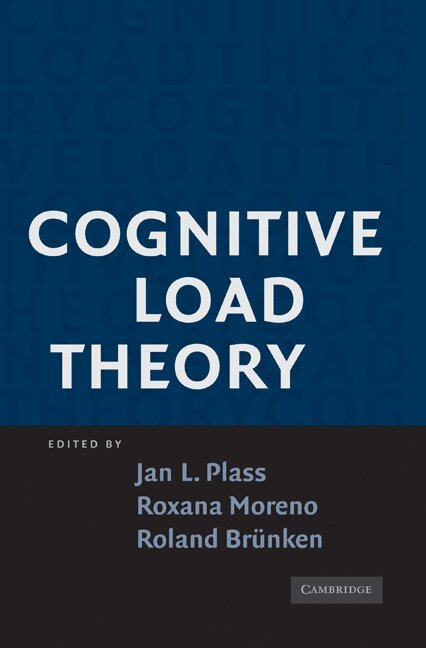
Cognitive load theory (CLT) is one of the most important theories in educational psychology, a highly effective guide for the design of multimedia and other learning materials. This edited volume brings together the most prolific researchers from around the world who study various aspects of cognitive load to discuss its current theoretical as well as practical issues. The book is divided into three parts. The first part describes the theoretical foundations and assumptions of CLT, the second discusses the empirical findings about the application of CLT to the design of learning environments, and the third part concludes the book with discussions and suggestions for new directions for future research. It aims to become the standard handbook in CLT for researchers and graduate students in psychology, education, and educational technology.
1 274 kr
Skickas inom 7-10 vardagar
Cognitive load theory (CLT) is one of the most important theories in educational psychology, a highly effective guide for the design of multimedia and other learning materials. This edited volume brings together the most prolific researchers from around the world who study various aspects of cognitive load to discuss its current theoretical as well as practical issues. The book is divided into three parts. The first part describes the theoretical foundations and assumptions of CLT, the second discusses the empirical findings about the application of CLT to the design of learning environments, and the third part concludes the book with discussions and suggestions for new directions for future research. It aims to become the standard handbook in CLT for researchers and graduate students in psychology, education, and educational technology.