Roxana Pessoa Cavalcanti – författare
Visar alla böcker från författaren Roxana Pessoa Cavalcanti. Handla med fri frakt och snabb leverans.
5 produkter
5 produkter
Häftad, Engelska, 2022
579 kr
Skickas inom 10-15 vardagar
A Southern Criminology of Violence, Youth and Policing examines public experiences of insecurity and the social impacts of security programmes that aim to address violence in Brazil. This book contributes to the emerging field of southern criminology by engaging with the perils faced by people living in ‘favelas’ in Brazil and critically investigating the discourse of state actors. It combines original ethnographic data with critical analysis to expand understandings of violence and control in urban and postcolonial contexts.This study challenges dominant practices and notions of security and control. Its objective is to decolonise knowledge and shed light on issues relating to policing, coercion, and the great socioeconomic, historical and spatial inequalities that shape the lives of millions of people in the Global South. The findings of this book expose the exacerbation of social problems by the expansion of the penal and crime industry, unsettling the applicability and universalism of mainstream managerial criminology.The evidence reveals that new modes of securitisation have not addressed long-standing issues of sexism, racism, classism and brutalisation in the police. Moreover, through the increasing use of methods of control and incarceration, security programmes have failed to prevent diverse forms of violence and challenge the expansion of organised crime. Instead they have exacerbated the inequalities that affect the most marginalised populations.Written in a clear and direct style, this book will appeal to students and scholars in criminology, sociology, cultural studies, social theory and those interested in learning about the social injustices that exists in the Global South.
Inbunden, Engelska, 2020
1 979 kr
Skickas inom 10-15 vardagar
A Southern Criminology of Violence, Youth and Policing examines public experiences of insecurity and the social impacts of security programmes that aim to address violence in Brazil. This book contributes to the emerging field of southern criminology by engaging with the perils faced by people living in ‘favelas’ in Brazil and critically investigating the discourse of state actors. It combines original ethnographic data with critical analysis to expand understandings of violence and control in urban and postcolonial contexts.This study challenges dominant practices and notions of security and control. Its objective is to decolonise knowledge and shed light on issues relating to policing, coercion, and the great socioeconomic, historical and spatial inequalities that shape the lives of millions of people in the Global South. The findings of this book expose the exacerbation of social problems by the expansion of the penal and crime industry, unsettling the applicability and universalism of mainstream managerial criminology.The evidence reveals that new modes of securitisation have not addressed long-standing issues of sexism, racism, classism and brutalisation in the police. Moreover, through the increasing use of methods of control and incarceration, security programmes have failed to prevent diverse forms of violence and challenge the expansion of organised crime. Instead they have exacerbated the inequalities that affect the most marginalised populations.Written in a clear and direct style, this book will appeal to students and scholars in criminology, sociology, cultural studies, social theory and those interested in learning about the social injustices that exists in the Global South.
Inbunden, Engelska, 2023
1 049 kr
Skickas
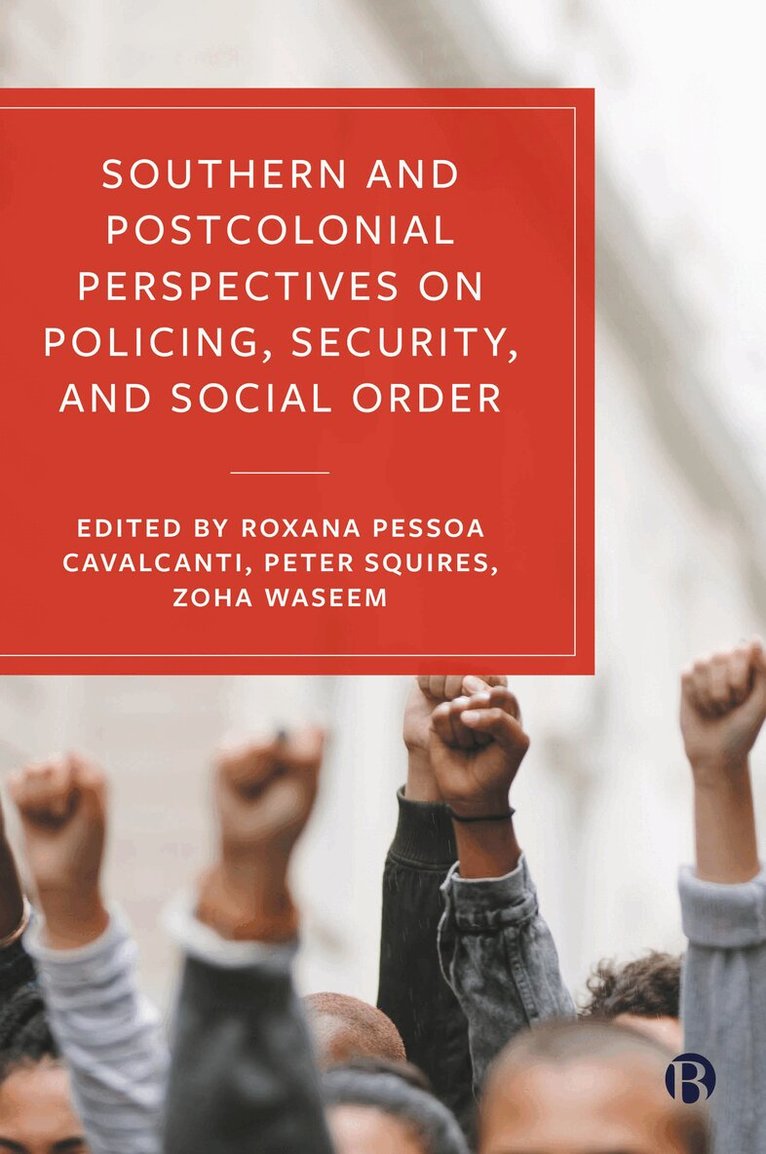
Postcolonial legacies continue to impact upon the Global South and this edited collection examines their influence on systems of policing, security management and social ordering. Expanding the Southern Criminology agenda, the book critically examines social harms, violence and war crimes, human rights abuses, environmental degradation and the criminalization of protest.The book asks how current states of policing came about, their consequences and whose interests they continue to serve through vivid international case studies, including prison struggles in Latin America and the misuse of military force. Challenging current criminological thinking on the Global South, the book considers how police and state overreach can undermine security and perpetuate racism and social conflict.
Häftad, Engelska, 2024
367 kr
Skickas
Postcolonial legacies continue to impact upon the Global South and this edited collection examines their influence on systems of policing, security management and social ordering. Expanding the Southern Criminology agenda, the book critically examines social harms, violence and war crimes, human rights abuses, environmental degradation and the criminalization of protest.The book asks how current states of policing came about, their consequences and whose interests they continue to serve through vivid international case studies, including prison struggles in Latin America and the misuse of military force. Challenging current criminological thinking on the Global South, the book considers how police and state overreach can undermine security and perpetuate racism and social conflict.
Inbunden, Engelska, 2026
7 115 kr
Kommande
This second edition of The Palgrave Handbook of Criminology and the Global South significantly expands, develops and draws together the rapidly growing research and theory about crime, punishment, security, prisons, policing, gender violence, environmental justice, island justice and justice innovations from, in the spatial and marginal global peripheries. It challenges the hegemonic bias in the production and dissemination of criminological knowledge and covers a huge scope of original research to develop a field of criminological inquiry inclusive of the experiences of the Global South. It includes Indigenous, critical, green, southern, feminist, counter-colonial, post-colonial and de-colonial approaches. The handbook promotes diverse perspectives to develop concepts and theories that bridge global divides aiming to democratise criminological knowledges. It contains 86 chapters organised into eight themes and features contributions from both emerging and established scholars from around the globe. While colonialism's impacts are most visible in former colonies of the Global South, marginalised communities also exist in the Global North. The handbook, therefore, transcends geographical boundaries by incorporating theories from the margins.