Roy Ben-Shai – författare
Visar alla böcker från författaren Roy Ben-Shai. Handla med fri frakt och snabb leverans.
7 produkter
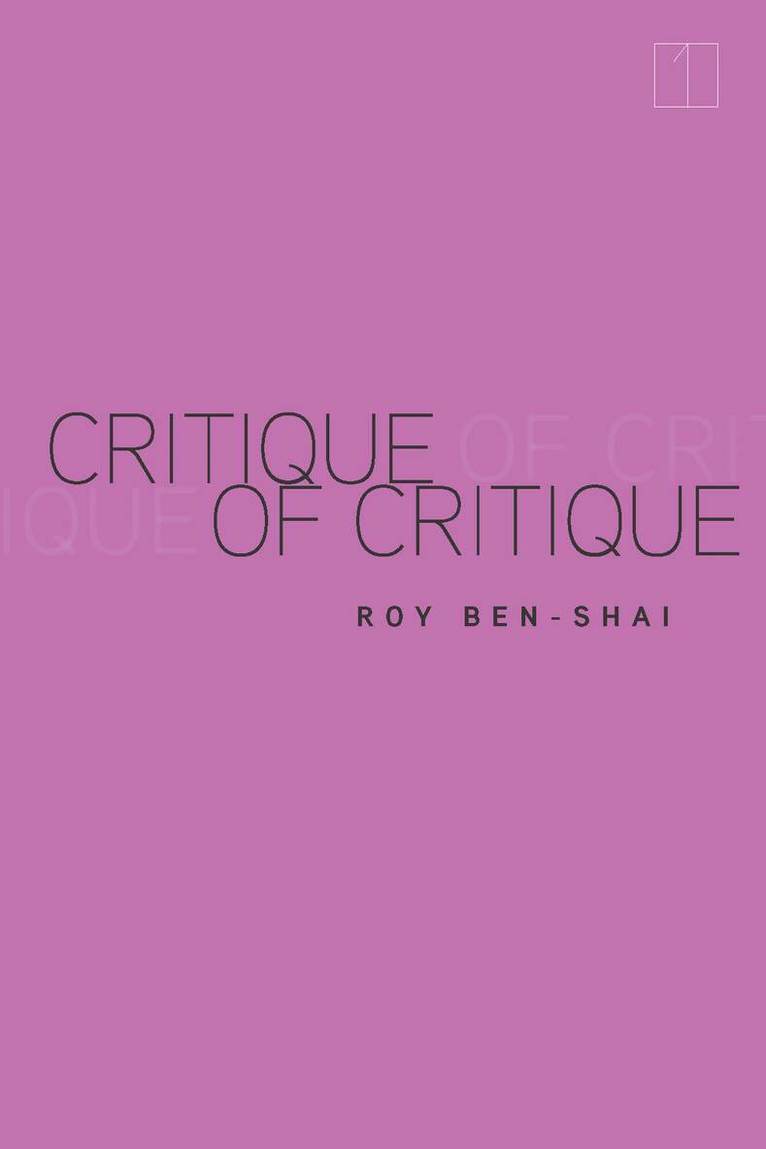
Critique of Critique
Av Roy Ben-Shai
Inbunden, 2023
1106 kr
Lägg i varukorg
What is critique? How is it used and abused? At a moment when popular discourse is saturated with voices confronting each other about not being critical enough, while academic discourses proclaim to have moved past critique, this provocative book reawakens the foundational question of what …
Critique of Critique
Av Roy Ben-Shai
Häftad, 2023
347 kr
Lägg i varukorg
What is critique? How is it used and abused? At a moment when popular discourse is saturated with voices confronting each other about not being critical enough, while academic discourses proclaim to have moved past critique, this provocative book reawakens the foundational question of what …
Critique of Critique
Av Roy Ben-Shai
E-bok, 2023
546 kr
Lägg i varukorg
What is critique? How is it used and abused? At a moment when popular discourse is saturated with voices confronting each other about not being critical enough, while academic discourses proclaim to have moved past critique, this provocative book reawakens the foundational question of what …
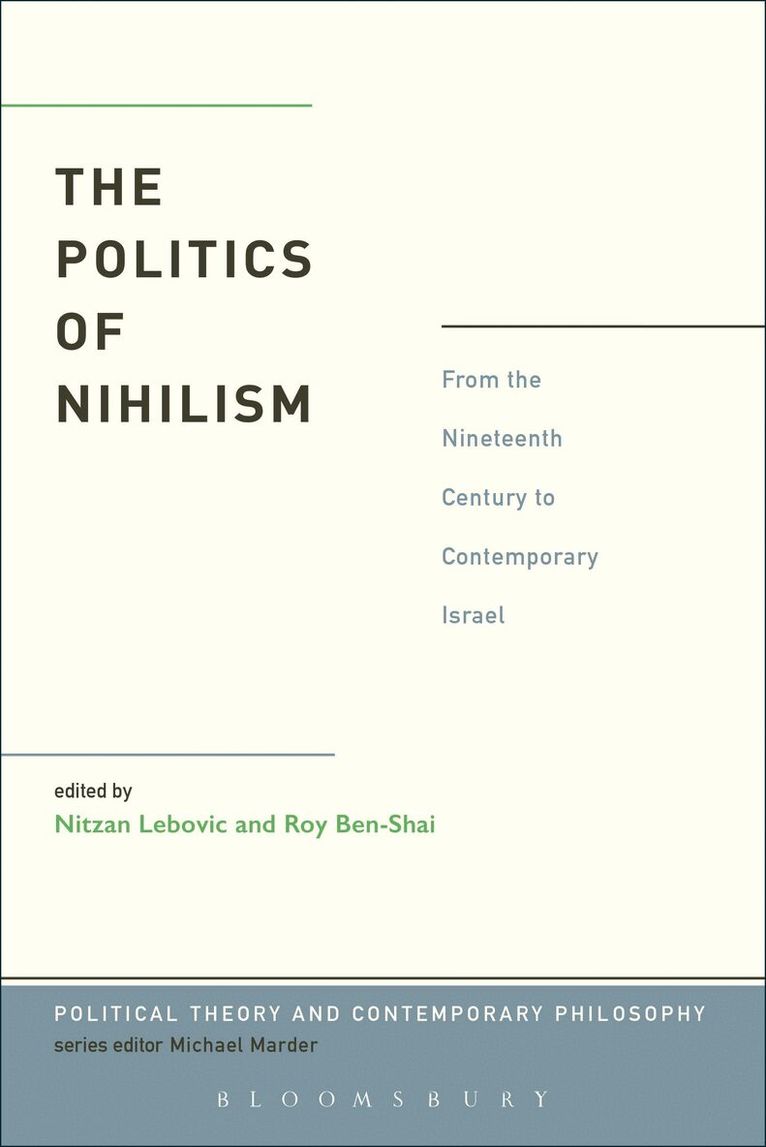
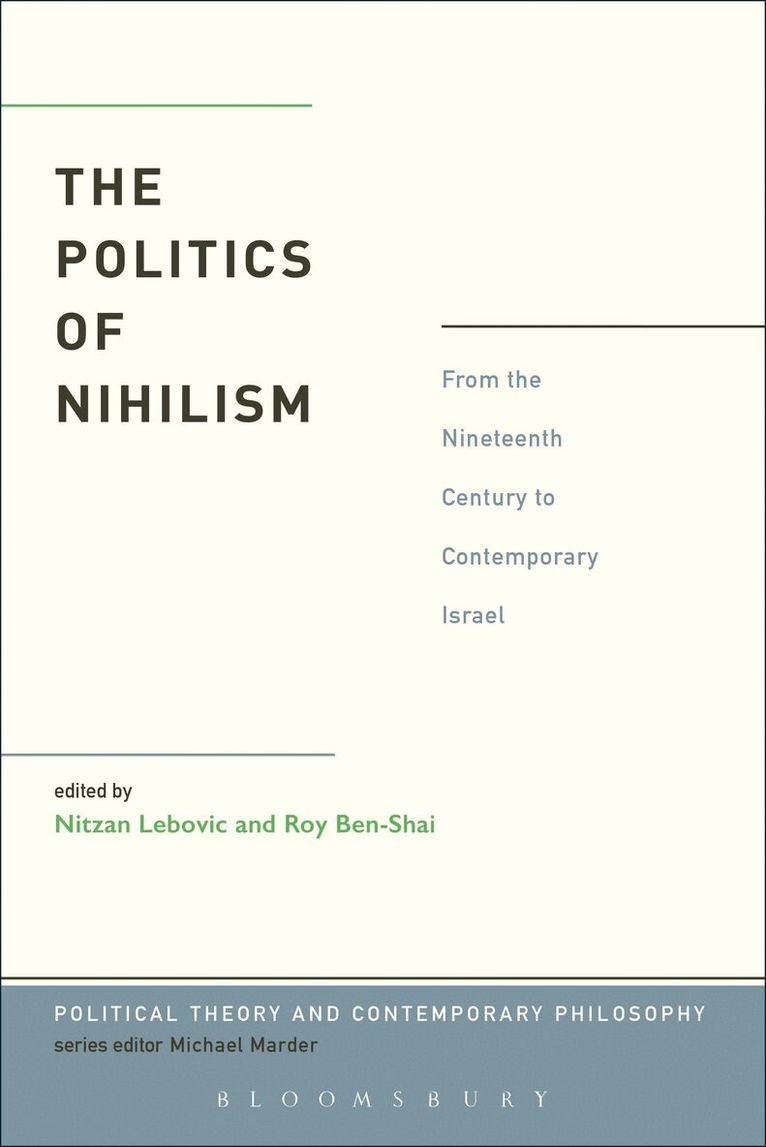
Politics of Nihilism
From the Nineteenth Century to Contemporary Israel
Av Nitzan Lebovic, Roy Ben-Shai
Häftad, 2014
518 kr
Lägg i varukorg
Contemporary politics is faced, on the one hand, with political stagnation and lack of a progressive vision on the side of formal, institutional politics, and, on the other, with various social movements that venture to challenge modern understandings of representation, participation,and democracy. …
Politics of Nihilism
From the Nineteenth Century to Contemporary Israel
Av Nitzan Lebovic, Roy Ben-Shai
E-bok, 2014
561 kr
Lägg i varukorg
Contemporary politics is faced, on the one hand, with political stagnation and lack of a progressive vision on the side of formal, institutional politics, and, on the other, with various social movements that venture to challenge modern understandings of representation, participation,and democracy. …
Politics of Nihilism
From the Nineteenth Century to Contemporary Israel
Av Nitzan Lebovic, Roy Ben-Shai
Inbunden, 2014
2133 kr
Lägg i varukorg
Contemporary politics is faced, on the one hand, with political stagnation and lack of a progressive vision on the side of formal, institutional politics, and, on the other, with various social movements that venture to challenge modern understandings of representation, participation,and democracy. …
Politics of Nihilism
From the Nineteenth Century to Contemporary Israel
Av Nitzan Lebovic, Roy Ben-Shai
E-bok, 2014
526 kr
Lägg i varukorg
Contemporary politics is faced, on the one hand, with political stagnation and lack of a progressive vision on the side of formal, institutional politics, and, on the other, with various social movements that venture to challenge modern understandings of representation, participation,and democracy. …