Roy L. Simpson – författare
Visar alla böcker från författaren Roy L. Simpson. Handla med fri frakt och snabb leverans.
3 produkter
3 produkter
Inbunden, Engelska, 2017
2 557 kr
Skickas inom 10-15 vardagar
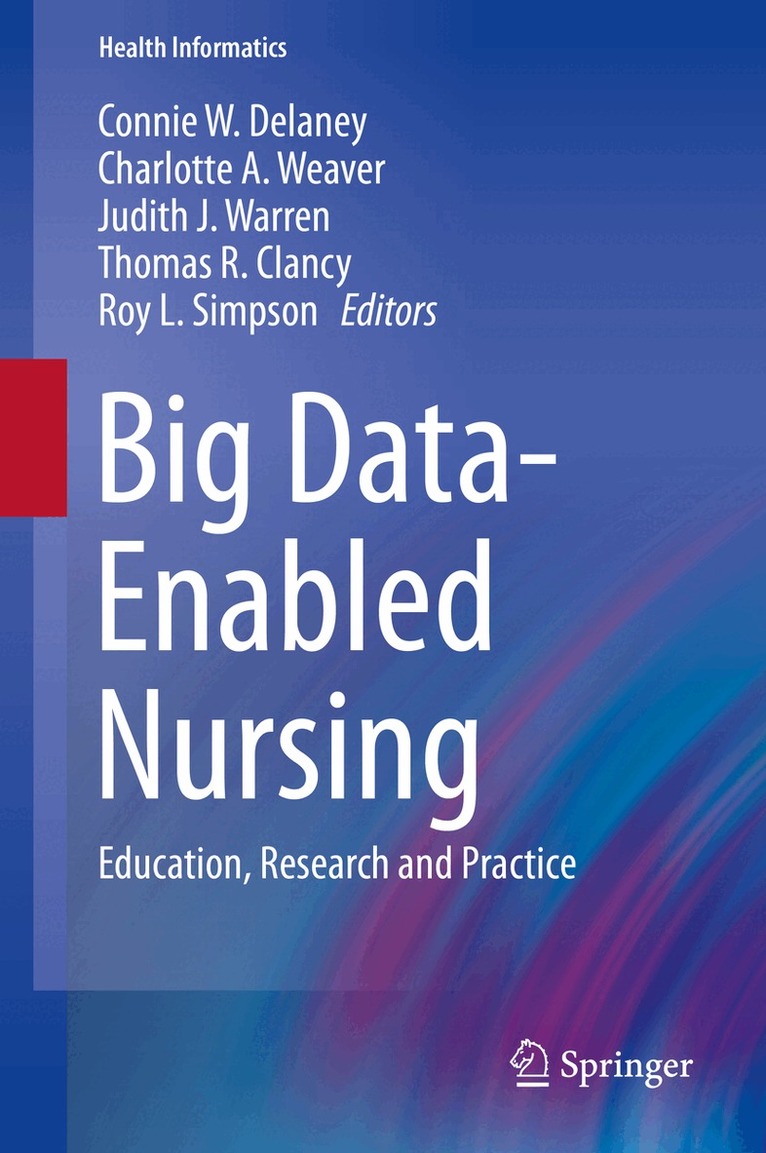
Historically, nursing, in all of its missions of research/scholarship, education and practice, has not had access to large patient databases. Nursing consequently adopted qualitative methodologies with small sample sizes, clinical trials and lab research. Historically, large data methods were limited to traditional biostatical analyses. In the United States, large payer data has been amassed and structures/organizations have been created to welcome scientists to explore these large data to advance knowledge discovery. Health systems electronic health records (EHRs) have now matured to generate massive databases with longitudinal trending. This text reflects how the learning health system infrastructure is maturing, and being advanced by health information exchanges (HIEs) with multiple organizations blending their data, or enabling distributed computing. It educates the readers on the evolution of knowledge discovery methods that span qualitative as well as quantitative data mining, including the expanse of data visualization capacities, are enabling sophisticated discovery. New opportunities for nursing and call for new skills in research methodologies are being further enabled by new partnerships spanning all sectors.
E-bok
Engelska, 20172 436 kr
Läs direkt efter köp
Historically, nursing, in all of its missions of research/scholarship, education and practice, has not had access to large patient databases. Nursing consequently adopted qualitative methodologies with small sample sizes, clinical trials and lab research. Historically, large data methods were limited to traditional biostatical analyses. In the United States, large payer data has been amassed and structures/organizations have been created to welcome scientists to explore these large data to advance knowledge discovery. Health systems electronic health records (EHRs) have now matured to generate massive databases with longitudinal trending. This text reflects how the learning health system infrastructure is maturing, and being advanced by health information exchanges (HIEs) with multiple organizations blending their data, or enabling distributed computing. It educates the readers on the evolution of knowledge discovery methods that span qualitative as well as quantitative data mining, including the expanse of data visualization capacities, are enabling sophisticated discovery. New opportunities for nursing and call for new skills in research methodologies are being further enabled by new partnerships spanning all sectors.
Häftad, Engelska, 2018
1 892 kr
Skickas inom 10-15 vardagar
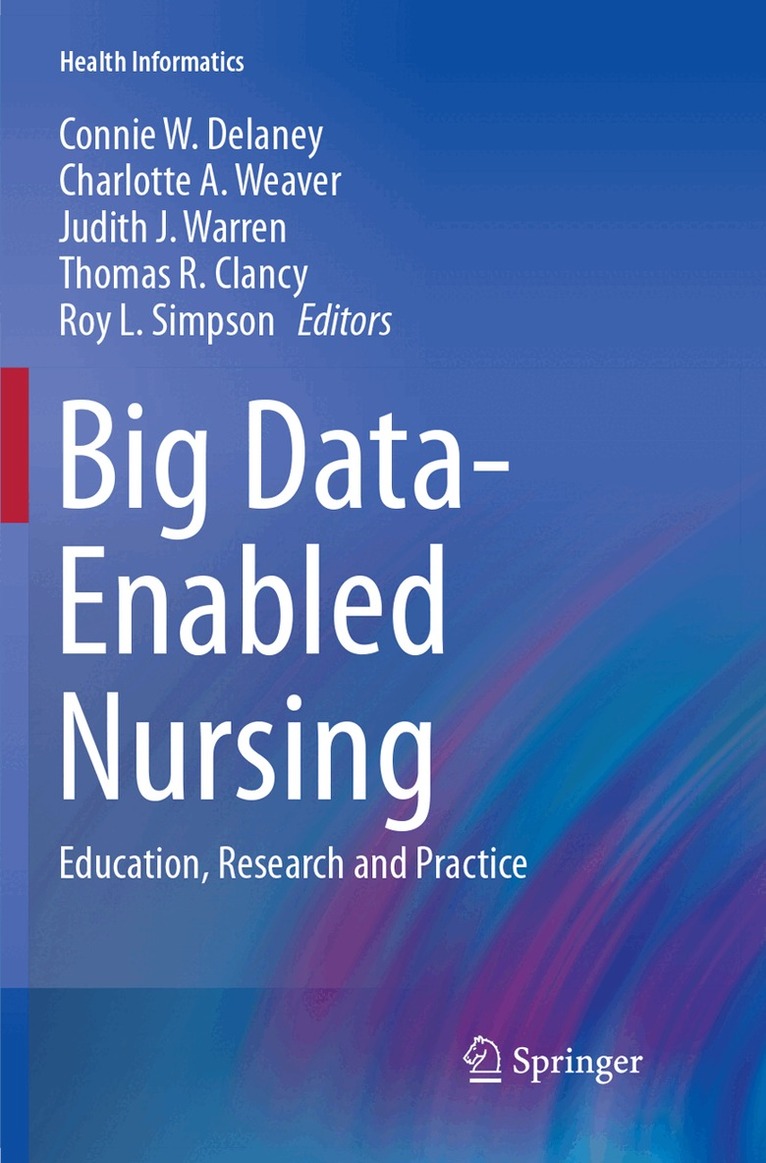
Historically, nursing, in all of its missions of research/scholarship, education and practice, has not had access to large patient databases. Nursing consequently adopted qualitative methodologies with small sample sizes, clinical trials and lab research. Historically, large data methods were limited to traditional biostatical analyses. In the United States, large payer data has been amassed and structures/organizations have been created to welcome scientists to explore these large data to advance knowledge discovery. Health systems electronic health records (EHRs) have now matured to generate massive databases with longitudinal trending. This text reflects how the learning health system infrastructure is maturing, and being advanced by health information exchanges (HIEs) with multiple organizations blending their data, or enabling distributed computing. It educates the readers on the evolution of knowledge discovery methods that span qualitative as well as quantitative data mining, including the expanse of data visualization capacities, are enabling sophisticated discovery. New opportunities for nursing and call for new skills in research methodologies are being further enabled by new partnerships spanning all sectors.