Roy M Anderson – författare
Visar alla böcker från författaren Roy M Anderson. Handla med fri frakt och snabb leverans.
3 produkter
3 produkter
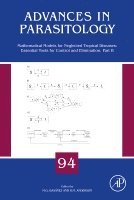
Del 94 - Advances in Parasitology
Mathematical Models for Neglected Tropical Diseases: Essential Tools for Control and Elimination, Part B
Inbunden, Engelska, 2016
2 680 kr
Skickas inom 10-15 vardagar
Mathematic Modelling: Improving the Implementation, Monitoring and Evaluation of Interventions, Part B, the latest volume in the Advances in Parasitology series contains comprehensive and up-to-date reviews in the field of mathematic modeling and its implementation within parasitology.
The series includes medical studies of parasites of major influence, such as Plasmodium falciparum and trypanosomes, along with reviews of more traditional areas, such as zoology, taxonomy, and life history, all of which shape current thinking and applications.
Informs and updates on all the latest developments in mathematic modeling Contains contributions from leading authorities and industry experts Latest installment in the Advances in Parasitology seriesHäftad, Engelska, 1982
565 kr
Skickas inom 10-15 vardagar
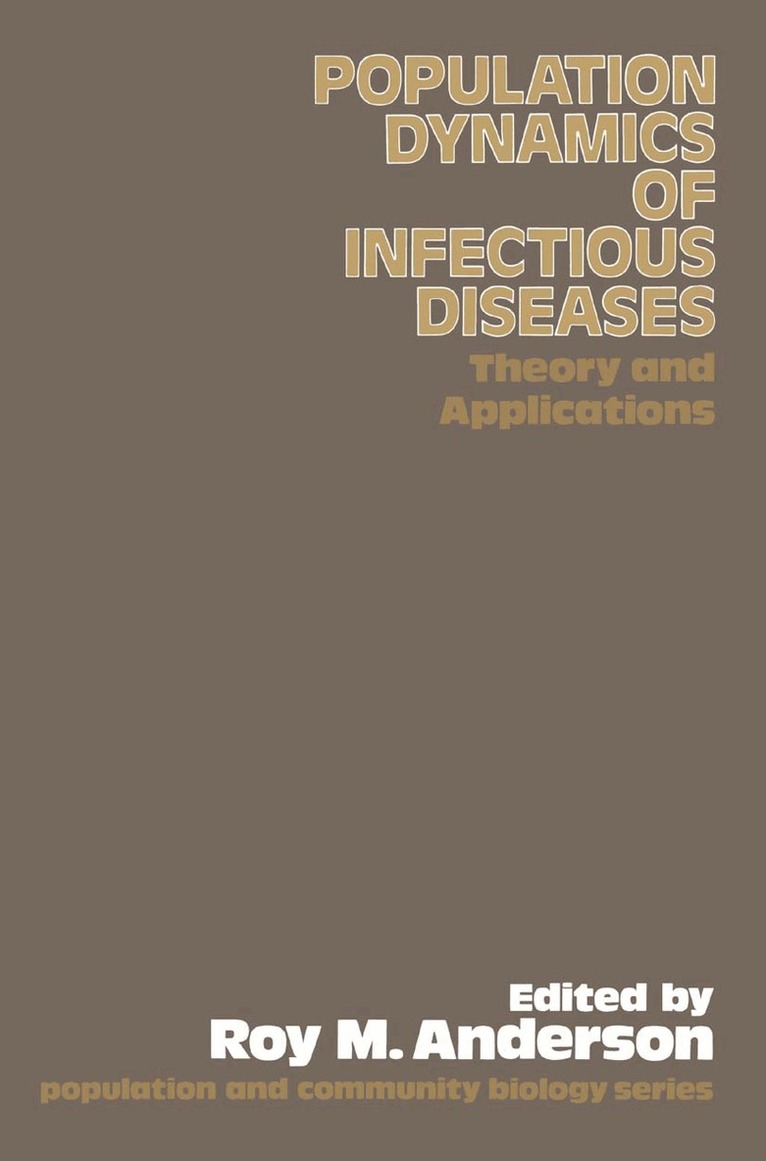
Since the beginning of this century there has been a growing interest in the study of the epidemiology and population dynamics of infectious disease agents. Mathematical and statistical methods have played an important role in the development of this field and a large, and sophisticated, literature exists which is concerned with the theory of epidemiological processes in popu lations and the dynamics of epidemie and endemie disease phenomena. Much ofthis literature is, however, rather formal and abstract in character, and the field has tended to become rather detached from its empirical base. Relatively little of the literature, for example, deals with the practical issues which are of major concern to public health workers. Encouragingly, in recent years there are signs of an increased awareness amongst theoreticians of the need to confront predictions with observed epidemiological trends, and to pay elose attention to the biological details of the interaction between host and disease agent. This trend has in part been stimulated by the early work of Ross and Macdonald, on the transmission dynamics of tropical parasitic infections, but a further impetus has been the recent advances made by ecologists in blending theory and observation in the study of plant and animal populations.
E-bok
PDF, Engelska, 2013708 kr
Läs direkt efter köp
Since the beginning of this century there has been a growing interest in the study of the epidemiology and population dynamics of infectious disease agents. Mathematical and statistical methods have played an important role in the development of this field and a large, and sophisticated, literature exists which is concerned with the theory of epidemiological processes in popu lations and the dynamics of epidemie and endemie disease phenomena. Much ofthis literature is, however, rather formal and abstract in character, and the field has tended to become rather detached from its empirical base. Relatively little of the literature, for example, deals with the practical issues which are of major concern to public health workers. Encouragingly, in recent years there are signs of an increased awareness amongst theoreticians of the need to confront predictions with observed epidemiological trends, and to pay elose attention to the biological details of the interaction between host and disease agent. This trend has in part been stimulated by the early work of Ross and Macdonald, on the transmission dynamics of tropical parasitic infections, but a further impetus has been the recent advances made by ecologists in blending theory and observation in the study of plant and animal populations.