Roy Pascal – författare
Visar alla böcker från författaren Roy Pascal. Handla med fri frakt och snabb leverans.
9 produkter
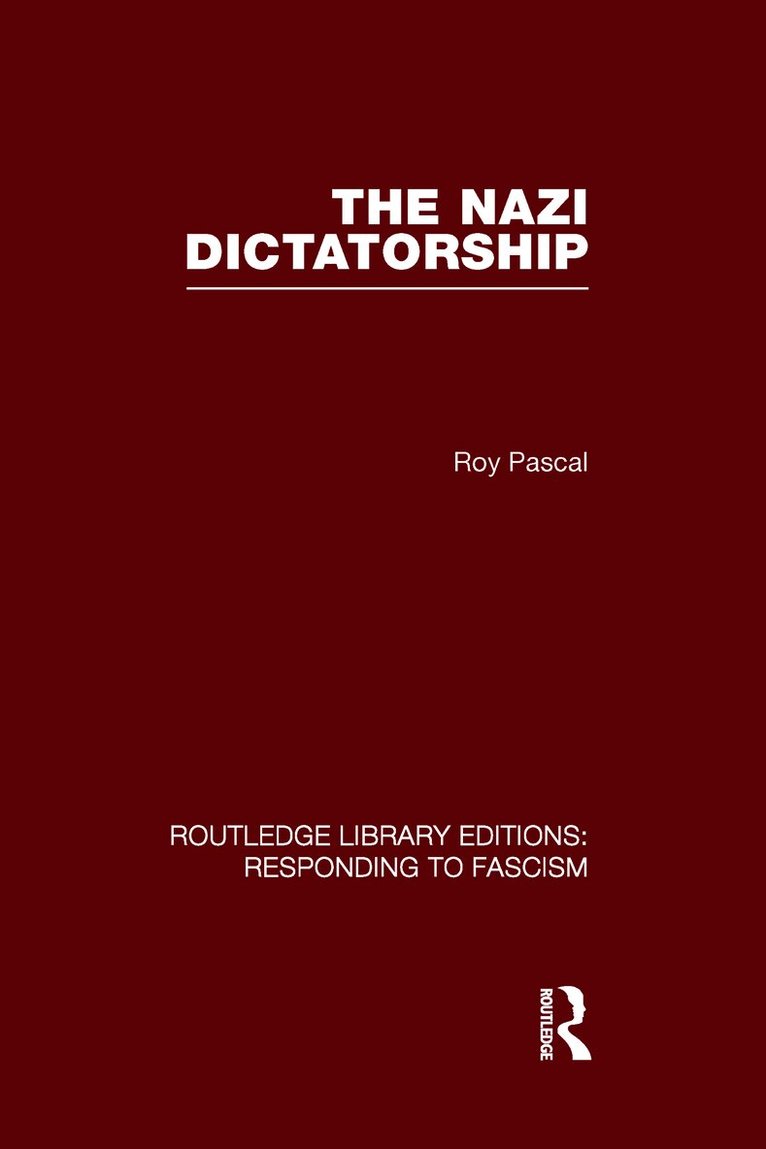
Nazi Dictatorship (RLE Responding to Fascism)
Av Roy Pascal
Inbunden, 2010
2578 kr
Lägg i varukorg
Faced with a political movement that was effectively unparalleled many observers found it extremely difficult to work out exactly what kind of regime they were dealing with: whose interests did it serve? First published in 1934, The Nazi Dictatorship argues both that the Nazi regime represented a …
Nazi Dictatorship (RLE Responding to Fascism)
Av Roy Pascal
Häftad, 2013
844 kr
Lägg i varukorg
Faced with a political movement that was effectively unparalleled many observers found it extremely difficult to work out exactly what kind of regime they were dealing with: whose interests did it serve? First published in 1934, The Nazi Dictatorship argues both that the Nazi regime represented a …
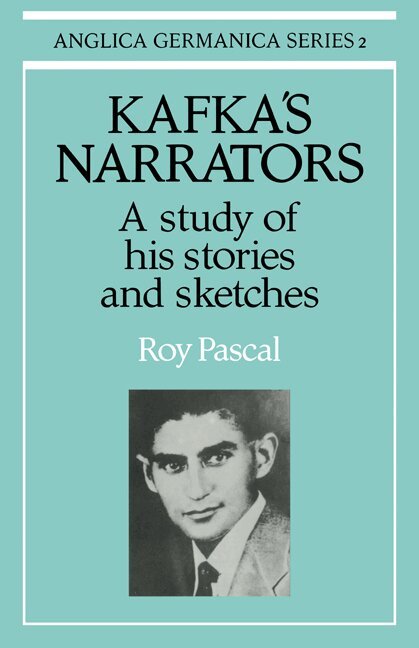
Kafka's Narrators
A Study of His Stories and Sketches
Av Roy Pascal
Häftad, 1982
654 kr
Lägg i varukorg
When Roy Pascal died in 1980 he had all but completed a book on narrative viewpoint in Kafka's shorter fiction: the stories and sketches, as well as the numerous fables and parables. It was for Pascal a genuine voyage of discovery from which he believed he was bringing back significant observations …
Nazi Dictatorship (RLE Responding to Fascism)
Av Roy Pascal
E-bok, 2010
967 kr
Lägg i varukorg
Faced with a political movement that was effectively unparalleled many observers found it extremely difficult to work out exactly what kind of regime they were dealing with: whose interests did it serve? First published in 1934, The Nazi Dictatorship argues both that the Nazi regime represented a …
Nazi Dictatorship (RLE Responding to Fascism)
Av Roy Pascal
E-bok, 2010
999 kr
Lägg i varukorg
Faced with a political movement that was effectively unparalleled many observers found it extremely difficult to work out exactly what kind of regime they were dealing with: whose interests did it serve? First published in 1934, The Nazi Dictatorship argues both that the Nazi regime represented a …
Design and Truth in Autobiography
Av Roy Pascal
Inbunden, 2015
2879 kr
Lägg i varukorg
Originally published in 1960. Is there an art of autobiography? What are its origins and how has it come to acquire the form we know today? For what does the autobiographer seek, and why should it be so popular? This study suggests some of the answers to these questions. It takes the view that …
Design and Truth in Autobiography
Av Roy Pascal
Häftad, 2017
642 kr
Lägg i varukorg
Originally published in 1960. Is there an art of autobiography? What are its origins and how has it come to acquire the form we know today? For what does the autobiographer seek, and why should it be so popular? This study suggests some of the answers to these questions. It takes the view that …
Design and Truth in Autobiography
Av Roy Pascal
E-bok, 2015
757 kr
Lägg i varukorg
Originally published in 1960. Is there an art of autobiography? What are its origins and how has it come to acquire the form we know today? For what does the autobiographer seek, and why should it be so popular? This study suggests some of the answers to these questions. It takes the view that …
Design and Truth in Autobiography
Av Roy Pascal
E-bok, 2015
735 kr
Lägg i varukorg
Originally published in 1960. Is there an art of autobiography? What are its origins and how has it come to acquire the form we know today? For what does the autobiographer seek, and why should it be so popular? This study suggests some of the answers to these questions. It takes the view that …