Roy Turner – författare
Visar alla böcker från författaren Roy Turner. Handla med fri frakt och snabb leverans.
14 produkter
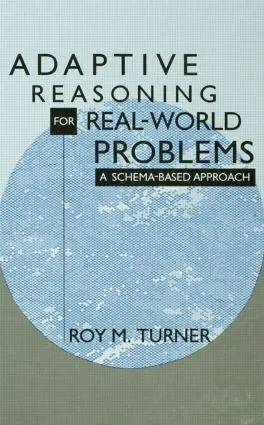
Adaptive Reasoning for Real-world Problems
A Schema-based Approach
Av Roy Turner
Inbunden, 1994
2445 kr
Lägg i varukorg
This book describes a method for building real-world problem solving systems such as medical diagnostic procedures and intelligent controllers for autonomous underwater vehicles (AUVs) and other robots. The approach taken is different from other work reported in the artificial intelligence …
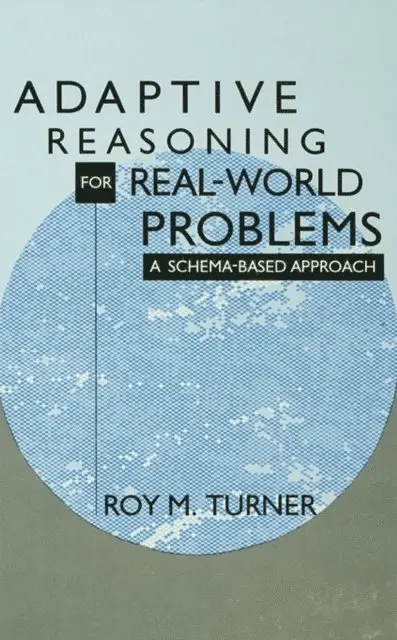
Adaptive Reasoning for Real-world Problems
A Schema-based Approach
Av Roy Turner
E-bok, 2013
478 kr
Lägg i varukorg
This book describes a method for building real-world problem solving systems such as medical diagnostic procedures and intelligent controllers for autonomous underwater vehicles (AUVs) and other robots. The approach taken is different from other work reported in the artificial intelligence …
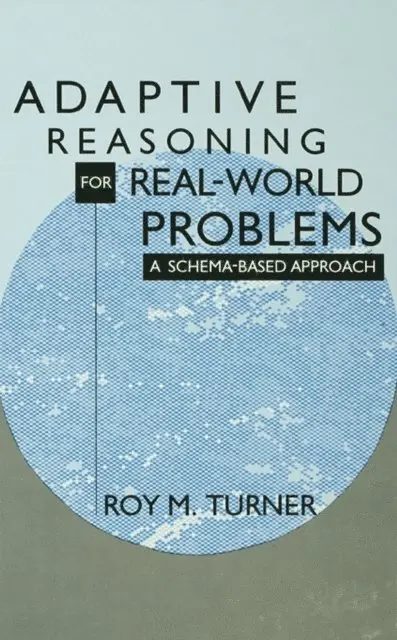
Adaptive Reasoning for Real-world Problems
A Schema-based Approach
Av Roy Turner
E-bok, 2013
492 kr
Lägg i varukorg
This book describes a method for building real-world problem solving systems such as medical diagnostic procedures and intelligent controllers for autonomous underwater vehicles (AUVs) and other robots. The approach taken is different from other work reported in the artificial intelligence …
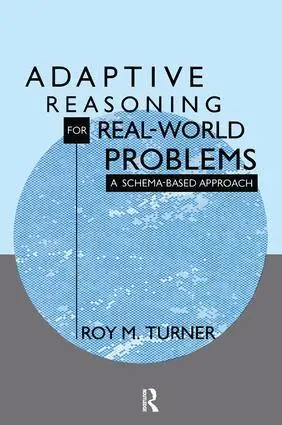
Adaptive Reasoning for Real-world Problems
A Schema-based Approach
Av Roy Turner
Häftad, 2019
430 kr
Lägg i varukorg
This book describes a method for building real-world problem solving systems such as medical diagnostic procedures and intelligent controllers for autonomous underwater vehicles (AUVs) and other robots. The approach taken is different from other work reported in the artificial intelligence …
Dominatrix: Candid interviews with 20 lifestyle Dominatrixes
Av Roy Turner
Häftad
253 kr
Lägg i varukorg
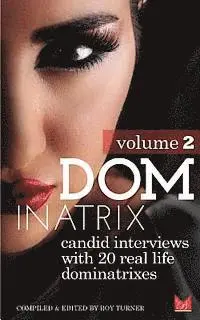
Dominatrix (Volume 2): Candid interviews with 20 real life dominatrixes
Av Roy Turner
Häftad
242 kr
Lägg i varukorg
Submissive Volume 2: Candid interviews with 15 real life submissives
Av Roy Turner
Häftad
242 kr
Lägg i varukorg
Modeling and Using Context
10th International and Interdisciplinary Conference, CONTEXT 2017, Paris, France, June 20-23, 2017, Proceedings
Av Patrick Brézillon, Roy Turner m. fl.
Häftad, 2017
568 kr
Lägg i varukorg
This book constitutes the proceedings of the 10th International and Interdisciplinary Conference on Modeling and Using Context, CONTEXT 2017, held in Paris, France, in June 2017.The 26 full papers and 15 short papers presented were carefully reviewed and selected from 88 submissions. The papers …
Modeling and Using Context
10th International and Interdisciplinary Conference, CONTEXT 2017, Paris, France, June 20-23, 2017, Proceedings
Av Carlo Penco, Roy Turner m. fl.
E-bok, 2017
710 kr
Lägg i varukorg
This book constitutes the proceedings of the 10th International and Interdisciplinary Conference on Modeling and Using Context, CONTEXT 2017, held in Paris, France, in June 2017. The 26 full papers and 15 short papers presented were carefully reviewed and selected from 88 submissions. The papers …
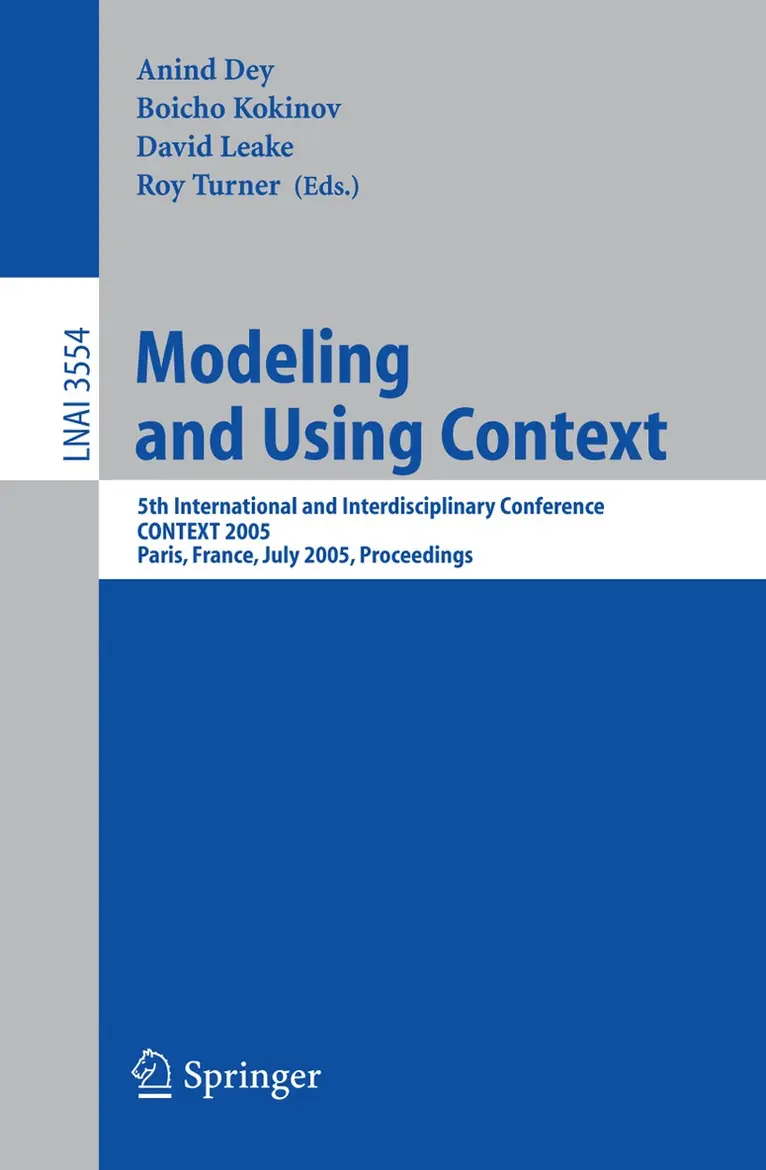
Modeling and Using Context
5th International and Interdisciplinary Conference, CONTEXT 2005, Paris, France, July 5-8, 2005, Proceedings
Av Anind Dey, Boicho Kokinov m. fl.
Häftad, 2005
1129 kr
Lägg i varukorg
Context is of crucial importance for research and applications in many disciplines, as evidenced by many workshops, symposia, seminars, and conferences on specific aspects of context. The International and Interdisciplinary Conference on Modeling and Using Context (CONTEXT), the oldest conference …
Modeling and Using Context
5th International and Interdisciplinary Conference, CONTEXT 2005, Paris, France, July 5-8, 2005, Proceedings
Av Roy Turner, David Leake m. fl.
E-bok, 2005
1459 kr
Lägg i varukorg
Context is of crucial importance for research and applications in many disciplines, as evidenced by many workshops, symposia, seminars, and conferences on specific aspects of context. The International and Interdisciplinary Conference on Modeling and Using Context (CONTEXT), the oldest conference …