Roy W. Perrett - Böcker
Visar alla böcker från författaren Roy W. Perrett. Handla med fri frakt och snabb leverans.
7 produkter
7 produkter
422 kr
Skickas inom 7-10 vardagar
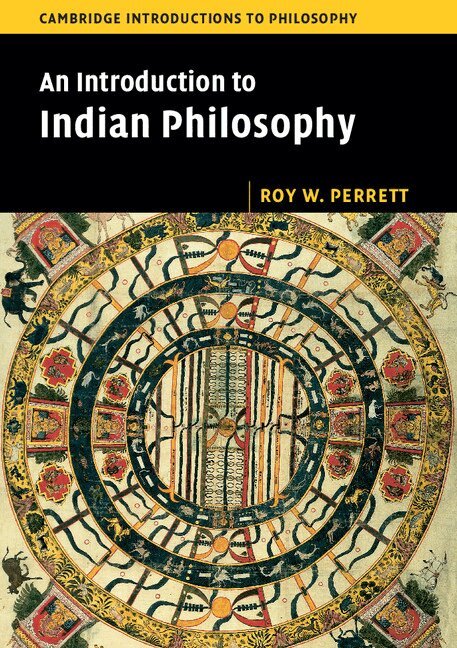
This wide-ranging introduction to classical Indian philosophy is philosophically rigorous without being too technical for beginners. Through detailed explorations of the full range of Indian philosophical concerns, including some metaphilosophical issues, it provides readers with non-Western perspectives on central areas of philosophy, including epistemology, logic, metaphysics, ethics, philosophy of language, and philosophy of religion. Chapters are structured thematically, with each including suggestions for further reading. This provides readers with an informed overview whilst enabling them to focus on particular topics if needed. Translated Sanskrit texts are accompanied by authorial explanations and contextualisations, giving the reader an understanding of the argumentative context and philosophical style of Indian texts. A detailed glossary and a guide to Sanskrit pronunciation equip readers with the tools needed for reading and understanding Sanskrit terms and names. The book will be an essential resource for both beginners and advanced students of philosophy and Asian studies.
902 kr
Skickas inom 7-10 vardagar
This wide-ranging introduction to classical Indian philosophy is philosophically rigorous without being too technical for beginners. Through detailed explorations of the full range of Indian philosophical concerns, including some metaphilosophical issues, it provides readers with non-Western perspectives on central areas of philosophy, including epistemology, logic, metaphysics, ethics, philosophy of language, and philosophy of religion. Chapters are structured thematically, with each including suggestions for further reading. This provides readers with an informed overview whilst enabling them to focus on particular topics if needed. Translated Sanskrit texts are accompanied by authorial explanations and contextualisations, giving the reader an understanding of the argumentative context and philosophical style of Indian texts. A detailed glossary and a guide to Sanskrit pronunciation equip readers with the tools needed for reading and understanding Sanskrit terms and names. The book will be an essential resource for both beginners and advanced students of philosophy and Asian studies.
2 171 kr
Skickas inom 10-15 vardagar
First Published in 2001. Part of the Indian Philosophy collection of readings, this volume focuses on Metaphysics. The complement to pramdna theory is prameya theory. Wherea s th e pramdnas are the means of knowledge, the prameyas are the knowables. cognizable entities which constitute the world. With respect to the number and kinds of such entities, there was a very wide variety of opinion among classical Indian philosophers. Moreover, since according to most Indian systems knowledge of reality is at least a necessary condition for liberation , these metaphysical disputes were taken to be of practical as well as theoretical import.
2 306 kr
Skickas inom 10-15 vardagar
First Published in 2001. The five volumes of this series collect together some of the most significant modern contributions to the study of Indian philosophy. Volume 1: Epistemology is concerned with the nature and scope of Indian pramana theory, i.e. that part of Indian philosophy concerned with the nature and sources of knowledge. Indian philosophers developed a causal theory of knowledge and acknowledged the existence of a number of valid ways of knowing, including perception, inference and testimony. The Indian pramana theorists thus discussed many issues that have also occupied Western epistemologists, often offering importantly different perspectives on these matters. They also sometimes addressed various interesting questions about knowledge that are unfamiliar to Western epistemologists. The selections in this volume discuss Indian treatments of epistemological topics like the means of knowledge, realism and anti-realism, truth, knowledge of knowledge, illusion and perceptual error, knowability, testimony, scepticism and doubt.
2 712 kr
Skickas inom 10-15 vardagar
First published in 2001. The five volumes of this series collect together some of the most significant modern contributions to the study of Indian philosophy. Volume 2: Logic and Philosophy of Language is concerned with those parts of Indian pramd-a theory that Western philosophers would count as logic and philosophy of language. Indian philosophers and linguists were much concerned with philosophical issues to do with language, especially with theories of meaning, while the Indian logicians developed both a formalised canonical inference schema and a theory of fallacies. The logic of the standard Indian inferential model is deductive, but the premises are arrived at inductively. The later Navya-Nyaya logicians went on to develop too a powerful technical language, an intentional logic of cognitions, which became the language of all serious discourse in India. The selections in this volume discuss Indian treatments of topics in logic and the philosophy of language like the nature of inference, negation, necessity, counterfactual reasoning, many-valued logics, theory of meaning, reference and existence, compositionality and contextualism, the sense-reference distinction, and the nature of the signification relation.
2 306 kr
Skickas inom 10-15 vardagar
First Published in 2001. No anthologist succeeds in including everyone's favorites, so a few words about the principles of selection seem appropriate. Firstly, as with other volumes in this series, priority has been given to journal articles, rather than book chapters. However, some essential book chapters have been included, and the introductions to each volume include references to significant books. Secondly, the emphasis throughout is on philosophical studies of Indian philosophy. Consequently, much excellent historical and philological work has been omitted. Thirdly, the desire to make Indian philosophy accessible to interested Western philosophers has meant not only that all the selections are in English, but also that most of them use a minimal amount of unglossed Sanskrit terminology.
2 306 kr
Skickas inom 10-15 vardagar
First Published in 2001. While classical Indian philosophy is incredibly rich in rigorous discussion s of topics in epistemology, logic and metaphysics, comparable discussions in the area s of ethics, politics and aesthetics were not as extensive as might have been expected. The selections in this volume discuss Indian treatments of topics in the theory of value like the proper ends of life, the relation of dharma and moksa, liberation and pleasure, the sources of our knowledge of right and wrong, the ethics of non-violence, the status of the supra-moral. egoism and altruism, the theory of rasa, aesthetic experience and catharsis.