R.S. Fraser – författare
Visar alla böcker från författaren R.S. Fraser. Handla med fri frakt och snabb leverans.
5 produkter
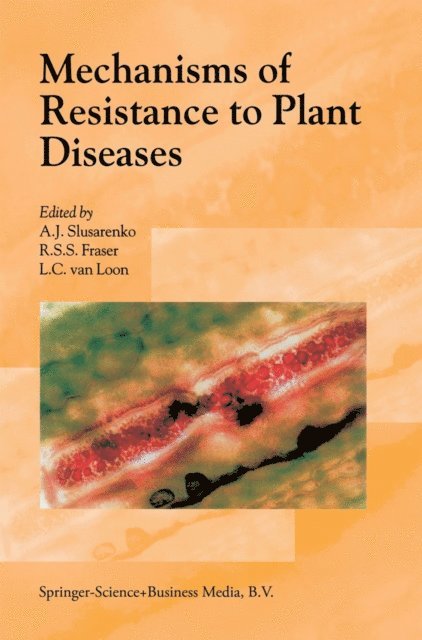
Mechanisms of Resistance to Plant Diseases
Av A.J. Slusarenko, R.S. Fraser m. fl.
Häftad, 2001
551 kr
Lägg i varukorg
Plant-pathogen interactions is a rapidly developing area among the plant sciences. Molecular genetics has provided the tools to analyse and manipulate mechanisms of pathogenicity and resistance responses and has facilitated their study from the population to the molecular level. The book brings …
Mechanisms of Resistance to Plant Diseases
Av R.S. Fraser
Inbunden, 1985
2183 kr
Lägg i varukorg
Plant resistance to pathogens is one of the most important strategies of disease control. Knowledge of resistance mechanisms, and of how to exploit them, has made a significant contribution to agricultural productivity. However, the continuous evolution of new variants of pathogen, ana additional …
Mechanisms of Resistance to Plant Diseases
Av R.S. Fraser
E-bok, 2012
2833 kr
Lägg i varukorg
Plant resistance to pathogens is one of the most important strategies of disease control. Knowledge of resistance mechanisms, and of how to exploit them, has made a significant contribution to agricultural productivity. However, the continuous evolution of new variants of pathogen, ana additional …
Mechanisms of Resistance to Plant Diseases
Häftad, 2011
2183 kr
Lägg i varukorg
Plant resistance to pathogens is one of the most important strategies of disease control. Knowledge of resistance mechanisms, and of how to exploit them, has made a significant contribution to agricultural productivity. However, the continuous evolution of new variants of pathogen, ana additional …
Mechanisms of Resistance to Plant Diseases
Av L.C. van Loon, R.S. Fraser m. fl.
E-bok, 2012
734 kr
Lägg i varukorg
Plant-pathogen interactions is a rapidly developing area among the plant sciences. Molecular genetics has provided the tools to analyse and manipulate mechanisms of pathogenicity and resistance responses and has facilitated their study from the population to the molecular level. The book brings …