Ruben van Luijk – författare
Visar alla böcker från författaren Ruben van Luijk. Handla med fri frakt och snabb leverans.
3 produkter
3 produkter
Inbunden, Engelska, 2016
1 416 kr
Skickas inom 3-6 vardagar
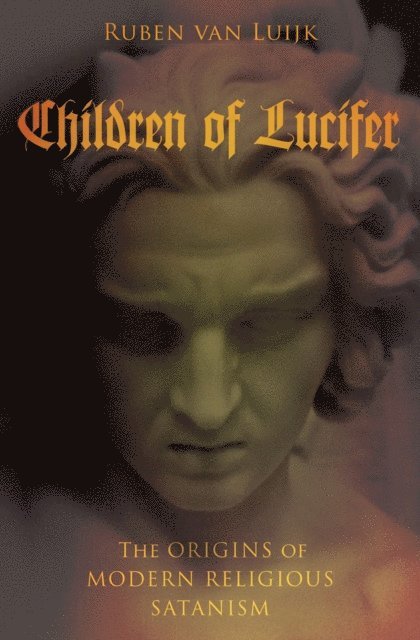
Children of Lucifer explores the historical origins of Satanism, the "anti-religion" that adopts Satan, the Judeo-Christian representative of evil, as an object of veneration. Ruben van Luijk traces its development from a concept invented by the Christian church to demonize its internal and external competitors, to a positive (anti-)religious identity embraced to varying degrees by groups in the modern West. Van Luijk offers a comprehensive intellectual history of this long and unpredictable trajectory; a story that involves Romantic poets, radical anarchists, eccentric esotericists, Decadent writers, and schismatic exorcists, among others, culminating in the establishment of the Church of Satan by carnival entertainer Anton Szandor LaVey. Yet, he argues, this story is more than just a collection of colorful characters and unlikely historical episodes. The emergence of new attitudes towards Satan proves to be intimately linked to the Western Revolution--the ideological struggle for emancipation that transformed the West and is epitomized by the American and French Revolutions. It is also closely connected to secularization, that other exceptional historical process during which western culture spontaneously renounced its traditional gods in order to enter into a self-imposed state of religious indecision. Children of Lucifer, thus, makes the case that the emergence of Satanism presents a shadow history of the evolution of modern civilization as we know it.
E-bok
PDF, Engelska, 2016670 kr
Läs direkt efter köp
If we are to believe sensationalist media coverage, Satanism is, at its most benign, the purview of people who dress in black, adorn themselves with skull and pentagram paraphernalia, and listen to heavy metal. At its most sinister, its adherents are worshippers of evil incarnate and engage in violent and perverse secret rituals, the details of which mainstream society imagines with a fascination verging on the obscene. Children of Lucifer debunks these facile characterizations by exploring the historical origins of modern Satanism. Ruben van Luijk traces the movement''s development from a concept invented by a Christian church eager to demonize its internal and external competitors to a positive (anti-)religious identity embraced by various groups in the modern West. Van Luijk offers a comprehensive intellectual history of this long and unpredictable trajectory. This story involves Romantic poets, radical anarchists, eccentric esotericists, Decadent writers, and schismatic exorcists, among others, and culminates in the establishment of the Church of Satan by carnival entertainer Anton Szandor LaVey. Yet it is more than a collection of colorful characters and unlikely historical episodes. The emergence of new attitudes toward Satan proves to be intimately linked to the ideological struggle for emancipation that transformed the West and is epitomized by the American and French Revolutions. It is also closely connected to secularization, that other exceptional historical process which saw Western culture spontaneously renounce its traditional gods and enter into a self-imposed state of religious indecision. Children of Lucifer makes the case that the emergence of Satanism presents a shadow history of the evolution of modern civilization as we know it. Offering the most comprehensive account of this history yet written, van Luijk proves that, in the case of Satanism, the facts are much more interesting than the fiction.
E-bok
Engelska, 2016676 kr
Läs direkt efter köp
If we are to believe sensationalist media coverage, Satanism is, at its most benign, the purview of people who dress in black, adorn themselves with skull and pentagram paraphernalia, and listen to heavy metal. At its most sinister, its adherents are worshippers of evil incarnate and engage in violent and perverse secret rituals, the details of which mainstream society imagines with a fascination verging on the obscene. Children of Lucifer debunks these facile characterizations by exploring the historical origins of modern Satanism. Ruben van Luijk traces the movement''s development from a concept invented by a Christian church eager to demonize its internal and external competitors to a positive (anti-)religious identity embraced by various groups in the modern West. Van Luijk offers a comprehensive intellectual history of this long and unpredictable trajectory. This story involves Romantic poets, radical anarchists, eccentric esotericists, Decadent writers, and schismatic exorcists, among others, and culminates in the establishment of the Church of Satan by carnival entertainer Anton Szandor LaVey. Yet it is more than a collection of colorful characters and unlikely historical episodes. The emergence of new attitudes toward Satan proves to be intimately linked to the ideological struggle for emancipation that transformed the West and is epitomized by the American and French Revolutions. It is also closely connected to secularization, that other exceptional historical process which saw Western culture spontaneously renounce its traditional gods and enter into a self-imposed state of religious indecision. Children of Lucifer makes the case that the emergence of Satanism presents a shadow history of the evolution of modern civilization as we know it. Offering the most comprehensive account of this history yet written, van Luijk proves that, in the case of Satanism, the facts are much more interesting than the fiction.