Rüdiger Wehner - Böcker
Visar alla böcker från författaren Rüdiger Wehner. Handla med fri frakt och snabb leverans.
3 produkter
3 produkter
529 kr
Skickas inom 7-10 vardagar
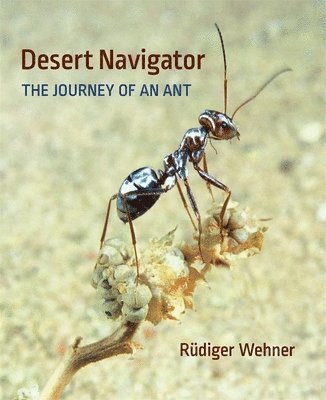
Winner of the Association of American Publishers PROSE Award for Excellence in Biological and Life SciencesA world-renowned researcher of animal behavior reveals the extraordinary orienteering skills of desert ants, offering a thrilling account of the sophisticated ways insects function in their natural environments.Cataglyphis desert ants are agile ultrarunners who can tolerate near-lethal temperatures when they forage in the hot midday sun. But it is their remarkable navigational abilities that make these ants so fascinating to study. Whether in the Sahara or its ecological equivalents in the Namib Desert and Australian Outback, the Cataglyphis navigators can set out foraging across vast expanses of desert terrain in search of prey, and then find the shortest way home. For almost half a century, Rüdiger Wehner and his collaborators have devised elegant experiments to unmask how they do it.Through a lively and lucid narrative, Desert Navigator offers a firsthand look at the extraordinary navigational skills of these charismatic desert dwellers and the experiments that revealed how they strategize and solve complex problems. Wehner and his team discovered that these insect navigators use visual cues in the sky that humans are unable to see, the Earth’s magnetic field, wind direction, a step counter, and panoramic “snapshots” of landmarks, among other resources. The ants combine all of this information to steer an optimal course. At any given time during their long journey, they know exactly where to go. It is no wonder these nimble and versatile creatures have become models in the study of animal navigation.Desert Navigator brings to light the marvelous capacity and complexity found in these remarkable insects and shows us how mini brains can solve mega tasks.
1 077 kr
Skickas inom 3-6 vardagar
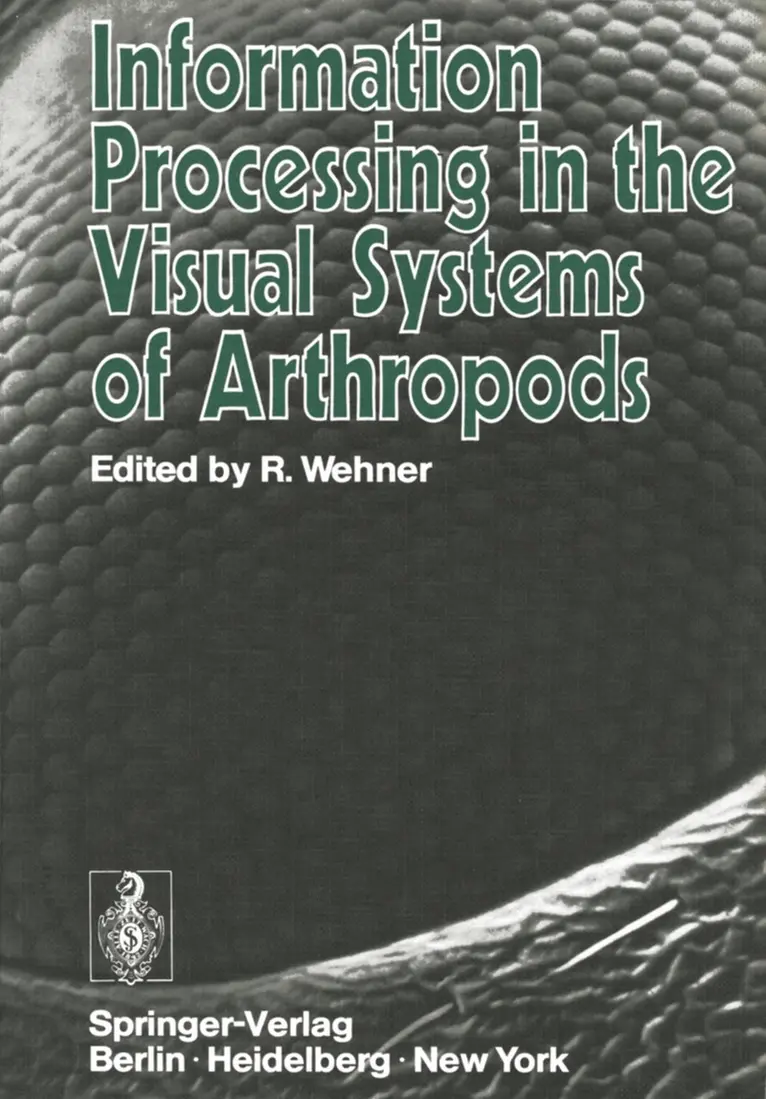
Information Processing in the Visual Systems of Arthropods
Symposium Held at the Department of Zoology, University of Zurich, March 6–9, 1972
Häftad, Engelska, 1972
1 094 kr
Skickas inom 10-15 vardagar
It is now generally accepted for a variety of reasons - morphological as well as physiologica- that the visual systems of arthropods provide a suitable model for the study of information proces sing in neuronal networks. Unlike the neurophysiology of the visual pathway in the frog and the cat which is more than adequately documented, recent work on the compound eye and optical ganglia of spiders, crustaceans, and insects has scarcely been summarized. In order to fill this void so that others, especially vertebrate neurophysiologists may become familiar with the advan tages of these systems, our group at Zurich University organized here in March 1972, a European meeting to discuss the anatomical. ! neurophysiological and behavioral knowledge on the compound eye and the visual. pathway of arthropods. Systems analysis was regarded as the main theme of the conference, but systems analysis of a network of neurons cannot be done as a mere "black-box" maneuver. The conference therefore tried to reconcile neurophysiology and behavioral analysis in order to make predictions about a necessary and sufficient neural structure. The "wiring dia grams" of such a structure might then be confirmed histologically. Hence the aim of the conferen ce was not to deal only with the structure and function of the compound eye - i. e.