Rudolph – författare
Visar alla böcker från författaren Rudolph. Handla med fri frakt och snabb leverans.
6 produkter
6 produkter
Inbunden, Engelska, 1997
3 235 kr
Skickas inom 10-15 vardagar
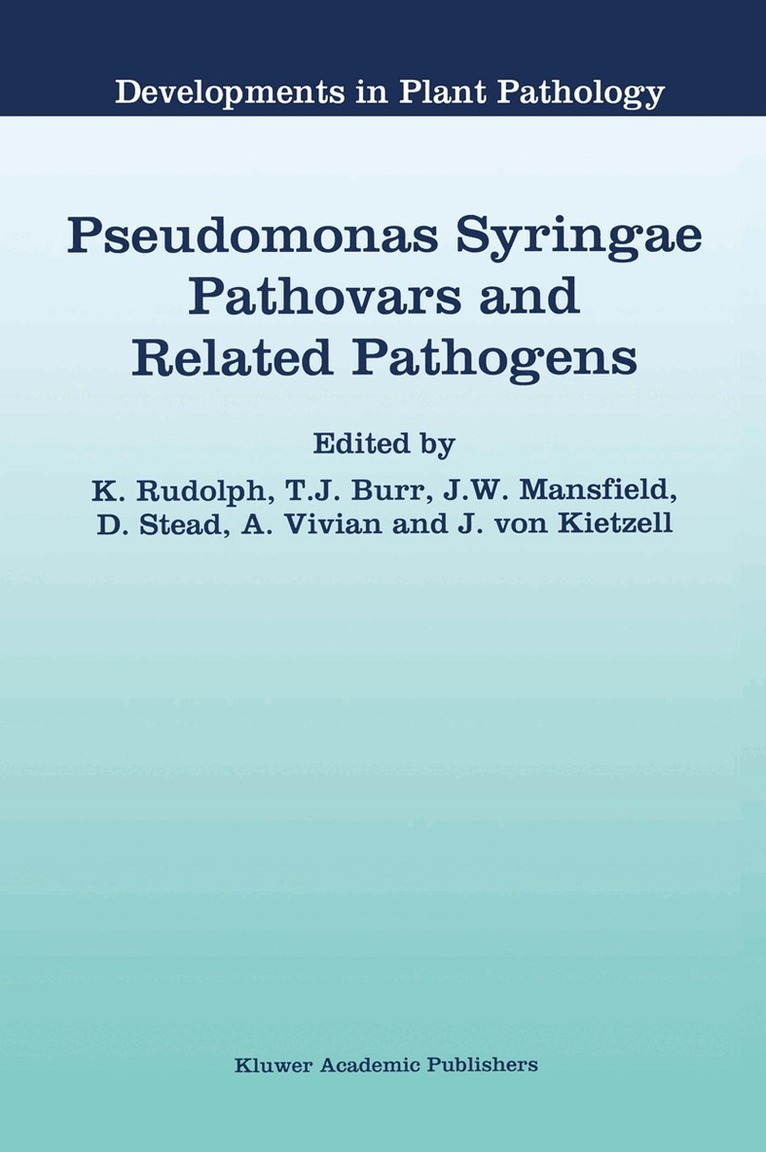
During the 1990s, research on Pseudomonas syringae pathovars and related pathogens has progressed rapidly, opening up many new avenues. The application of molecular genetics has provided insights into determinants of pathogenicity and virulence. Progress has also been made in elucidating the chemical structures and modes of action of phytotoxins from Pseudomonas syringae; by establishing strategies for disease control; in biotechnological applications; by studying the resistant reaction of the plant with a combined biochemical and genetic approach; and in the development of detection and identification methodologies as tools in epidemiological studies. In a response to such rapid advances, this volume is an attempt to provide a balanced overview of recent developments in the field. At the beginning of each chapter is a critical review by international experts.
Del 3 - Blackwell Companions to Art History
Companion to Medieval Art
Romanesque and Gothic in Northern Europe
Häftad, Engelska, 2009
606 kr
Skickas inom 5-8 vardagar
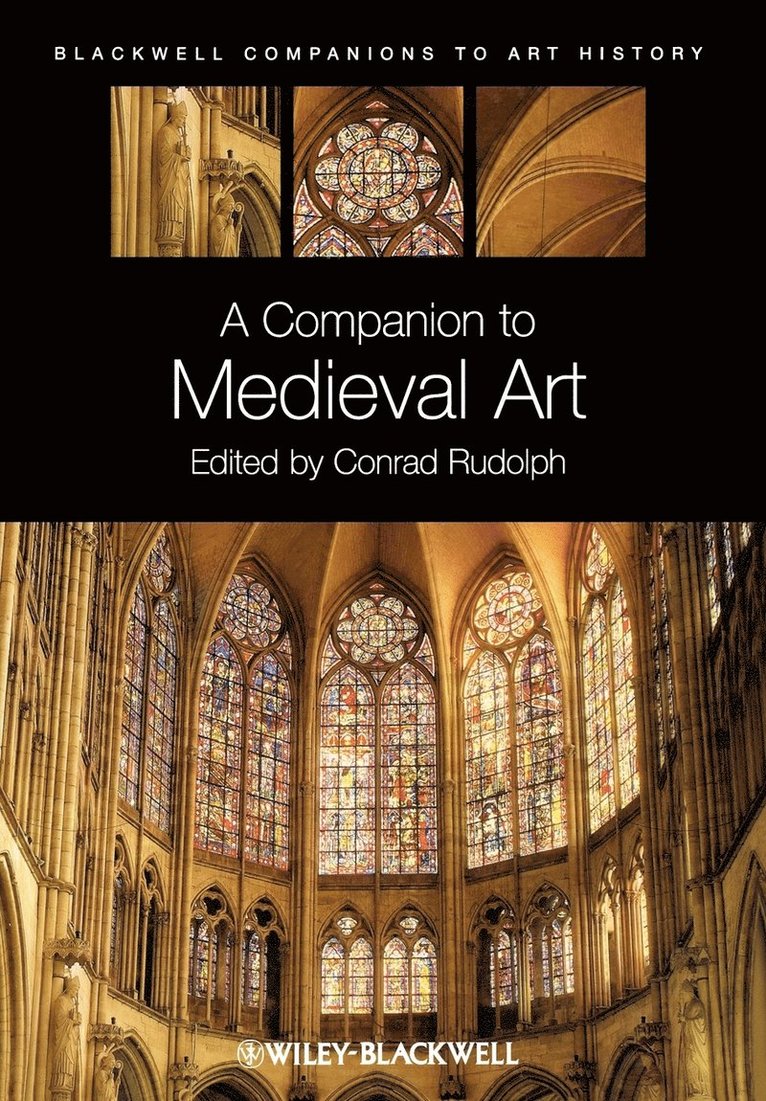
A Companion to Medieval Art brings together cutting-edge scholarship devoted to the Romanesque and Gothic traditions in Northern Europe. Brings together cutting-edge scholarship devoted to the Romanesque and Gothic traditions in Northern Europe.Contains over 30 original theoretical, historical, and historiographic essays by renowned and emergent scholars.Covers the vibrancy of medieval art from both thematic and sub-disciplinary perspectives.Features an international and ambitious range - from reception, Gregory the Great, collecting, and pilgrimage art, to gender, patronage, the marginal, spolia, and manuscript illumination.
Häftad, Tyska, 1998
225 kr
Skickas inom 3-6 vardagar
E-bok
PDF, Tyska, 20183 992 kr
Läs direkt efter köp
This book contains a collection of 18 articles written by the author in the last 30 years on methodological, terminological and historical problems concerning the field of his discipline at Leipzig University, namely Religious Studies. Some articles are rewritten, others only revised or complemented.Much influenced at this University in considering the field of Religious Studies as an area based primary on history and philology, independent of theology and philosophy, this work focuses a.o. on terms like Myth, Mythology, Demythologizing, and Syncretism; on subjects like Mohammed, the relation between Jews, Christians and Muslims; and on leading figures of the discipline in past and present.An introductory essay provides the autobiographical considerations, necessary for a good understanding of the collection.Das Buch enthalt 18 Aufsatze des Autors aus den letzten 30 Jahren, die sich mit wissenschaftsgeschichtlichen, methodologischen und terminologischen Problemen der Religionswissenschaft (Rw) beschaftigen. Mehrere von ihnen sind neubearbeitet, andere wenigstens durchgesehen und erganzt worden. Da der Verfasser das Fach fast 25 Jahre an der Universitat Leipzig (fruher DDR) vertreten hat, ehe er nach den USA und dann nach Marburg berufen wurde, waren seine Moglichkeiten begrenzt, sich zu grundlegenden und aktuellen Fragen seiner Disziplin zu auern, und wenn, dann in Zeitschriften, die nicht so verbreitet sind, da sie international beachtet werden konnten. Seine Ausbildung in Leipzig mit einer der altesten Traditionen der deutschen Rw und die damalige Situation bestimmen daher die Mehrzahl seiner Arbeiten in bemerkenswerter Weise, indem sie versuchen der Rw ein eigenstandiges Profil zu geben, und zwar auf der Grundlage einer streng historisch-philologischen, nichttheologischen Position, die vor allem auch ihre ideologiekritische Seite mit einschliet. Einige Beitrage widmen sich auerdem terminologischen Themen (Mythos, Entmythologisierung, Synkretismus, Entwicklung, Sekte), andere historischen (Mohammed, Verhaltnis von Juden, Christen und Muslimen, Fruhes Christentum) und wissenschaftsgeschichtlichen (H. Haas, J. Wach, W. Baetke, Eliade, Religionsgeschichtliche Schule). Der einleitende Essay gibt autobiographische Reflexionen wieder, die zum Verstandnis der Sammlung notig sind.Das Buch greift grundlegende Probleme der Rw auf, die bis heute diese Disziplin begleiten, auch wenn verstandlicherweise neue Fragestellungen aufgekommen sind, von denen der Verfasser z.B. die der Religion-Umwelt-Beziehung (der alteren Religionsgeographie) aufgreift.
E-bok
PDF, Tyska, 20209 831 kr
Läs direkt efter köp
A collection of 40 or so of the author's essays and contributions to the study of Gnosis, the Mandaeans and Manichaeism, published in the course of the past 40 years. Most have been revised for this new edition. Subjects treated include on the one hand source problems (Nag Hammadi, Manichaean finds and texts, Mandaean manuscripts), and on the other hand the situating of the gnostic-cum-Manichaean tradition in the context of late-antique religious history, especially with regard to the early Christian Church and its environment.Contributions on the history of research set out the issues and problems that have arisen from the study of these texts. Particular attention is given to the new finds from Nag Hammadi, which have proved highly significant for a new picture of Gnosis and Manichaeism. The author, who is especially well known for his work of Mandaica, has incorporated this aspect of Gnosis in the overall picture.
E-bok
PDF, Tyska, 20213 741 kr
Läs direkt efter köp
Al-Maturidi (d. 944 CE), the prominent hanafi scholar from Samarqand, succeeded in formulating a theological doctrine which is widely accepted in Sunni Islam to this day. The present volume examines his teachings by describing their principal characteristics and situating them in the history of kalam.The first part investigates the development of hanafi thought in Transoxania before Maturidi's time. The second part deals with the other religious groups (in particular the Mu'tazilites) which emerged in this area during his lifetime. Part three shows how he explained and defended the position of his teachers. In doing so, he reformed their traditional views, thereby developing his own theology which then became the basis of a new tradition, viz. the Maturidite school.