Ruerd Ruben - Böcker
Visar alla böcker från författaren Ruerd Ruben. Handla med fri frakt och snabb leverans.
5 produkter
5 produkter
2 101 kr
Skickas inom 10-15 vardagar
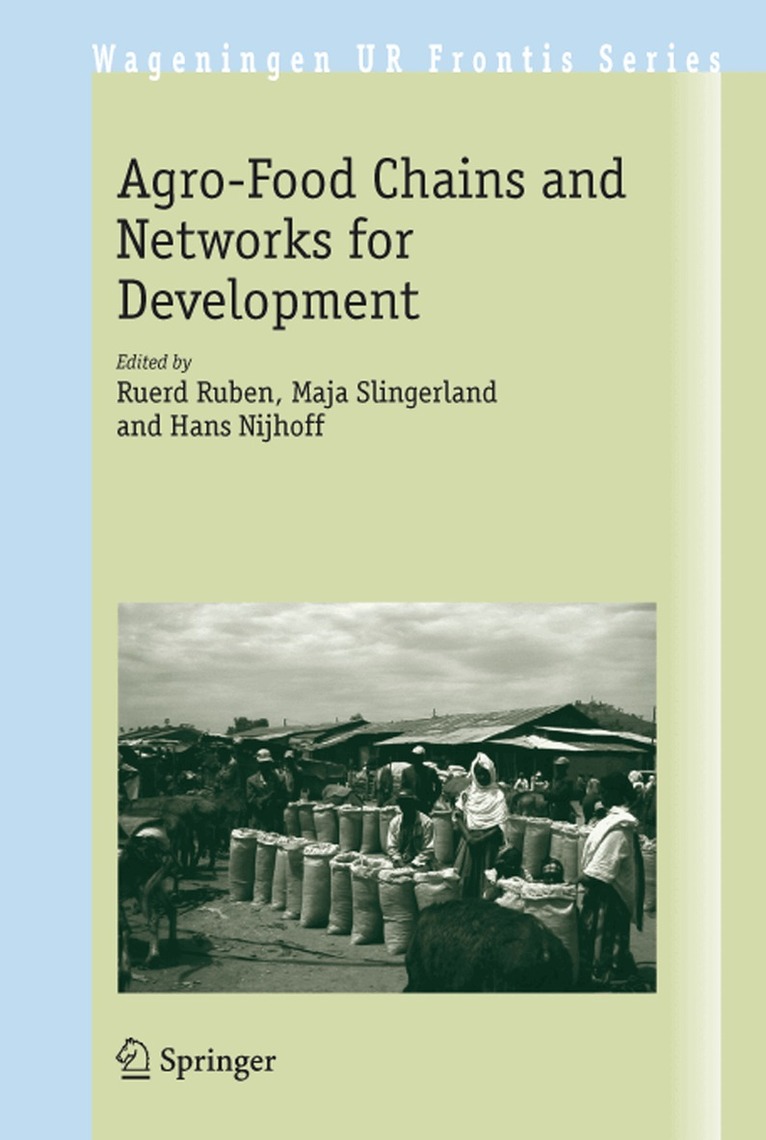
Globalization of trade and integration of supply chains lead to new demands regarding food quality, safety and health.Companies involved in global food and agri-business chains and networks face fast changes in their market and business environment.
2 101 kr
Skickas inom 10-15 vardagar
Globalization of trade and integration of supply chains lead to new demands regarding food quality, safety and health.Companies involved in global food and agri-business chains and networks face fast changes in their market and business environment.
Del 4 - Mansholt Publication series
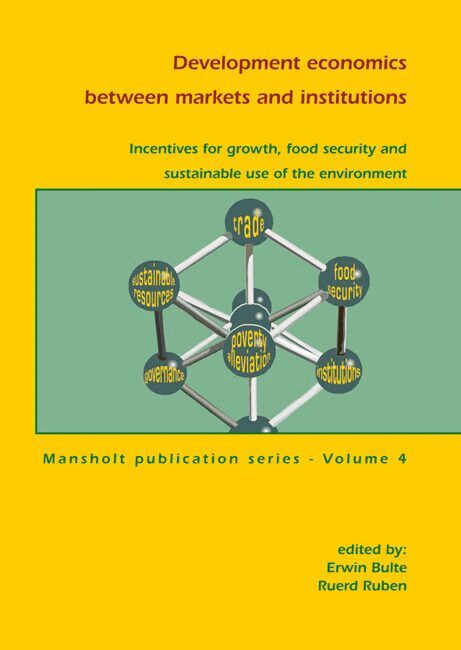
Development economics between markets and institutions
Incentives for growth, food security and sustainable use of the environment
Häftad, Engelska, 2007
1 674 kr
Skickas inom 5-8 vardagar
"This volume in the Mansholt series presents state of the art discussions on a wide variety of topics in the field of (agricultural) development. More than 20 chapters have been prepared by internationally known scholars and policy analysts, providing a concise overview of a variety of recent debates in development economics. While the background of most contributors is in economic science, the chapters are prepared so that they feed into ongoing policy discussions and are accessible to a wide readership.The contributions in this volume are organized around five themes: prospects for rural poverty alleviation, sustainable management of natural resources, strategies for enhancing food security, markets and the role of the state, and institutions and governance. It is obvious there are many links between these themes, and indeed the integration between them is emphasized in various chapters.This book is prepared as a festschrift or Liber Amicorum for professor Arie Kuyvenhoven. His retirement from the Development Economics Group at Wageningen University, The Netherlands is a good opportunity to take stock of recent developments in the area of agricultural development economics. Therefore, in addition to being a valuable source of information for readers with an interest in development, this volume is also intended as a farewell gift: to Arie, from friends and colleagues."
1 342 kr
Skickas inom 5-8 vardagar
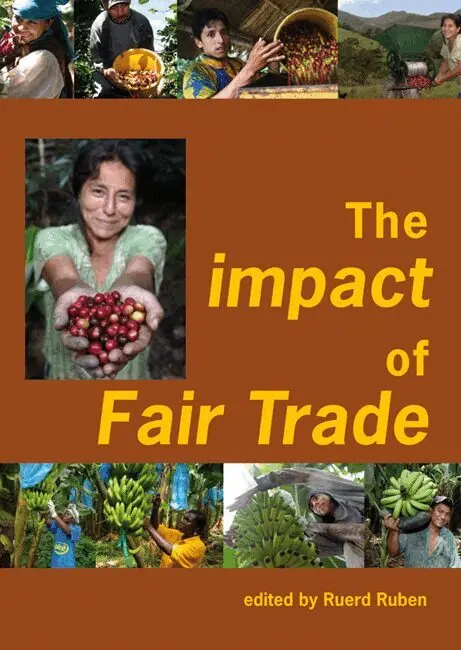
Twenty years ago, Fair Trade started as an effort to enable smallholder producers from developing countries to successfully compete in international markets. Better access to market outlets and stable prices are considered key principles for sustainable poverty reduction and stakeholder participation based on 'trade, not aid'. While Fair Trade is primarily conceived as a trading partnership - based on dialogue, transparency and mutual respect - seeking greater equity in international trade, it relies on an organized social movement promoting standards for production practices and delivery procedures, working conditions and labour remuneration, environmental care and social policies in supply chains of certified tropical goods.Over the past two decades, sales of Fair Trade products have considerably increased. After the first shipments of coffee, the range of products has gradually broadened to include fruit (particularly bananas, pineapple and citrus), tea, cocoa, textiles, cosmetics and a whole series of other products. Global Fair Trade sales have steadily grown to approximately EUR 1.6 billion worldwide, covering almost 600 producer organizations in more than 55 developing countries that represent close to a million families of farmers and workers. In recent years, efforts have been made towards mainstreaming of Fair Trade involving large international companies and retail chains.While numerous case studies and descriptive overviews are available to illustrate the importance of Fair Trade for producers and their families in developing countries, little quantitative evidence has been presented to review the socio-economic impact of Fair Trade. This collection of articles provides the first balanced in-depth analysis of the real welfare impact of Fair Trade, paying attention to key dimensions of income, consumption, wealth, environment, empowerment and gender. The core articles are based on extensive field surveys in Peru, Costa Rica, Ecuador, Ghana, Kenya and Mexico, and provide valuable insights in the contributions and constraints for producers’ involvement in Fair Trade. In addition, attention is paid to the broader implications for international trade regimes and the ethical perspectives on Fair Trade.
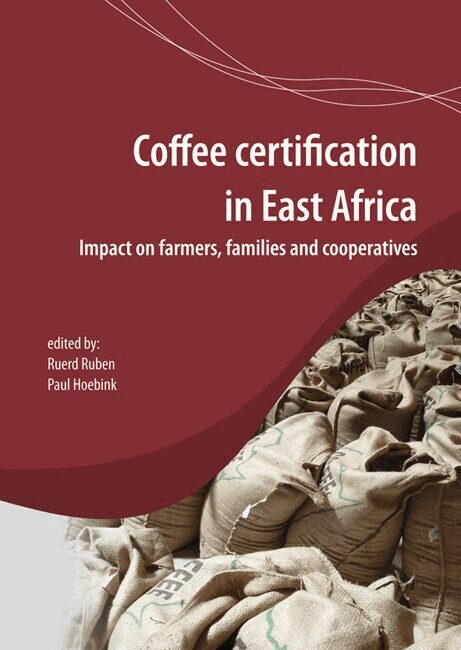
Coffee certification in East Africa: impact on farms, families and cooperatives
Häftad, Engelska, 2014
1 266 kr
Skickas inom 5-8 vardagar
Certification of coffee producers is frequently suggested as a promising strategy for improving the position of smallholder farmers in the market. After the launch of the first Fairtrade label in 1988, several other standards have been promoted either by voluntary agencies (Utz-certified) or by private coffee companies. Each coffee label relies on different strategies for enhancing sustainable production and responsible trade.Coffee certification in East Africa is of a rather recent nature but has been rapidly expanding, representing currently 26 percent of the world's sustainable certified coffee supply. Marketing channels, cooperative organisation and household structures show notable differences between Kenya, Uganda and Ethiopia. Empirical studies on the effects of standards for smallholders are scarce.This book intends to deepen our understanding on the role and functions of coffee certification regimes, based on three innovative approaches: (1) longitudinal field survey data capturing changes in coffee farming systems and effects on household welfare; (2) in-depth interviews and behavioural experiments regarding risk attitudes, trust and investments at cooperative level; and (3) detailed discourse analyses regarding gender roles and female bargaining power within coffee households. The chapters included in this book provide new and original evidence about the impact of coffee certification based on large-scale field surveys and in-depth interviews.