Ruha Benjamin - Böcker
Visar alla böcker från författaren Ruha Benjamin. Handla med fri frakt och snabb leverans.
10 produkter
10 produkter
258 kr
Skickas inom 7-10 vardagar
From the author of Race After Technology, an inspiring vision of how we can build a more just world—one small change at a time“A true gift to our movements for justice.”—Michelle Alexander, author of The New Jim CrowLong before the pandemic, Ruha Benjamin was doing groundbreaking research on race, technology, and justice, focusing on big, structural changes. But the twin plagues of COVID-19 and anti-Black police violence inspired her to rethink the importance of small, individual actions. Part memoir, part manifesto, Viral Justice is a sweeping and deeply personal exploration of how we can transform society through the choices we make every day.Vividly recounting her personal experiences and those of her family, Benjamin shows how seemingly minor decisions and habits could spread virally and have exponentially positive effects. She recounts her father’s premature death, illuminating the devastating impact of the chronic stress of racism, but she also introduces us to community organizers who are fostering mutual aid and collective healing. Through her brother’s experience with the criminal justice system, we see the trauma caused by policing practices and mass imprisonment, but we also witness family members finding strength as they come together to demand justice for their loved ones. And while her own challenges as a young mother reveal the vast inequities of our healthcare system, Benjamin also describes how the support of doulas and midwives can keep Black mothers and babies alive and well.Born of a stubborn hopefulness, Viral Justice offers a passionate, inspiring, and practical vision of how small changes can add up to large ones, transforming our relationships and communities and helping us build a more just and joyful world.
176 kr
Skickas inom 7-10 vardagar
From the author of Race After Technology, an inspiring vision of how we can build a more just world—one small change at a time“A true gift to our movements for justice.”—Michelle Alexander, author of The New Jim CrowLong before the pandemic, Ruha Benjamin was doing groundbreaking research on race, technology, and justice, focusing on big, structural changes. But the twin plagues of COVID-19 and anti-Black police violence inspired her to rethink the importance of small, individual actions. Part memoir, part manifesto, Viral Justice is a sweeping and deeply personal exploration of how we can transform society through the choices we make every day.Vividly recounting her personal experiences and those of her family, Benjamin shows how seemingly minor decisions and habits could spread virally and have exponentially positive effects. She recounts her father’s premature death, illuminating the devastating impact of the chronic stress of racism, but she also introduces us to community organizers who are fostering mutual aid and collective healing. Through her brother’s experience with the criminal justice system, we see the trauma caused by policing practices and mass imprisonment, but we also witness family members finding strength as they come together to demand justice for their loved ones. And while her own challenges as a young mother reveal the vast inequities of our healthcare system, Benjamin also describes how the support of doulas and midwives can keep Black mothers and babies alive and well.Born of a stubborn hopefulness, Viral Justice offers a passionate, inspiring, and practical vision of how small changes can add up to large ones, transforming our relationships and communities and helping us build a more just and joyful world.
1 199 kr
Skickas inom 7-10 vardagar
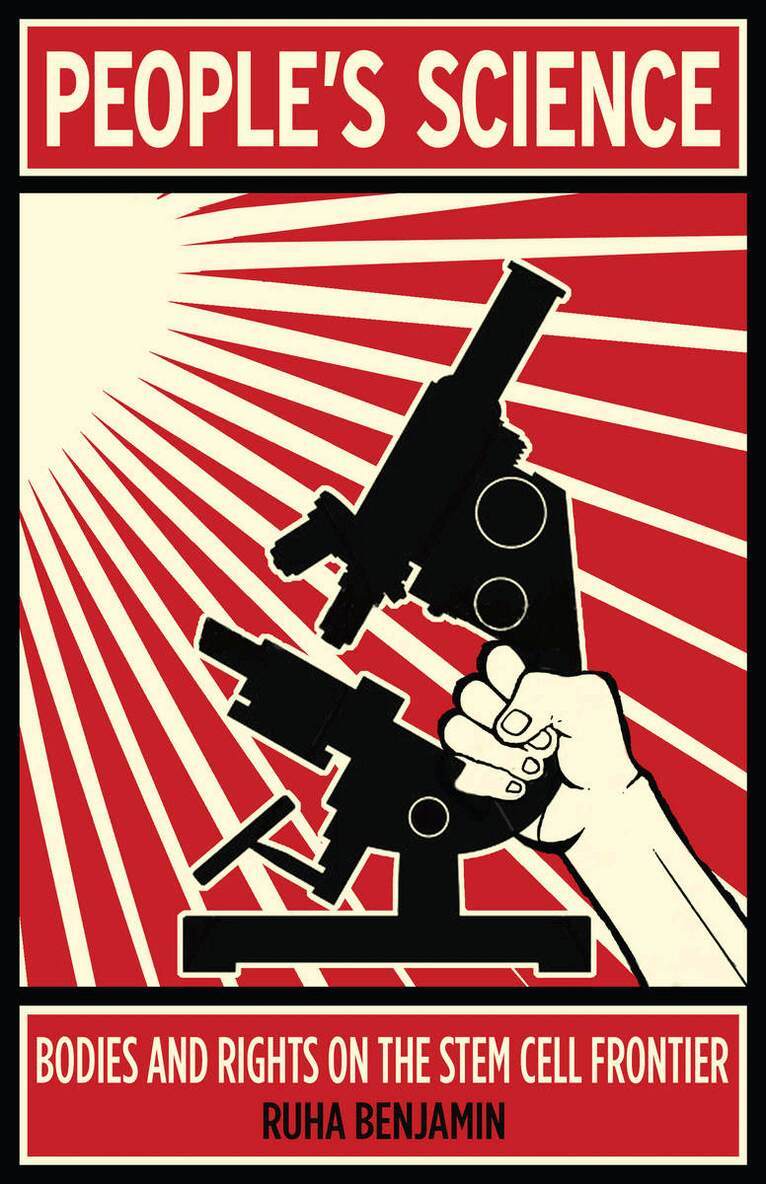
Stem cell research has sparked controversy and heated debate since the first human stem cell line was derived in 1998. Too frequently these debates devolve to simple judgments—good or bad, life-saving medicine or bioethical nightmare, symbol of human ingenuity or our fall from grace—ignoring the people affected. With this book, Ruha Benjamin moves the terms of debate to focus on the shifting relationship between science and society, on the people who benefit—or don't—from regenerative medicine and what this says about our democratic commitments to an equitable society.People's Science uncovers the tension between scientific innovation and social equality, taking the reader inside California's 2004 stem cell initiative, the first of many state referenda on scientific research, to consider the lives it has affected. Benjamin reveals the promise and peril of public participation in science, illuminating issues of race, disability, gender, and socio-economic class that serve to define certain groups as more or less deserving in their political aims and biomedical hopes. Under the shadow of the free market and in a nation still at odds with universal healthcare, the socially marginalized are often eagerly embraced as test-subjects, yet often are unable to afford new medicines and treatment regimes as patients.Ultimately, Ruha Benjamin argues that without more deliberate consideration about how scientific initiatives can and should reflect a wider array of social concerns, stem cell research— from African Americans' struggle with sickle cell treatment to the recruitment of women as tissue donors—still risks excluding many. Even as regenerative medicine is described as a participatory science for the people, Benjamin asks us to consider if "the people" ultimately reflects our democratic ideals.
291 kr
Skickas inom 7-10 vardagar
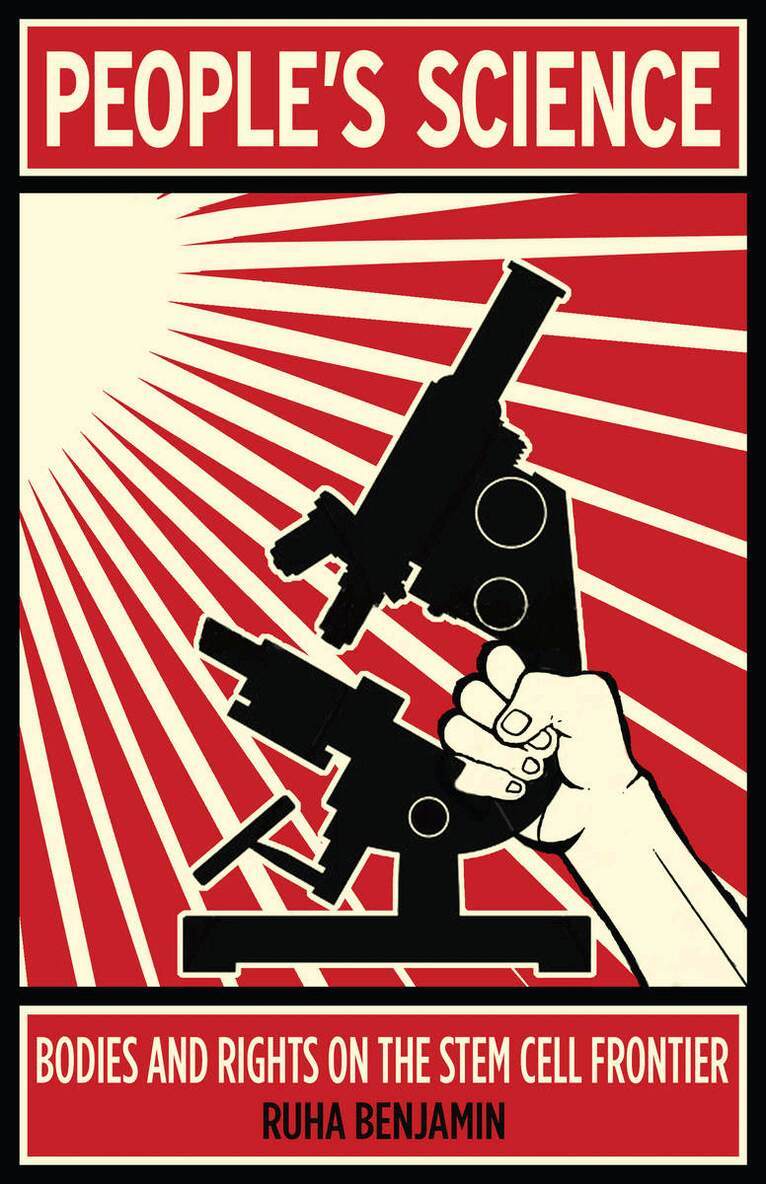
Stem cell research has sparked controversy and heated debate since the first human stem cell line was derived in 1998. Too frequently these debates devolve to simple judgments—good or bad, life-saving medicine or bioethical nightmare, symbol of human ingenuity or our fall from grace—ignoring the people affected. With this book, Ruha Benjamin moves the terms of debate to focus on the shifting relationship between science and society, on the people who benefit—or don't—from regenerative medicine and what this says about our democratic commitments to an equitable society.People's Science uncovers the tension between scientific innovation and social equality, taking the reader inside California's 2004 stem cell initiative, the first of many state referenda on scientific research, to consider the lives it has affected. Benjamin reveals the promise and peril of public participation in science, illuminating issues of race, disability, gender, and socio-economic class that serve to define certain groups as more or less deserving in their political aims and biomedical hopes. Under the shadow of the free market and in a nation still at odds with universal healthcare, the socially marginalized are often eagerly embraced as test-subjects, yet often are unable to afford new medicines and treatment regimes as patients.Ultimately, Ruha Benjamin argues that without more deliberate consideration about how scientific initiatives can and should reflect a wider array of social concerns, stem cell research— from African Americans' struggle with sickle cell treatment to the recruitment of women as tissue donors—still risks excluding many. Even as regenerative medicine is described as a participatory science for the people, Benjamin asks us to consider if "the people" ultimately reflects our democratic ideals.
243 kr
Skickas inom 7-10 vardagar
A world without prisons? Ridiculous. Schools that foster the genius of every child? Impossible. A society where everyone has food, shelter, love? In your dreams. Exactly. Princeton professor Ruha Benjamin believes in the liberating power of the imagination. Deadly systems shaped by mass incarceration, ableism, digital surveillance and eugenics emerged from the human imagination but they have real-world impacts. To fight these systems and create a world that works for all of us, we will have to imagine things differently. As Benjamin shows, educators, artists, technologists and more are experimenting with new ways of thinking and tackling seemingly intractable problems. Drawing from the work of these visionaries—including Black feminists, climate activists, Afrofuturists and troublemakers of all sorts—Imagination: A Manifesto explores the possibility and practices required to imagine and create more just and habitable worlds.
142 kr
Skickas inom 7-10 vardagar
A world without prisons? Ridiculous. Schools that foster the genius of every child? Impossible. Work that doesn’t strangle the life out of people? Naive. A society where everyone has food, shelter, love? In your dreams. Exactly. Ruha Benjamin, Princeton University professor, insists that imagination isn’t a luxury. It is a vital resource and powerful tool for collective liberation.Imagination is her proclamation that we have the power to use our imaginations to challenge systems of oppression and to create a world in which everyone can thrive. But obstacles abound. We have inherited destructive ideas that trap us inside a dominant imagination. Consider how racism, sexism and classism make hierarchies, exploitation and violence seem natural and inevitable—but all emerged from the human imagination.The most effective way to disrupt these deadly systems is to do so collectively. Benjamin highlights the educators, artists, activists and many others who are refuting powerful narratives that justify the status quo, crafting new stories that reflect our interconnection, offering creative approaches to seemingly intractable problems.Imagination offers visionary examples and tactics to push beyond the constraints of what we think, and are told, is possible. This book is for anyone who is ready to take to heart Toni Morrison’s instruction: “Dream a little before you think.”
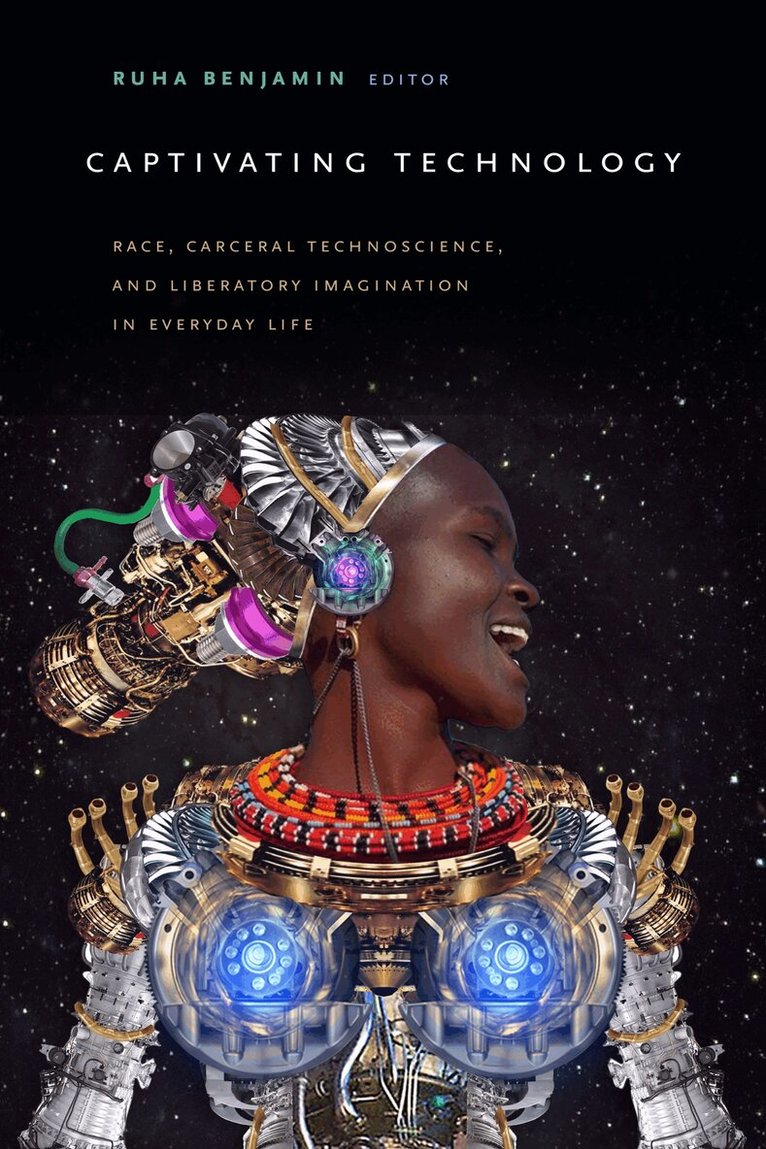
Captivating Technology
Race, Carceral Technoscience, and Liberatory Imagination in Everyday Life
Inbunden, Engelska, 2019
1 217 kr
Skickas inom 7-10 vardagar
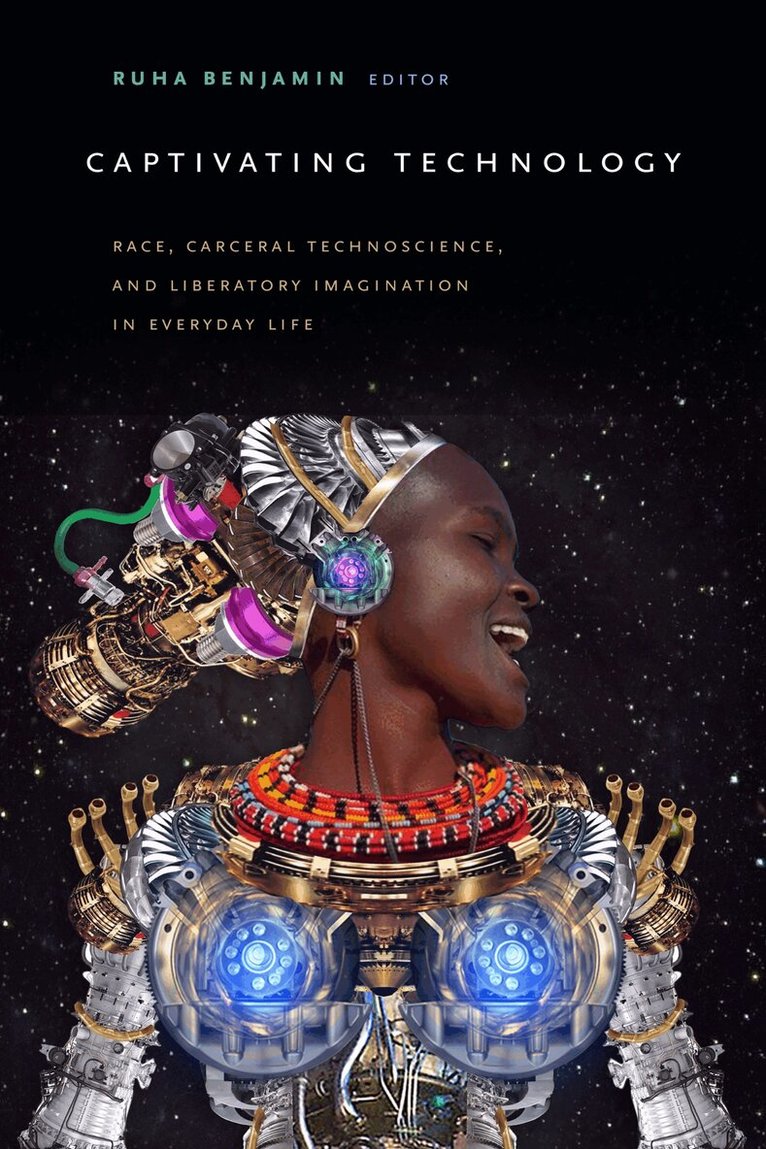
The contributors to Captivating Technology examine how carceral technologies such as electronic ankle monitors and predictive-policing algorithms are being deployed to classify and coerce specific populations and whether these innovations can be appropriated and reimagined for more liberatory ends.
Captivating Technology
Race, Carceral Technoscience, and Liberatory Imagination in Everyday Life
Häftad, Engelska, 2019
322 kr
Skickas inom 7-10 vardagar
The contributors to Captivating Technology examine how carceral technologies such as electronic ankle monitors and predictive-policing algorithms are being deployed to classify and coerce specific populations and whether these innovations can be appropriated and reimagined for more liberatory ends.
512 kr
Skickas inom 7-10 vardagar
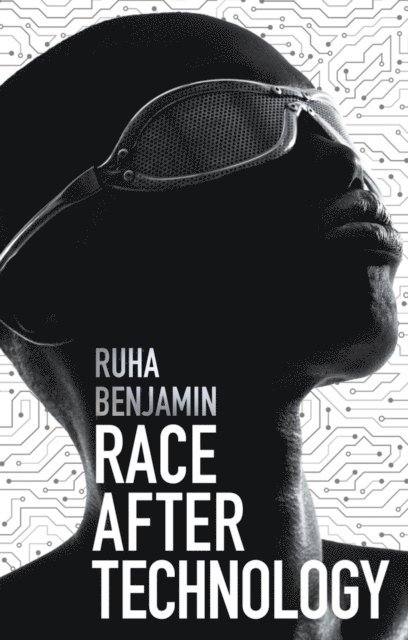
From everyday apps to complex algorithms, Ruha Benjamin cuts through tech-industry hype to understand how emerging technologies can reinforce White supremacy and deepen social inequity.Benjamin argues that automation, far from being a sinister story of racist programmers scheming on the dark web, has the potential to hide, speed up, and deepen discrimination while appearing neutral and even benevolent when compared to the racism of a previous era. Presenting the concept of the “New Jim Code,” she shows how a range of discriminatory designs encode inequity by explicitly amplifying racial hierarchies; by ignoring but thereby replicating social divisions; or by aiming to fix racial bias but ultimately doing quite the opposite. Moreover, she makes a compelling case for race itself as a kind of technology, designed to stratify and sanctify social injustice in the architecture of everyday life.This illuminating guide provides conceptual tools for decoding tech promises with sociologically informed skepticism. In doing so, it challenges us to question not only the technologies we are sold but also the ones we ourselves manufacture.Visit the book's free Discussion Guide: www.dropbox.com
144 kr
Skickas inom 7-10 vardagar
From everyday apps to complex algorithms, Ruha Benjamin cuts through tech-industry hype to understand how emerging technologies can reinforce White supremacy and deepen social inequity.Benjamin argues that automation, far from being a sinister story of racist programmers scheming on the dark web, has the potential to hide, speed up, and deepen discrimination while appearing neutral and even benevolent when compared to the racism of a previous era. Presenting the concept of the “New Jim Code,” she shows how a range of discriminatory designs encode inequity by explicitly amplifying racial hierarchies; by ignoring but thereby replicating social divisions; or by aiming to fix racial bias but ultimately doing quite the opposite. Moreover, she makes a compelling case for race itself as a kind of technology, designed to stratify and sanctify social injustice in the architecture of everyday life.This illuminating guide provides conceptual tools for decoding tech promises with sociologically informed skepticism. In doing so, it challenges us to question not only the technologies we are sold but also the ones we ourselves manufacture.Visit the book's free Discussion Guide: www.dropbox.com