Russel J. Reiter – författare
Visar alla böcker från författaren Russel J. Reiter. Handla med fri frakt och snabb leverans.
10 produkter
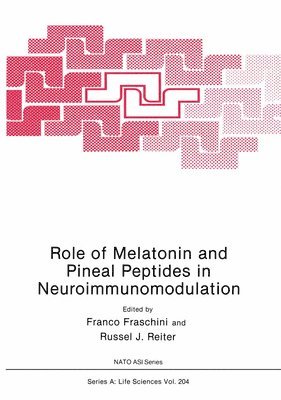
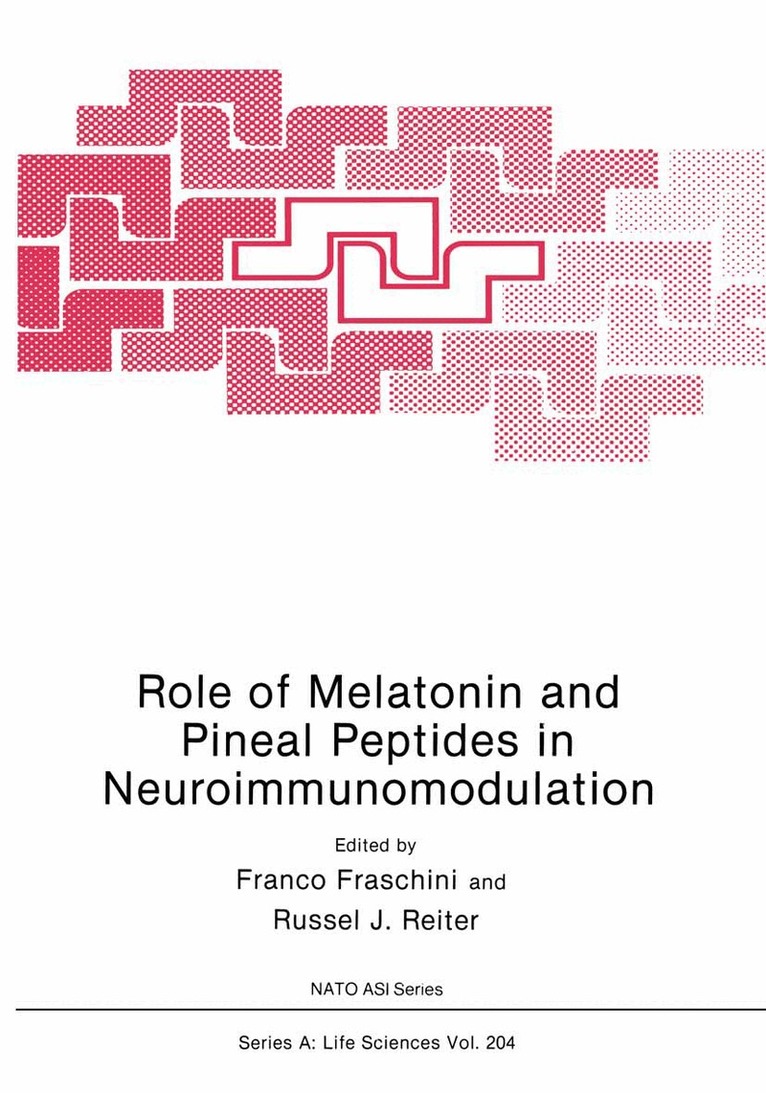
Role of Melatonin and Pineal Peptides in Neuroimmunomodulation
Workshop Proceedings
Av F. Fraschini, NATO Advanced Research Workshop on the R m. fl.
Inbunden, 1991
903 kr
Lägg i varukorg
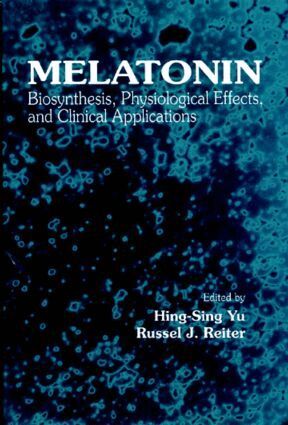
Melatonin
Biosynthesis, Physiological Effects, and Clinical Applications
Av Hing-Sing Yu, Russel J. Reiter
Inbunden, 1992
15763 kr
Lägg i varukorg
Melatonin: Biosynthesis, Physiological Effects, and Clinical Applications provides a thorough review of recent advances in major areas of melatonin research. The book is arranged in a logical sequence, beginning with the history of melatonin and then proceeding to cover its biochemistry and …
Melatonin
Biosynthesis, Physiological Effects, and Clinical Applications
Av Russel J. Reiter, Hing-Sing Yu
E-bok, 2020
11233 kr
Lägg i varukorg
Melatonin: Biosynthesis, Physiological Effects, and Clinical Applications provides a thorough review of recent advances in major areas of melatonin research. The book is arranged in a logical sequence, beginning with the history of melatonin and then proceeding to cover its biochemistry and …
Melatonin
Biosynthesis, Physiological Effects, and Clinical Applications
Av Russel J. Reiter, Hing-Sing Yu
E-bok, 2020
10990 kr
Lägg i varukorg
Melatonin: Biosynthesis, Physiological Effects, and Clinical Applications provides a thorough review of recent advances in major areas of melatonin research. The book is arranged in a logical sequence, beginning with the history of melatonin and then proceeding to cover its biochemistry and …
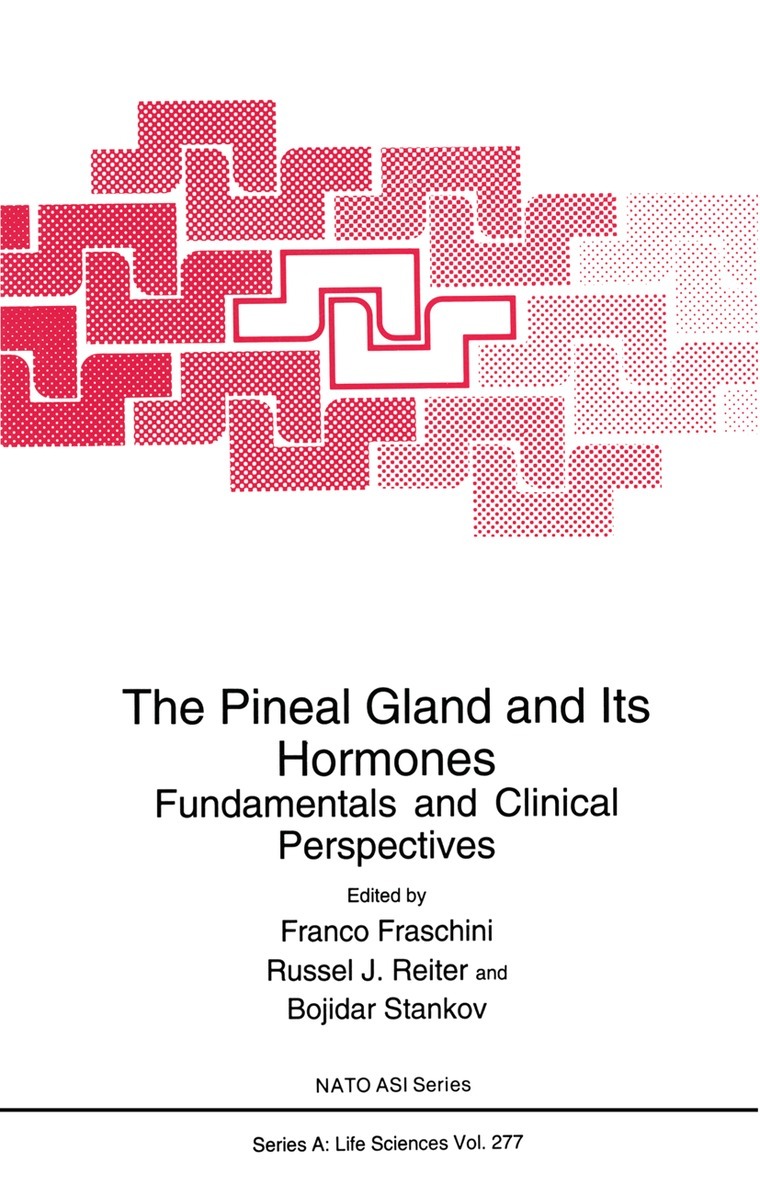
Pineal Gland and Its Hormones
Fundamentals and Clinical Perspectives
Av Franco Fraschini, Russel J. Reiter m. fl.
Häftad, 2012
568 kr
Lägg i varukorg
This volume contains the written contributions to the proceedings of a workshop related to the pineal gland and its hormones, which was held in Erice, Italy, on June 7 -June 13, 1994. This series of workshops, which began in 1982 and which have been held at four-year intervals since that time, has …
Role of Melatonin and Pineal Peptides in Neuroimmunomodulation
Av Franco Fraschini, Russel J. Reiter
Häftad, 2012
568 kr
Lägg i varukorg
Research related to the pineal gland has advanced rapidly in the last three decades since the discovery of its most important hormone, melatonin. This indoleamine has been shown to have a large variety of effects in the organism; the bulk of these actions were initially thought to relate the pineal …
Pineal Gland and Its Hormones
Fundamentals and Clinical Perspectives
Av Bojidar Stankov, Russel J. Reiter m. fl.
E-bok, 2012
755 kr
Lägg i varukorg
This volume contains the written contributions to the proceedings of a workshop related to the pineal gland and its hormones, which was held in Erice, Italy, on June 7 -June 13, 1994. This series of workshops, which began in 1982 and which have been held at four-year intervals since that time, has …
Role of Melatonin and Pineal Peptides in Neuroimmunomodulation
Av Russel J. Reiter, Franco Fraschini
E-bok, 2012
739 kr
Lägg i varukorg
Research related to the pineal gland has advanced rapidly in the last three decades since the discovery of its most important hormone, melatonin. This indoleamine has been shown to have a large variety of effects in the organism; the bulk of these actions were initially thought to relate the pineal …
Harderian Glands
Porphyrin Metabolism, Behavioral and Endocrine Effects
Av Russel J. Reiter, Manuel L. Puig-Domingo m. fl.
E-bok, 2012
1502 kr
Lägg i varukorg
Harderian glands, first described by Jacob Harder in two species of deer in 1694, are large, intraorbital glands which, with but few exceptions, are found in all land vertebrates. Certainly, their relatively large size, their phylogenetic age, and persistent conservation in all groups as they …
Harderian Glands
Porphyrin Metabolism, Behavioral and Endocrine Effects
Av Susan M. Webb, Roger A. Hoffman m. fl.
Häftad, 2012
1131 kr
Lägg i varukorg
Harderian glands, first described by Jacob Harder in two species of deer in 1694, are large, intraorbital glands which, with but few exceptions, are found in all land vertebrates. Certainly, their relatively large size, their phylogenetic age, and persistent conservation in all groups as they …