Russel Winder – författare
Visar alla böcker från författaren Russel Winder. Handla med fri frakt och snabb leverans.
4 produkter
4 produkter
Häftad, Engelska, 2006
852 kr
Skickas inom 5-8 vardagar
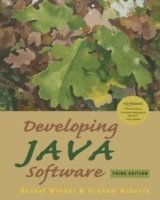
This significantly updated new edition of Developing Java Software is a thorough presentation of object-oriented design and programming concepts using the Java 5 programming language. The book takes the reader from the basics of using Java 5 to the creation of complete, object-oriented programs. Following an ‘objects early’ approach, the core elements of the Java language are covered, including the use of recently added features such as generics. The encouragement of the proper creation and use of classes, and the demonstration of the strategies used to create good quality code are at the core of this book. You will learn how Java programs work and how they can be designed and implemented in an organized and systematic way. In addition, the book addresses how a Java programming project should be managed and introduces the Ant build tool and the Subversion version control system.Testing has always been an important part of Developing Java Software. This edition provides new chapters which give a detailed introduction to Test-driven Development (TDD). This approach to programming introduces more rigor to writing programs by placing emphasis on writing high quality testable and tested code from the outset. A series of examples and case studies shows how TDD works and highlights the strategies for testing code.Reflecting recent changes to the Java programming language and newly focused on first courses in programming, this excellent primer is ideal for classroom use or self-study. The many motivating examples and larger case studies show how core ideas can be applied when creating real applications, and show how to use object-oriented methods effectively to create robust, reliable, and fully-tested Java applications.
E-bok
PDF, Engelska, 2013687 kr
Läs direkt efter köp
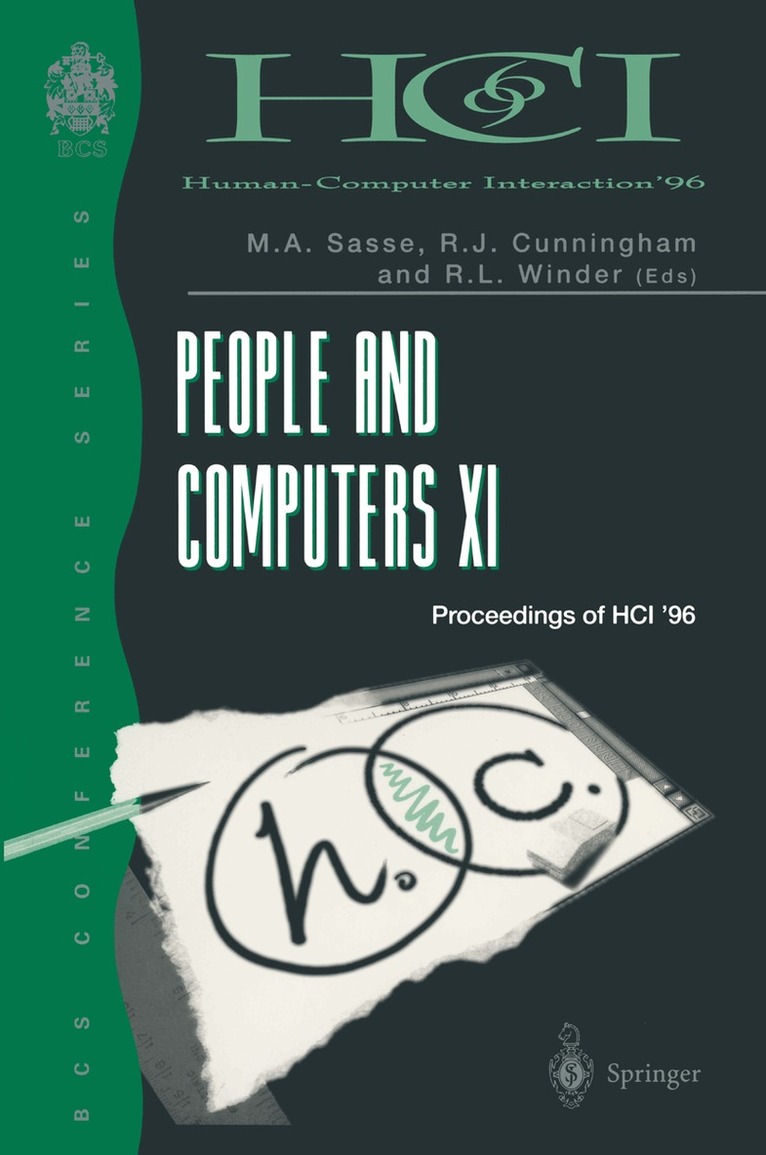
Disciplines, including Human-Computer Interaction (HCI), consist of knowledge supporting practices which solve general problems (Long & Dowell, 1989). A disci pline thus requires knowledge to be acquired which can be applied by practitioners to solve problems within the scope of the discipline. In the case of HCI, such knowledge is being acquired through research and, less formally, through the description of successful system development practice. Some have argued that knowledge is further embodied in the artefacts. HCI knowledge is applied to solve user interface design problems. Such applica tion is facilitated if the knowledge is expressed in a conception which makes explicit the design problems of practitioners. A conception has been proposed by Dowell & Long (1989). The conception provides a framework within which to reason about the implications of designs for system performance. The framework is concordant with the trend towards design, discernible in recent HCI research. It is further compatible with notions of top-down design, fundamental to software engineering practice. 2 Teaching and the HeI Research and Development Gap 2.1 An Assessment of Current HCI Education Teaching is one means by which practitioners learn to specify discipline problems. It is also a means by which they acquire knowledge to enable the problems to be solved.
Häftad, Engelska, 2008
1 006 kr
Skickas inom 5-8 vardagar
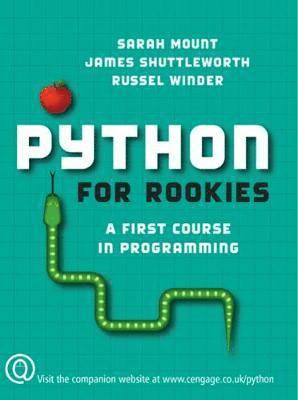
Python for Rookies is designed to help students learn how to program. Using the Python language as a tool, the approach taken teaches students the fundamentals of programming and re-enforces good programming practice. Written for students studying a variety of degree subjects such as Games Technology, Creative Computing and Multimedia (where core Computer Science is applied to the Arts) the pace and breadth would also be suitable for a one semester introductory programming course for all computing undergraduates. We hope that the example programs, chosen to enliven and motivate will also be very relevant to a range of courses and the varied ambitions of people who need to acquire programming skills.The book covers programming from small script-style applications to larger pieces of software. The emphasis remains on problem-solving, even through the introduction of common libraries and object-oriented programming.Test-oriented development is an integral part of programming and learning how to incorporate a unit test early on will take away the frustrations of producing buggy software that doesn’t run. It will provide a framework to support your learning of programming.
Häftad, Engelska, 1996
561 kr
Skickas inom 10-15 vardagar
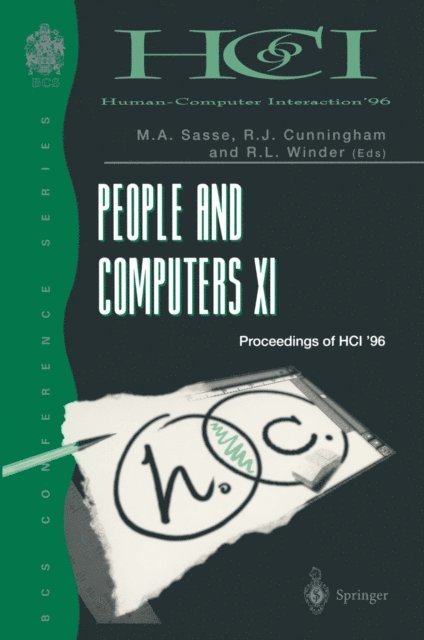
Disciplines, including Human-Computer Interaction (HCI), consist of knowledge supporting practices which solve general problems (Long & Dowell, 1989). A disci pline thus requires knowledge to be acquired which can be applied by practitioners to solve problems within the scope of the discipline. In the case of HCI, such knowledge is being acquired through research and, less formally, through the description of successful system development practice. Some have argued that knowledge is further embodied in the artefacts. HCI knowledge is applied to solve user interface design problems. Such applica tion is facilitated if the knowledge is expressed in a conception which makes explicit the design problems of practitioners. A conception has been proposed by Dowell & Long (1989). The conception provides a framework within which to reason about the implications of designs for system performance. The framework is concordant with the trend towards design, discernible in recent HCI research. It is further compatible with notions of top-down design, fundamental to software engineering practice. 2 Teaching and the HeI Research and Development Gap 2.1 An Assessment of Current HCI Education Teaching is one means by which practitioners learn to specify discipline problems. It is also a means by which they acquire knowledge to enable the problems to be solved.