Russell Muirhead - Böcker
Visar alla böcker från författaren Russell Muirhead. Handla med fri frakt och snabb leverans.
8 produkter
8 produkter
297 kr
Skickas inom 10-15 vardagar
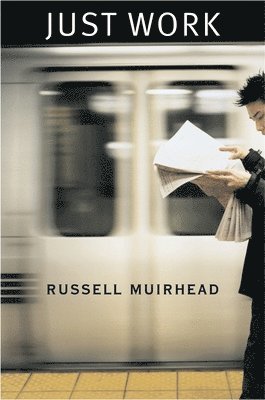
This elegant essay on the justice of work focuses on the fit between who we are and the kind of work we do. Russell Muirhead shows how the common hope for work that fulfills us involves more than personal interest; it also points to larger understandings of a just society. We are defined in part by the jobs we hold, and Muirhead has something important to say about the partial satisfactions of the working life, and the increasingly urgent need to balance the claims of work against those of family and community. Against the tendency to think of work exclusively in contractual terms, Muirhead focuses on the importance of work to our sense of a life well lived. Our notions of freedom and fairness are incomplete, he argues, without due consideration of how we fit the work we do.Muirhead weaves his argument out of sociological, economic, and philosophical analysis. He shows, among other things, how modern feminism's effort to reform domestic work and extend the promise of careers has contributed to more democratic understandings of what it means to have work that fits. His account of individual and social fit as twin standards of assessment is original and convincing--it points both to the unavoidable problem of distributing bad work in society and to the personal importance of finding fulfilling work. These themes are pursued through a wide-ranging discussion that engages thinkers from Plato to John Stuart Mill to Betty Friedan. Just Work shows what it would mean for work to make good on the high promise so often invested in it and suggests what we--both as a society and as individuals--might do when it falls short.
394 kr
Skickas inom 10-15 vardagar
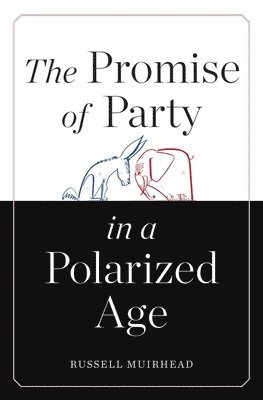
At the root of America’s broken politics is hyperbolic partisanship. It distorts perceptions, inflames disagreements, and poisons the democratic process. Citizens pine for a time when liberals and conservatives compromised with one another—or they yearn for a post-partisan future when the common good trumps ideology and self-interest. Russell Muirhead argues that better partisanship, not less partisanship, is the solution to America’s political predicament. Instead of striving to overcome our differences, we should learn how to engage them.The political conflicts that provide fodder for cable news shows are not simply manufactured from thin air. However sensationalized they become in the retelling, they originate in authentic disagreements over what constitutes the common welfare. Republicans vest responsibility in each citizen for dealing with bad decisions and bad luck, and want every individual and family to enjoy the benefits of good decisions and good luck. Democrats ask citizens to stand together to insure one another against the worst consequences of misfortune or poor judgment, and especially to insure children against some of the consequences of their parents’ bad decisions or lack of opportunities. These are fundamental differences that fantasies of bipartisan consensus cannot dissolve.Disagreement without parties is disempowering, Muirhead says. The remedy is not for citizens and elected officials to learn to “just get along” but for them to bring a skeptical sensibility even to their own convictions, and to learn to disagree as partisans and govern through compromise despite those disagreements.
219 kr
Skickas inom 7-10 vardagar
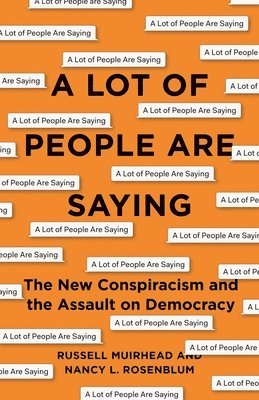
How the new conspiracists are undermining democracy—and what can be done about itConspiracy theories are as old as politics. But conspiracists today have introduced something new—conspiracy without theory. And the new conspiracism has moved from the fringes to the heart of government with the election of Donald Trump. In A Lot of People Are Saying, Russell Muirhead and Nancy Rosenblum show how the new conspiracism differs from classic conspiracy theory, why so few officials speak truth to conspiracy, and what needs to be done to resist it.Classic conspiracy theory insists that things are not what they seem and gathers evidence—especially facts ominously withheld by official sources—to tease out secret machinations. The new conspiracism is different. There is no demand for evidence, no dots revealed to form a pattern, no close examination of shadowy plotters. Dispensing with the burden of explanation, the new conspiracism imposes its own reality through repetition (exemplified by the Trump catchphrase "a lot of people are saying") and bare assertion ("rigged!").The new conspiracism targets democratic foundations—political parties and knowledge-producing institutions. It makes it more difficult to argue, persuade, negotiate, compromise, and even to disagree. Ultimately, it delegitimates democracy.Filled with vivid examples, A Lot of People Are Saying diagnoses a defining and disorienting feature of today's politics and offers a guide to responding to the threat.
178 kr
Skickas inom 7-10 vardagar
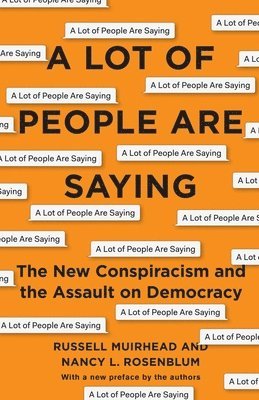
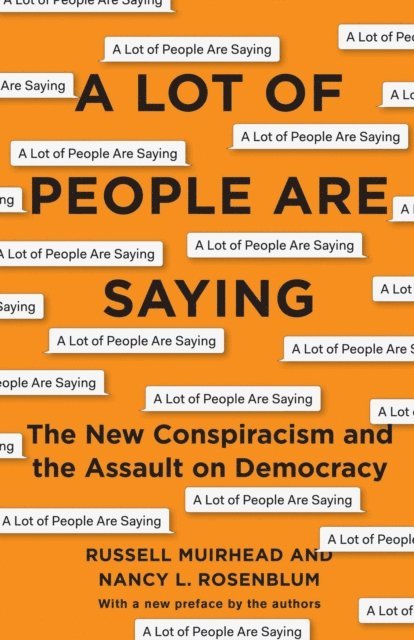
How the new conspiracists are undermining democracy—and what can be done about itConspiracy theories are as old as politics. But conspiracists today have introduced something new—conspiracy without theory. And the new conspiracism has moved from the fringes to the heart of government with the election of Donald Trump. In A Lot of People Are Saying, Russell Muirhead and Nancy Rosenblum show how the new conspiracism differs from classic conspiracy theory, how it undermines democracy, and what needs to be done to resist it.
243 kr
Skickas inom 7-10 vardagar
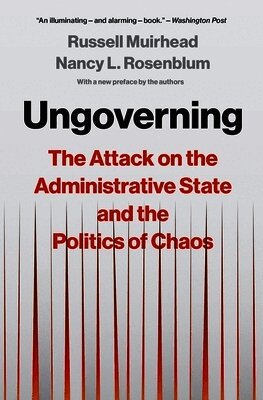
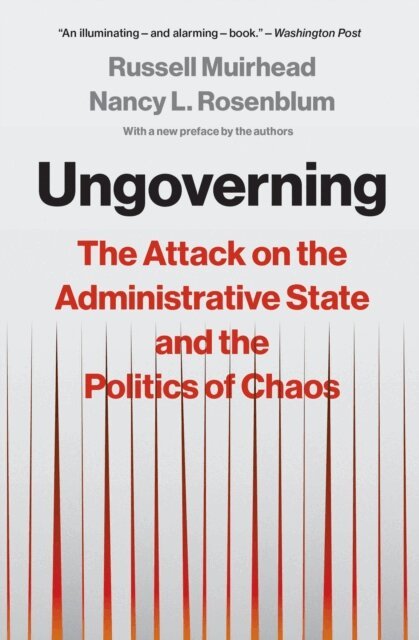
How a concentrated attack on political institutions threatens to disable the essential workings of governmentIn this unsettling book, Russell Muirhead and Nancy Rosenblum trace how ungoverning—the deliberate effort to dismantle the capacity of government to do its work—has become a malignant part of politics. Democracy depends on a government that can govern, and that requires what’s called administration. The administrative state is made up of the vast array of departments and agencies that conduct the essential business of government, from national defense and disaster response to implementing and enforcing public policies of every kind. Ungoverning chronicles the reactionary movement that demands dismantling the administrative state. The demand is not for goals that can be met with policies or programs. When this demand is frustrated, as it must be, the result is an invitation to violence.Muirhead and Rosenblum unpack the idea of ungoverning through many examples of the politics of destruction. They show how ungoverning disables capacities that took generations to build—including the administration of free and fair elections. They detail the challenges faced by officials who are entrusted with running the government and who now face threats and intimidation from those who would rather bring it crashing down—and replace the regular processes of governing with chaotic personal rule.The unfamiliar phenomenon of ungoverning threatens us all regardless of partisanship or ideological leaning. Ungoverning will not be limited to Donald Trump’s moment on the political stage. To resist this threat requires that we first recognize what ungoverning is and what it portends.
180 kr
Skickas inom 7-10 vardagar
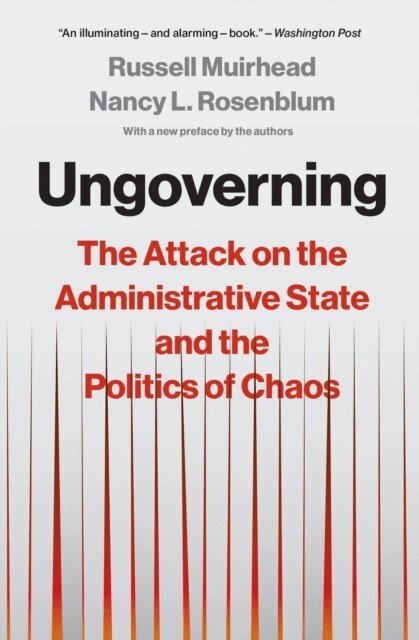
How a deliberate dismantling of political institutions undermines the essential work of governmentIn this unsettling book, Russell Muirhead and Nancy Rosenblum trace how ungoverning—the deliberate effort to dismantle the capacity of government to do its work—has become a malignant part of politics. Democracy depends on a government that can govern, and that requires what’s called administration. The administrative state is made up of the vast array of departments and agencies that conduct the essential business of government, from national defense and disaster response to implementing and enforcing public policies of every kind. Ungoverning chronicles the reactionary movement that demands dismantling the administrative state. The demand is not for goals that can be met with policies or programs. When this demand is frustrated, as it must be, the result is an invitation to violence.Muirhead and Rosenblum unpack the idea of ungoverning through many examples of the politics of destruction. They show how ungoverning disables capacities that took generations to build—including the administration of free and fair elections. They detail the challenges faced by officials who are entrusted with running the government and who now face threats and intimidation from those who would rather bring it crashing down—and replace the regular processes of governing with chaotic personal rule.The unfamiliar phenomenon of ungoverning threatens us all regardless of partisanship or ideological leaning. Ungoverning will not be limited to Donald Trump’s moment on the political stage. To resist this threat requires that we first recognize what ungoverning is and what it portends.
391 kr
Skickas inom 5-8 vardagar
266 kr
Skickas inom 5-8 vardagar