Rustin E Brian – författare
Visar alla böcker från författaren Rustin E Brian. Handla med fri frakt och snabb leverans.
9 produkter
9 produkter
Del 9 - Veritas
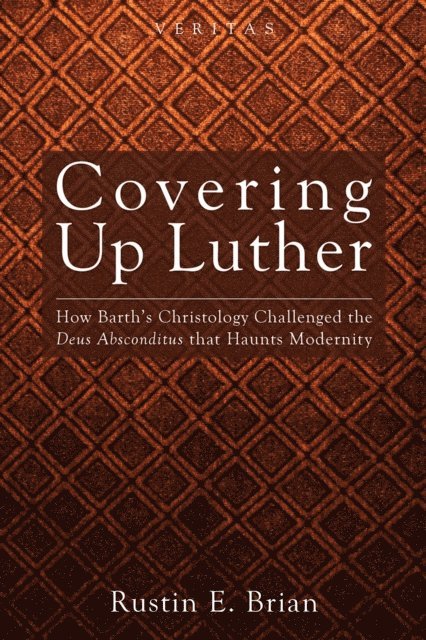
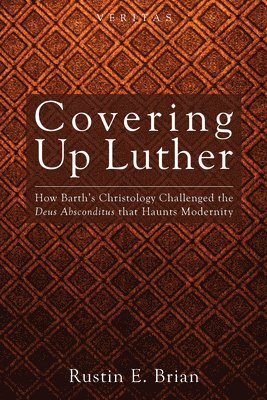
Covering Up Luther
How Barth's Christology Challenged the Deus Absconditus That Haunts Modernity
Inbunden, Engelska, 2013
432 kr
Skickas inom 5-8 vardagar
Del 17 - Cascade Companions
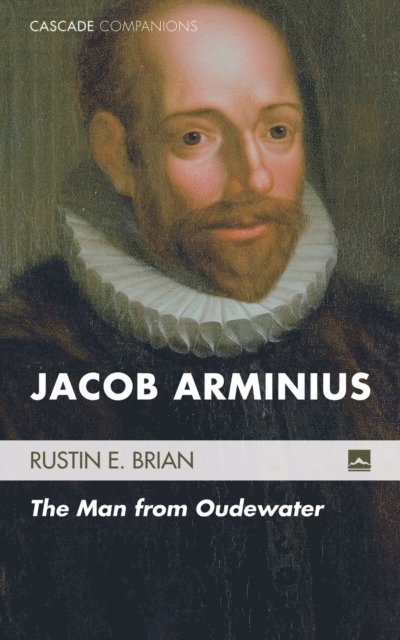
Jacob Arminius
The Man from Oudewater
Häftad, Engelska, 2015
173 kr
Skickas inom 5-8 vardagar
E-bok
Engelska, 2015304 kr
Läs direkt efter köp
Jacob Arminius was a Dutch theologian whose views have become the basis of Arminianism and the Dutch Remonstrant movement, and are quite influential on Wesleyan, and therefore Methodist, theology as well. Arminius attempted to reform Reformed theology and ended up lending his name to a movement that resisted some of the primary tenets of Calvinism. Rustin E. Brian outlines the life and theology of Arminius, shedding fresh light on his life, theology, and writings. In hopes of better understanding Arminian theology and Arminianism, Brian concludes with a constructive comparison and contrast of Arminius and several prominent theological figures: Pelagius, John Wesley, and Karl Barth.
Inbunden, Engelska, 2015
308 kr
Skickas inom 5-8 vardagar
Häftad, Engelska, 2013
274 kr
Skickas inom 5-8 vardagar
E-bok
Engelska, 2013438 kr
Läs direkt efter köp
Karl Barth''s Christology provides a key to out-narrating the Deus absconditus, which, as Rustin Brian contends, is in fact the god of modernity. Included in this is the rejection of the logical and philosophical systems that allow for the modern understanding of God as the Deus absconditus, namely, dialectics and nominalism. This rejection is illustrated, interestingly enough, in Barth''s decision to literally cover up, with a rug, Martin Luther''s works in his personal library. Surely this was more than a decorative touch.The reading of Barth''s works that results from this starting point challenges much of contemporary Barth scholarship and urges readers to reconsider Barth. Through careful examination of a large body of Barth''s writings, particularly in regard to the issues of the knowledge or knowability of God, as well as Christology, Brian argues that contemporary Barth scholarship should be done in careful conversation with the finest examples of both Protestant and, especially, Roman Catholic theology. Barth''s paradoxical Christology thus becomes the foundation for a dogmatic ecumenicism. Barth''s Christology, then, just might be able to open up possibilities for discussion and even convergence, within a church that is anything but one.
Häftad, Engelska, 2021
195 kr
Skickas inom 5-8 vardagar
Inbunden, Engelska, 2021
331 kr
Skickas inom 5-8 vardagar
E-bok
Engelska, 2021303 kr
Läs direkt efter köp
The church as we know it in North America is dying. Statistics make this overwhelmingly clear. And yet, despite this observation, the church remains a resurrection people. How might these seemingly contradictory observations hold true? Taking a cue from Romans 5, Rustin Brian suggests that resurrection necessarily implies death. The church is called to follow Christ. This is a call to come and die. The Christian affirmation is that death is not truly the end, though, but rather the beginning of new and unending life in him. And so the first statement must be tempered by stating that the church is going through death on the way to resurrection. This book is truly one of two halves, then. The first half examines the present death of the church. The second half examines the possibility of resurrection for the church. Throughout, key factors for decline are considered, such as: poor and destructive evangelistic practices, civil religion, moral therapeutic deism, and consumerism. In the end, Brian suggests that the church embrace its peculiarity--the things that make us, dare it be said, a religion. As we embrace our strange beliefs, therefore, and discontinue our obsession with growth and relevance, we just might discover the possibility for renewed and resurrected faith amidst the death that we are experiencing.