Ruth DeFries - Böcker
Visar alla böcker från författaren Ruth DeFries. Handla med fri frakt och snabb leverans.
4 produkter
4 produkter
794 kr
Skickas inom 7-10 vardagar
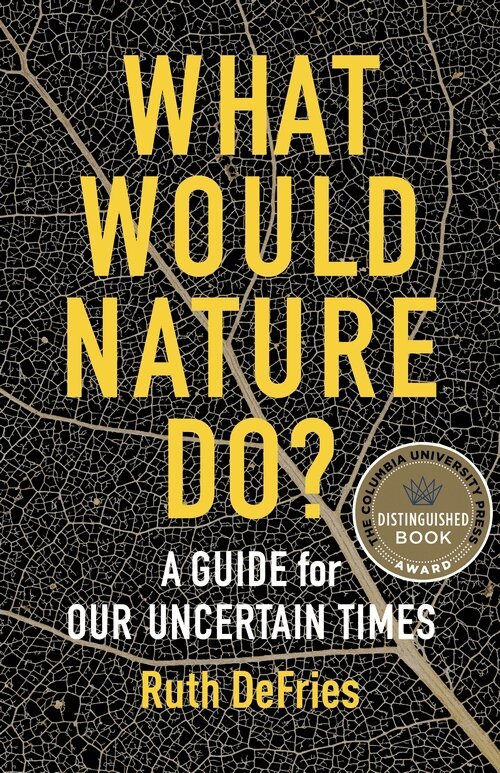
Not long ago, the future seemed predictable. Now, certainty about the course of civilization has given way to fear and doubt. Raging fires, ravaging storms, political upheavals, financial collapse, and deadly pandemics lie ahead—or are already here. The world feels less comprehensible and more dangerous, and no one, from individuals to businesses and governments, knows how to navigate the path forward.Ruth DeFries argues that a surprising set of time-tested strategies from the natural world can help humanity weather these crises. Through trial and error over the eons, life has evolved astonishing and counterintuitive tricks in order to survive. DeFries details how a handful of fundamental strategies—investments in diversity, redundancy over efficiency, self-correcting feedbacks, and decisions based on bottom-up knowledge—enable life to persist through unpredictable, sudden shocks. Lessons for supply chains from a leaf’s intricate network of veins and stock market-saving “circuit breakers” patterned on planetary cycles reveal the power of these approaches for modern life. With humility and willingness to apply nature’s experience to our human-constructed world, DeFries demonstrates, we can withstand uncertain and perilous times. Exploring the lessons that life on Earth can teach us about coping with complexity, What Would Nature Do? offers timely options for civilization to reorganize for a safe and prosperous future.
203 kr
Skickas inom 7-10 vardagar
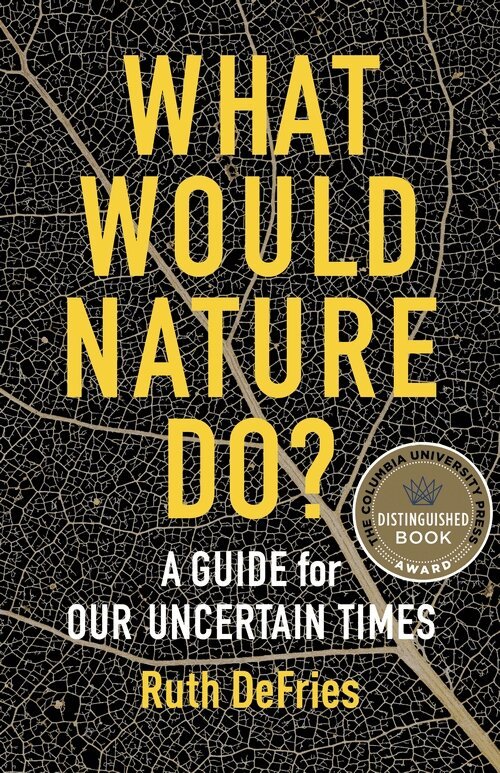
Not long ago, the future seemed predictable. Now, certainty about the course of civilization has given way to fear and doubt. Raging fires, ravaging storms, political upheavals, financial collapse, and deadly pandemics lie ahead—or are already here. The world feels less comprehensible and more dangerous, and no one, from individuals to businesses and governments, knows how to navigate the path forward.Ruth DeFries argues that a surprising set of time-tested strategies from the natural world can help humanity weather these crises. Through trial and error over the eons, life has evolved astonishing and counterintuitive tricks in order to survive. DeFries details how a handful of fundamental strategies—investments in diversity, redundancy over efficiency, self-correcting feedbacks, and decisions based on bottom-up knowledge—enable life to persist through unpredictable, sudden shocks. Lessons for supply chains from a leaf’s intricate network of veins and stock market-saving “circuit breakers” patterned on planetary cycles reveal the power of these approaches for modern life. With humility and willingness to apply nature’s experience to our human-constructed world, DeFries demonstrates, we can withstand uncertain and perilous times. Exploring the lessons that life on Earth can teach us about coping with complexity, What Would Nature Do? offers timely options for civilization to reorganize for a safe and prosperous future.
485 kr
Skickas inom 5-8 vardagar
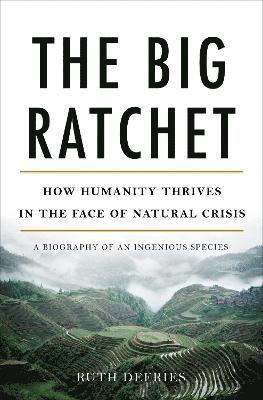
Our species long lived on the edge of starvation. Now we produce enough food for all 7 billion of us to eat nearly 3,000 calories every day. This is such an astonishing thing in the history of life as to verge on the miraculous. The Big Ratchet is the story of how it happened, of the ratchets,the technologies and innovations, big and small,that propelled our species from hunters and gatherers on the savannahs of Africa to shoppers in the aisles of the supermarket. The Big Ratchet itself came in the twentieth century, when a range of technologies,from fossil fuels to scientific plant breeding to nitrogen fertilizers,combined to nearly quadruple our population in a century, and to grow our food supply even faster. To some, these technologies are a sign of our greatness to others, of our hubris. MacArthur fellow and Columbia University professor Ruth DeFries argues that the debate is the wrong one to have. Limits do exist, but every limit that has confronted us, we have surpassed. That cycle of crisis and growth is the story of our history indeed, it is the essence of The Big Ratchet. Understanding it will reveal not just how we reached this point in our history, but how we might survive it.
819 kr
Tillfälligt slut
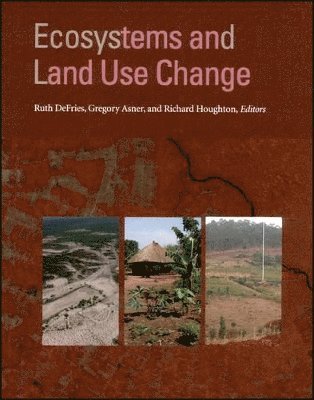
Published by the American Geophysical Union as part of the Geophysical Monograph Series, Volume 153.Land use is at the center of one of the most vexing challenges for the coming decades: to provide enough food, fiber and shelter for the world's population; raise the standard of living for the billion people currently below the poverty line; and simultaneously sustain the world's ecosystems for use by humans and other species. The intended consequence of cropland expansion, urban growth, and other land use changes is to satisfy demands from the increasing appetite of the world's population. Unintended consequences, however, can alter ecological processes and have far-reaching and long-term effects that potentially compromise the basic functioning of ecosystems. Recently, the scientific community has begun to confront such issues. Several national and international programs have been at the forefront of scientific enquiry on the causes and consequences of land use change, including: the Land Use and Land Cover Change Program of the National Aeronautics and Space Administration, the Land Use program element in the interagency U.S. Climate Change Science Program, and the International Geosphere-Biosphere's Land Use and Cover Change (LUCC) core project. The result has been significant advances in understanding the complex socioeconomic, technological, and biophysical factors that drive land use change worldwide.